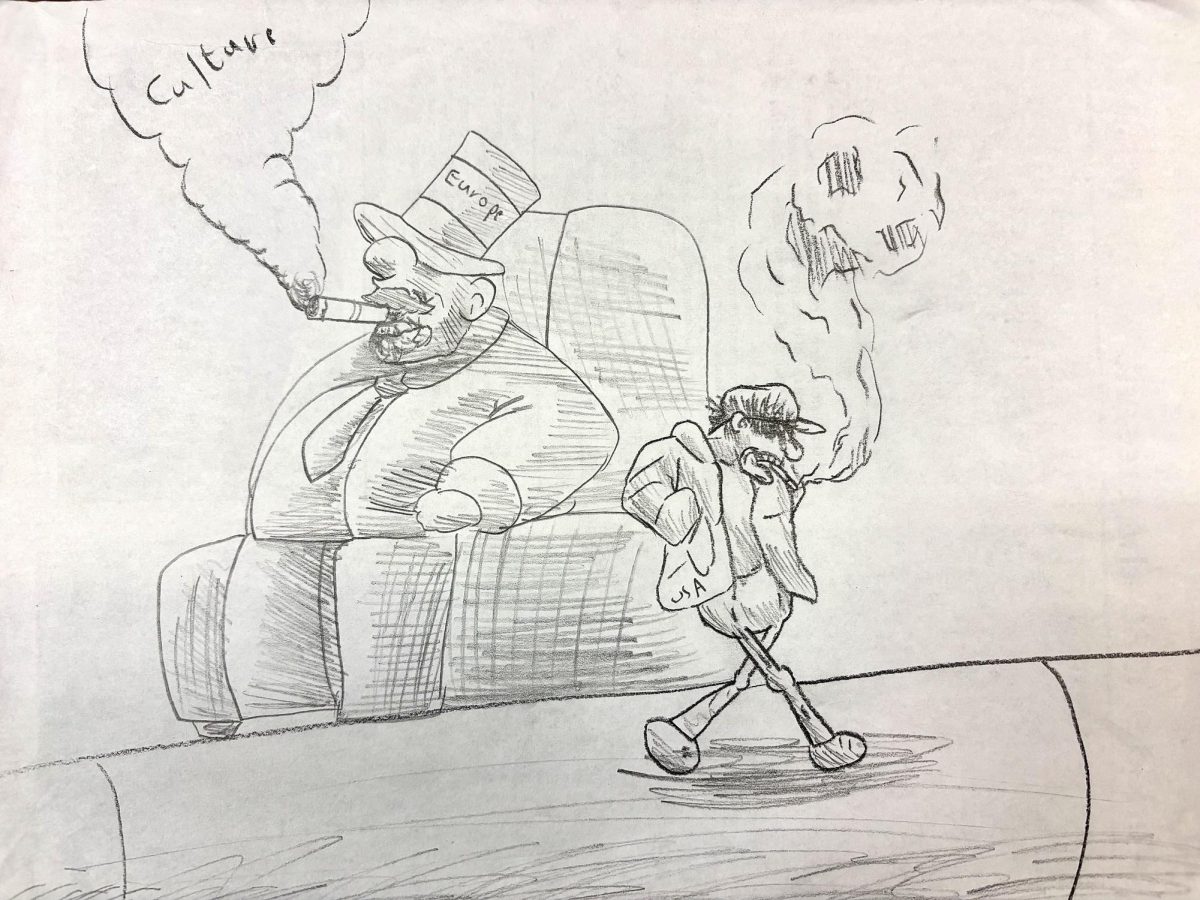


Nationwide, the College Board offers 42 Advanced Placement (AP) — or college-level — curriculums from AP Biology to AP German Language. In some high school districts, students can take these classes starting in freshman year; however, in this district, AP classes are only available starting sophomore year. While some argue that AP classes create a stressful course load for incoming students, others believe that it better prepares them for the rest of high school. This week, the Falconer debates each side.
Pro – by Jessie Chen
An incoming high school freshman meticulously selects courses that align with their interests. To their surprise, many classes are not available, not because of readiness, but because of the school’s blanket policy. Many schools limit AP courses as a protective measure. However, course readiness cannot be generalized to all students; restricting AP access puts students at a disadvantage as it limits their schedule, forcing them to cram the most rigorous coursework into their later years.
For one, taking AP classes during freshman year sends an early signal to colleges that the student is ambitious and capable of handling rigorous coursework from the beginning. While the University of California (UC) and California State University (CSU) systems calculate Grade Point Average (GPA) only using sophomore and junior year grades, universities outside of the system do consider freshman performance.
AP classes also expose students to subjects they might never seek otherwise, and having an early discovery gives them an edge over other students. For example, extracurricular opportunities with prerequisites or competitive applications are more accessible for students who take AP courses early. On a more general note, the sooner a student finds out what excites them academically, the more intentionally they can explore that over the next 3 years of high school, building extracurriculars, joining clubs and centering classes around their passion.
Because the UC and CSU systems calculate GPA only using sophomore and junior year grades, many assume that freshman grades are inconsequential. They view freshman year as an AP-free period that eases the transition to high school. However, if freshman year grades hold less significance, students should take advantage of that to attempt challenging courses. Even if they end with a lower grade, they learn the format and rigor of AP classes and exams, helping them challenge themselves, build study habits and develop test-taking skills. These benefits better prepare students and reduce stress for the next 3 years.
Being able to take APs freshman year helps with course scheduling, too. With 42 AP classes available and required courses filling up the majority of students’ class periods, fitting all the APs a student wants to take is difficult. When students are unable to fit their desired APs into their class schedule, many turn to self-studying or take the courses outside of school, which adds extra pressure on students along with an extra cost. Since students end up seeking methods to take the AP classes during freshman year — such as through outside of school opportunities — barring them from taking these classes inside of school is irrelevant. Allowing freshmen to start earlier distributes the load more manageably across 4 years, rather than cramming most APs into junior and senior year.
There is also an argument that a heavy course load takes away from extracurricular activities applies to all grades, but that does not just apply for freshmen. Taking APs freshman year can help lessen the burden for upcoming years, which arguably have a more demanding workload, helping teach students to balance their schoolwork and extracurriculars. Although there are some harder APs, with some requiring prerequisites, there are many “easier” AP classes, such as AP Human Geography and AP Computer Science Principles that have a lower workload and easier concepts, serving as a great introductory AP course for freshmen.
Furthermore, being in an AP classroom puts students around others who are motivated and take academics seriously. When the surrounding students are engaged, curious and motivated, those habits influence other students too. Connections that are made in classrooms fosters an academic drive in students as they tend to push each other, study together and hold each other accountable in ways that a typical class environment does not create as naturally.
Some freshmen are genuinely ready for harder classes, and it should be up to them to decide their course load, not the school or district policy. Restrictions that apply to every incoming student ignore the fact that course readiness is different for everyone, and for those who are ready, being held back does not prepare or protect them, but rather slows them down. The opportunity to take AP courses in the freshman year is not about adding pressure, but giving students the opportunity to help them for the next 3 years.
Con – by Viktoria Kiss
A freshman receives their new schedule for the year, they stare down at the 7 AP classes, which they believe they have carefully selected, and await a year of doom. When debating freshmen students’ right to enroll in AP classes at school, it is critical to understand why this system was initially set in place and evaluate its active, positive impact over the past years in SDUHSD. Although many students can critique these systems, the absence from any sort of altercation shows that, clearly, the issue is not significant enough for the district to make active changes.
As students entering high school are around 14 years old, they lack a large number of fundamental academic and life skills that, when learned, allow them to thrive in college-level coursework. Since students are still learning this diverse skillset, which includes time management, communication and self-awareness, it would be too hasty a move to impose this intensity on their early, developing lives.
Most importantly, these barriers ensure a steady transition into high school by reducing student stress and allowing them to gain prior knowledge and prerequisites through honors and college preparatory coursework, which will enable the students to succeed in later academic work. It is illogical to expect the majority of students to thrive in these advanced classes when their only prior academic skills were acquired through middle school. Of course, there are always exceptional students who can take on this demanding load, but for the majority of freshmen, it would be a struggle. For example, allowing students to take AP Biology would be difficult, as they do not have sufficient college-preparatory biology knowledge yet. On the other hand, if a student is advanced in mathematics, their placement into AP Calculus courses, for example, would suffice.
Of course, these outliers are star students who excel academically and can quickly advance in schoolwork. Incorporation of AP classes for some students could be a viable option, but it would also result in peer pressure. If a student sees that their friends are taking AP classes, they may feel behind when, in reality, they are not yet prepared. Although these differences in choice are unavoidable in the real world, once again, these are still young, impressionable students who become insecure and self-doubtful.
Although some students feel held back from their full potential in freshman year, restrictions allow for easy high school assimilation and discovery of interests to support later success in these harder classes. Taking an academic year off of AP classes should not be the “end all, be all,” as there are many opportunities for students to challenge themselves in the coming years through rigorous coursework and independent activities. Instead, students should view freshman year as a time to test the waters with a new social perspective and academic mindset, figuring out passions through their required classes and extracurriculars.
Additionally, many students feel that by taking away their ability to take AP classes, it sets them behind in proving their academic rigor for college admissions. However, students should not feel behind on this end, as applicants are evaluated within the context of their school’s offerings and capabilities. Most prominently, freshmen classes play a key role in kickstarting students’ academic journey and areas of interest. As they engage in structured coursework in Biology, English, Math, Language and the choice of two electives, students have the opportunity to discover where their interests lie and develop study techniques that will serve them well as they take on relentless coursework in the years to come. Because of the many stressors that an AP class entails, it can be difficult for students to enjoy the topics that they are discovering. Most prominently, some of the largest areas of development are through elective courses, where students discover a passion for versatile subjects. Although many can find joy through AP material, it can dissuade the thrill of the topics with the rigorous workload. Fostering these skills before devoting to more rigorous coursework is a successful strategy that SDUHSD continues to implement by restricting students from taking AP courses so early.
As AP classes come with a heavy course load, they require time, energy and passion. For young students who are getting used to the new social scene of high school and are busy joining clubs, there is not a sufficient amount of time or knowledge that would enable success in these rigorous courses.
Instead of the possibility of rushing to complete as many AP classes as offered, since students applying to top colleges strive to complete this coursework, students should switch their attitude to understanding the importance of their own academic experience by selectively choosing to take a challenging course at a later, more mature age. Instead of trying to simply increase the number of AP courses by the end of one’s high school year, focus on the process and all you can gain from it.