
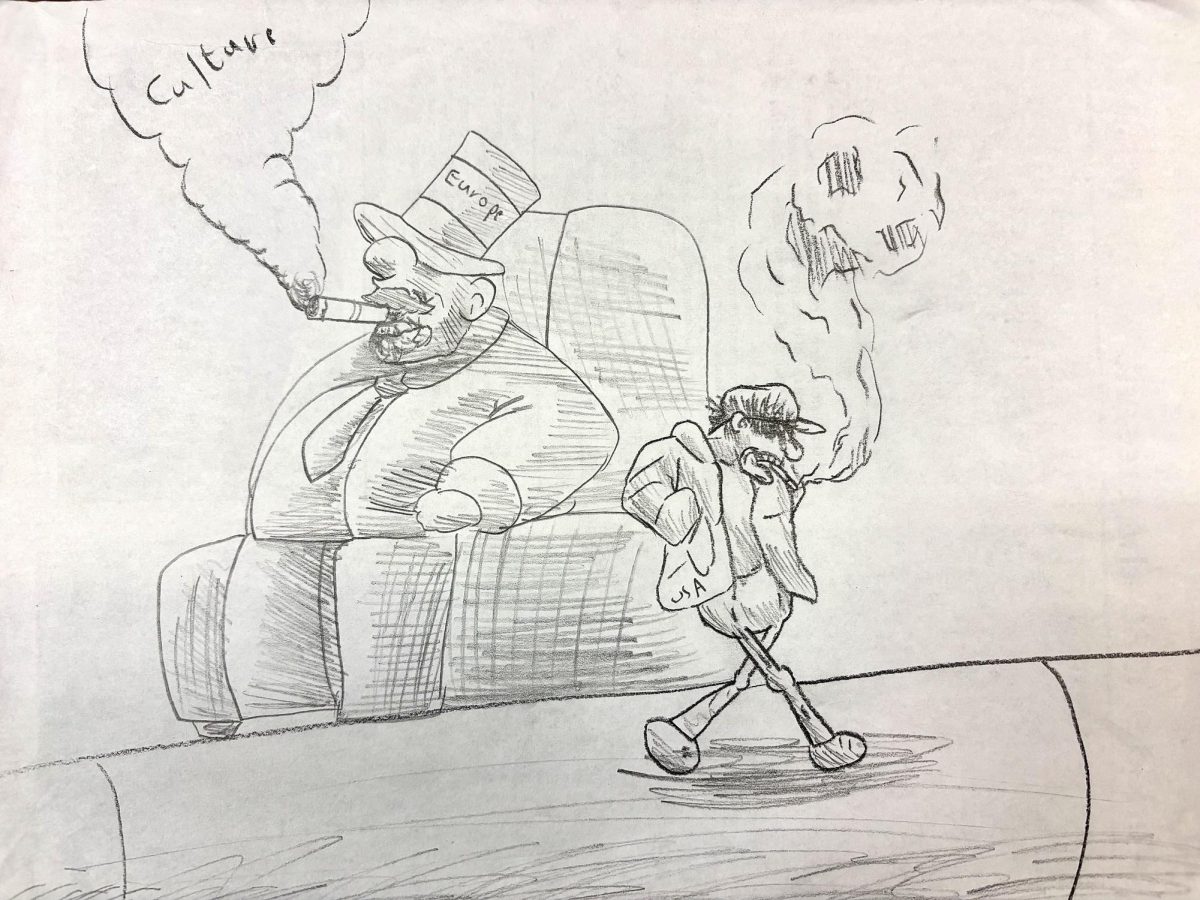
Even with the studies proving its deadliness, smoking is still a cultural staple. From the lighter to the strand, it is a changing aesthetic. America sees smoking as a sign of delinquency and failure, frowning upon it, but in Europe, smoking is a chic talking piece ingrained in activities and art, something that signifies adulthood. Tobacco’s negative effects are universal, but societal views differ from place to place.
No matter the difference in what people are smoking, it is an unhealthy choice and should not be normalized; however, to judge someone for making that choice is also not acceptable.
The United States condemns cigarette culture, associating smoking with a “bad path” and something to avoid. Anti-smoking campaigns like Truth and The Real Cost are a few of many that run multimedia — billboards, commercials, etc. — campaigns to discourage smoking, especially in youth. These are highly recognizable ads that reach large audiences; most people know the advertisement for “Text Truth” at least once. By using intense imagery of the negative affects, they convey the serious complications associated with smoking. Socially, smoking a cigarette will cause judgmental stares and over-projected coughs when you exhale.
But yet, smoking in a French city is normal, unnoticed and even sometimes a conversation starter. Europeans generally value conversation and nightlife more than Americans, especially in their walkable, urban cities. Smoking is an addition to the table that continues conversations as both parties bond over sharing a lighter.
However, these dynamics completely change when it comes to another substance: marijuana, most commonly referred to as weed. At one point, marijuana was also something heavily criticized and seen as a highly defective drug, but people are now seeing the benefits. In moderation and with professional prescription, weed can be used medicinally, and it scientifically has been proven to help with chronic pain, anxiety attacks, panic attacks and even helps moderate pain during chemotherapy. Across the United States, marijuana is becoming more legalized for recreational and medicinal uses, becoming a normal entity of life.
In recent years, the European Union sees the use of marijuana as a much larger issue than the United States. The attempt to legalize weed products in Europe is happening, but it is not as effective. Weed is truly a lifestyle choice in the United States, and Europe has not really matched. Only four countries in Europe legalize weed, while 24 out of 50 U.S. states have.
Both Europe and the United States romanticize smoking, just in different ways. But both ignore the reality that the only thing that should ever enter your lungs is air. Tobacco is known to cause various lethal lung diseases. Excessive weed use damages cognitive abilities and worsens mental health. Even though smoking is often regarded as elegant or chic, it still proves to be a danger to one’s health.
Essentially, smoking is something that is frowned upon by many cultures, but it is not just because of the science proving its potential damages; it is the identity associated with it. Most people choose to smoke whatever products for aesthetic reasons and how it associates with a certain persona, these being promoted by popular culture and media. Smoking weed where it is legal, like in California, is seen as relaxing, and if done in moderation, it is a recreational activity. Meanwhile, smoking a cigarette while walking the streets of Berlin adds an accessory to an outfit.
The double standard both areas hold against smoking is clearly flawed; they both make an aesthetic of smoking while simultaneously judging another form of it. Smoking’s normalization causes many long-term issues. However, judging someone’s choices is also not right; someone’s habit does not identify who they are, just because someone enjoys a cigarette does not mean they are any less than someone who does not.
Society has no power to tell people what not and what to do; however, it does have the power to continue promoting facts about our daily choices. Different forms of smoking existed for the last 12,000 years, making this habit heavily engraved into culture. People’s choice to stop smoking is at the end of the day completely up to them; it is unrealistic to think that the tobacco and weed industry will go away due to how addictive it is, one can only hope people are more aware of what they put into their bodies. If there were better access to rehabilitation centers for those who struggle with addiction, people would be able to combat smoking easier. Access to rehab is more scarce, and there are fewer outlets to cope with their addictions.
As stated before, smoking is known to be bad, but it is still done based on how society views it. People can fear and judge smokers all they want, but it will still be present as long as other people still see it as a form of freedom and elegance. Ultimately, if you’re going to smoke, just make sure you do it in the right place…or better yet, do not do it at all.