

I open my phone after 20 minutes of “doing homework.” Instinctively, my finger follows the pattern that has been built into it. Swipe right, top left corner, one row down. Except this time, Instagram is no longer there. I put my phone down and think about what I just did.
Teens are addicted to social media, and it is a problem. There is no doubt about it. On average, we spend almost five hours a day on social media, which hurts our mental health and ability to complete tasks. Thus, we are now widely known as “screenagers.” We are viewed by older generations as kids detached from reality, disrespectfully scrolling away on our phones while ignoring “real life.” They are not completely wrong. Even most Gen Zers admit they spend too much time online. I know I do. Every time there is a small period of inaction in my life, I pull out my phone, almost like it is a part of me.
It often seems like society dismisses us as just weak-minded people who cannot get a hold of their habits. But there is more to the story than that. The truth is that the companies and masterminds behind social media design their apps and sites to be addictive, so much so that it has drawn comparisons to drugs. Except with social media, addiction is culturally acceptable, maybe even required. It is built into the world around us. The whole reason I downloaded Instagram in the first place was to stay updated with friends and school clubs. Of course, it became much more than that. I tried to limit my time watching Instagram Reels, but once I started exchanging videos with friends and following more accounts, my feed became tightly tailored to my interests. Just like that, Instagram becomes the perfect money-making machine for Meta, its parent company, exploiting the short attention spans of young minds to increase advertisement revenue.
It takes little observation to see the addictive nature of social media. Features like infinite scroll, autoplay and intense algorithms make content more addictive than it already is. Constant notifications from apps kept me coming back again and again. With personally customized feeds, Instagram overloaded me with quick, easy dopamine. Reels were constantly sent, stories always updated. I had to get on social media all the time, and I rarely spent an hour awake before getting online.
Combined with the fact that my developing teenage brain is more inclined to be addicted, these features trapped me and had me scrolling for hours on end. Unfortunately, this is the case for far too many teens around the world.
The worst part: companies are fully aware that their sites are harming young people, sometimes even children. Furthermore, the “safety features” incorporated into apps, such as Instagram’s age verification, are pathetic and ineffective. In Instagram’s case specifically, Meta’s chief executive officer (CEO), Mark Zuckerberg, is fully aware that these features fall far short.
The most damning evidence is found in the families of big tech CEOs. Microsoft CEO Bill Gates did not get phones for his children until they were 14 years old. YouTube CEO Neal Mohan is “strict” about limiting his kids’ screen time. Snapchat CEO Evan Spiegel limits his kids to just 90 minutes of screen time per week. Not per day. Per week.
From an objective standpoint, those restrictions are likely reasonable given social media’s immense harmful potential. However, for most teens, myself included, they are unthinkably severe.
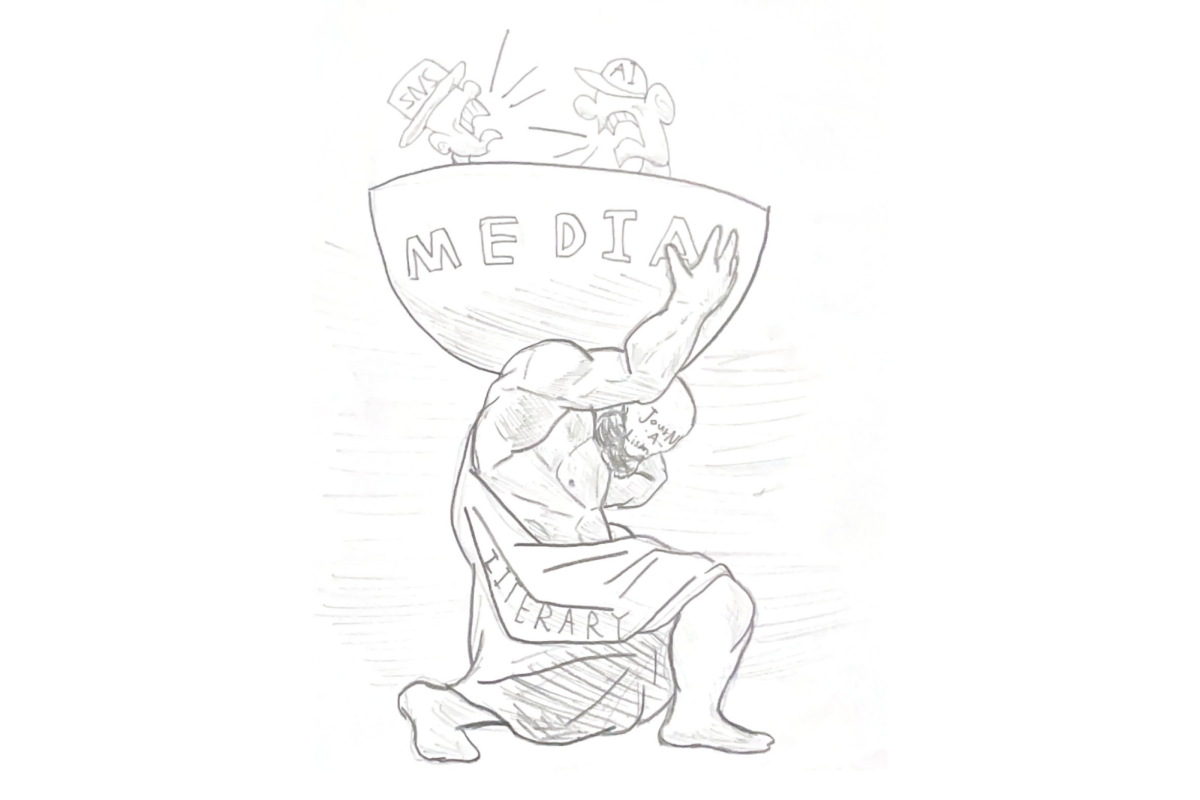
These restrictions make it undeniably obvious: social media is destructive. It is rotting. And, the brains behind it are fully aware of what they are doing to millions of teens and kids around the world. Social media addiction is not an accident. It is not the fault of the oblivious teens who are drowning under the weight of school and social pressure. It is not the fault of parents, who must helplessly try to protect their kids from the dangers of the internet while ensuring they are technologically literate. It is the fault of the companies that deliberately and knowingly exploit vulnerable young minds. Can we honestly say that teens are to blame for losing control in a system that is designed to make them fail?
Of course, the last thing phone-addicted teens need to hear is that they cannot break away from their phones. They can.
For me, I was only able to stop excessive usage by eliminating it. In the midst of pre-Advanced Placement (AP) testing weeks, I found myself questioning whether or not it was in my best interest to keep social media. Even during a time when I should have been studying hard, I was scrolling just as much as usual, wasting countless hours that could have been much more productive. In my gut, I knew that social media was taking valuable time away from me. But at the same time, I kept questioning if I would be as connected to my peers without it. I did not refrain from deleting because I wanted the dopamine. I hated that I scrolled so much. But as long as the app was there, my habits did not change.
Eventually, I faced myself and asked: Overall, has social media been a positive or negative force in my life? The answer was a clear, hard negative.
With justification out of the way, I deleted Instagram.
During the first few days, I continued to reach for the app, but it was not there anymore. Later, I stopped going for it, and my screen time was cut in half. Originally, I told myself that I would delete Instagram to focus on AP exams and finals, then get it back once summer came around. But after two weeks, I decided that freedom felt too good, and summer is too short a time to spend online.
Yet, there were still difficulties. Without social media, there simply was not much to do. I often found that I did not know what to do in my spare time, leading me to a humbling revelation of how dependent I had grown on technology.
Nevertheless, I recognize the positive effects of my decision: better mood, better sleep and better focus.
Breaking patterns of social media addiction is very possible. But it is not easy, and it is crucial that we hold media companies accountable for their actions — or lack thereof. Social media can indeed be helpful, and teens may not be the best-behaved, but we must not let media corporations hide under the curtains of those narratives.
That said, it is seldom entirely a teenager’s fault for being addicted to social media. But at the end of the day, our lives are our responsibility, and blaming outside forces will not help us. Companies like Meta, Google and X must be confronted, but for now, we must fight for ourselves.