

Pro – by Dylan Guillory
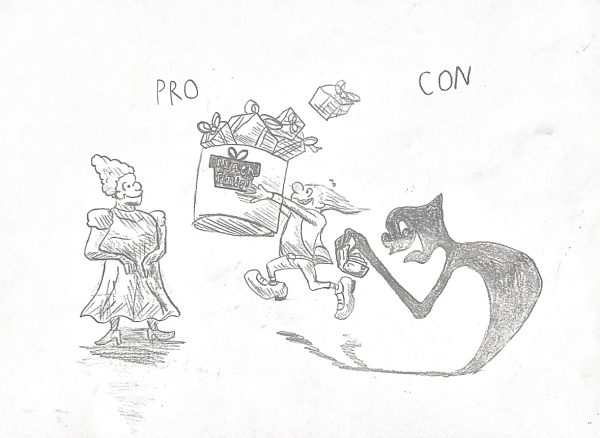
Waking up the morning after Thanksgiving, handing your Christmas list to your parents and feeling the excitement of what is to come on Christmas morning is a feeling better than no other. This is the blessing of Black Friday: the day your favorite major companies offer huge sales, often at the lowest prices of the year. Black Friday offers a day full of opportunities to buy presents for your loved ones at a discount.
Economic problems such as inflation have caused financial hardship for many. A 2025 study by the U.S. Department of Labor shows that the Consumer Price Index for All Urban Consumers, a measure of the average change over time of the prices paid by urban consumers for goods and services, shows that the all items index increased 3% before seasonal adjustment. This shows the increasing living cost, which incomes have not caught up to.
Therefore, this day is a chance for people who are not as economically privileged to buy gifts for their loved ones at a lower cost. With these sales, shoppers are more likely to be satisfied with the price they paid, creating a more positive experience when shopping.
Along with these great deals, Black Friday provides an early start to check items off your holiday shopping list as you buy, leaving less time to stress out on not getting your shopping done early enough. Essentially, this creates a more organized and formative schedule, as it allows for shopping to be done ahead of time rather than a week before Christmas.
Black Friday shopping gives retailers the chance to clear their leftover inventory, as items on sale tend to sell faster. These businesses also add positions to handle the increased number of customers and retail employees are making greater profits as the companies begin to hire more.
For some companies, sales are limited to either online or in-person; however, Black Friday offers both in-person and online purchases, reaching a broader audience. This flexibility makes holiday shopping more convenient. Whether you are at the mall or cozied up in bed, you can reap the benefits of these sales.
Some may argue that Black Friday is harmful because it takes the spotlight away from Thanksgiving. However, this is completely untrue. If anything, Black Friday adds to the positive feeling of Thanksgiving. Thanksgiving is traditionally spent with loved ones, and Black Friday offers another day to do the same. Many people shop with their friends and families, allowing for more time to bond.
Black Friday provides holiday spirit, large discounts, family bonding, greater opportunities for retail employees and the flexible choice of in-person or online purchases. These benefits create a day made for getting a head start on your holiday shopping. Whether you are looking for gifts or just window shopping, Black Friday is an ideal day made for everyone.
Con – by Emerson Koning
The day after Thanksgiving is supposed to be a day spent with your family, relaxing and reflecting on the things you are grateful for. Instead, millions of people rush to open their laptops or sprint to line up outside stores. Behind the flashy 50% off signs lies the reality: overconsumption is encroaching on Thanksgiving. This, along with misleading deals and the negative impact on small businesses, is Black Friday worth the splurge?
This annual shopping event takes away the true meaning of Thanksgiving. The last week of November is meant to be a time for being thankful and appreciating your family, friends and community. Becoming obsessed with the latest deals and whether or not a shirt is back in stock skips over quality time you could be spending with your loved ones. It transforms the holiday into one focused on materialism and deals rather than connection with others.
Black Friday shopping leads to overconsumption and impulse buying. Over the last decade, there has been a dramatic increase in Black Friday spending: Since 2013, online spending has skyrocketed more than five times, reaching $10.8B. These items are often discarded quickly or never used because many people engage in this shopping spree solely for the thrill of it. It feels like a one-time sale you cannot miss out on, even if you regret it later on.
There is also another side to Black Friday that many don’t consider. The deals are not as genuine as many might think, leading to people getting ripped off without realizing it. Companies raise their prices weeks before, then, when returning them to the original price, claim it is a discount. The once-a-year sale where people rush for what seems like a miracle deal is really just the regular price with a flashy tag.
Small businesses usually cannot match the major discounts that big corporations provide during this time because they are unable to afford such high sales. A poll showed that 30% of small businesses cannot afford to provide discounts. This overshadows local businesses and loses customers to larger ones. Companies compete for the best deals, causing stress and pressure between them. Meanwhile, employees working at these stores are leaving to spend a busy and chaotic day working instead of getting to be with their family.
Some may argue that Black Friday is beneficial because it allows people to save money on holiday gifts and other necessities. Consumers gain access to these deals after waiting a year. They claim it is actually helping retailers stay profitable. However, this overlooks independent businesses, while only large corporations benefit. The deals people think they are securing are not as much of a steal as they think.
Black Friday’s appeal hides a more complicated reality. What was once a week centered on gratitude and family has shifted toward unnecessary spending and obsession over the best deals. The built-up excitement of these special deals often leads to impulse purchases and disappointment, especially when many discounts are not as real as they seem. Before rushing to click “add to cart,” it is best to reconsider whether Black Friday is truly worth it.