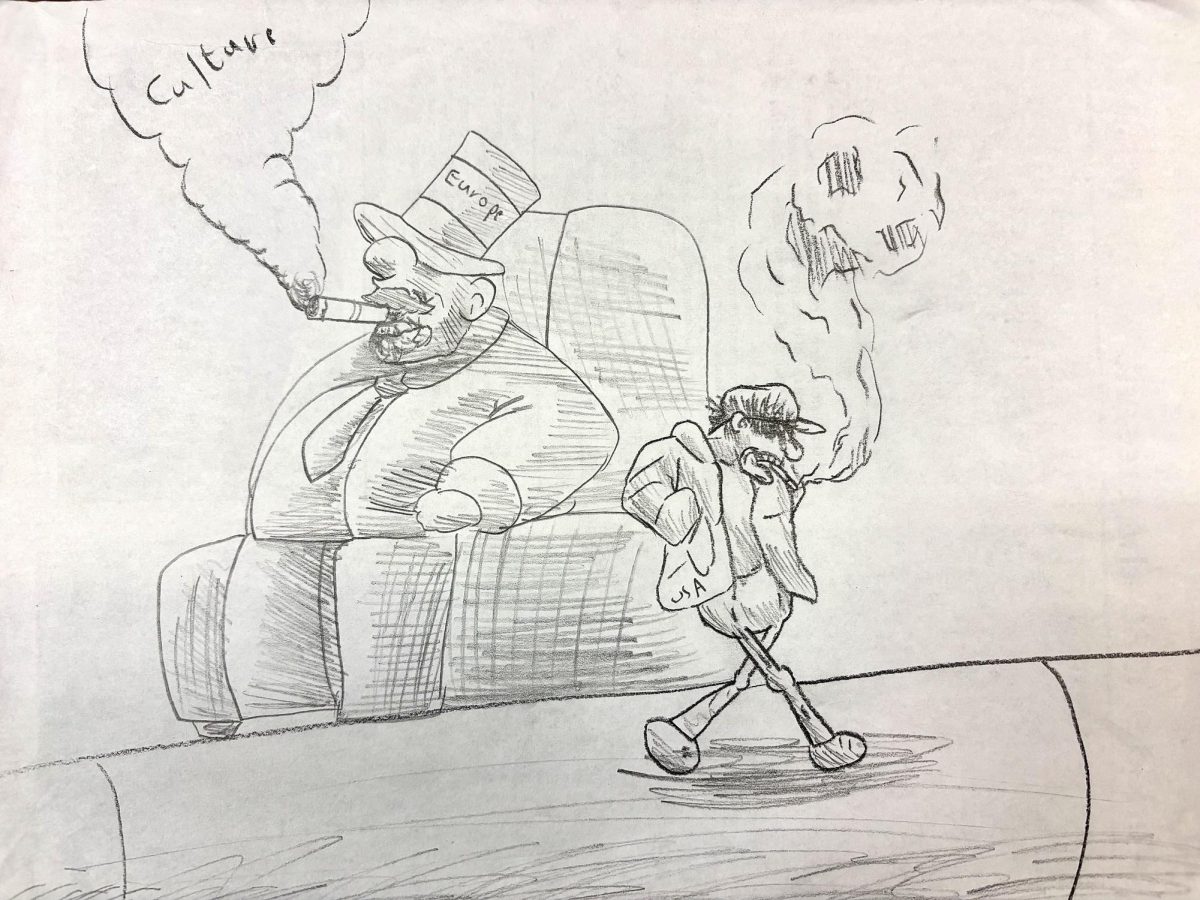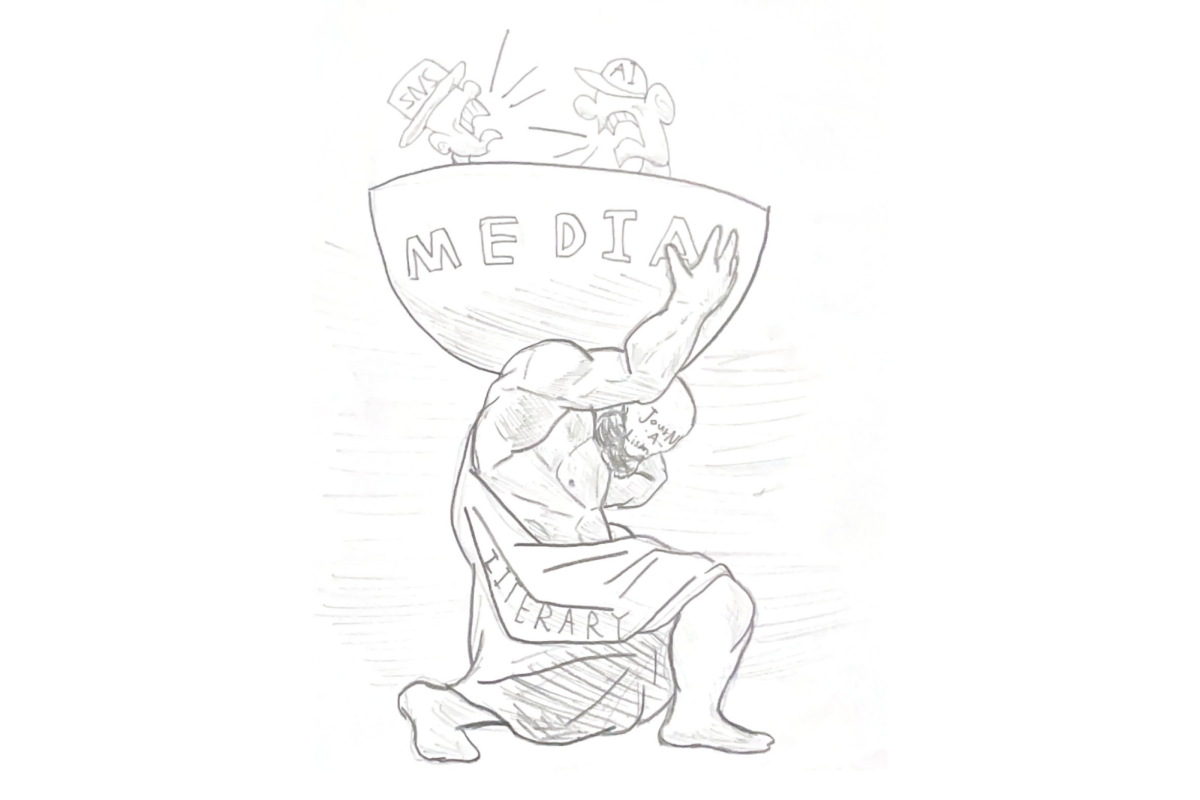


High school students today have opportunities to gain work experience through part-time jobs. While some argue that having a job during high school can cause stress and distract students from their schoolwork, others believe that working at a young age helps students build responsibility, gain valuable life skills and better prepare for their future careers. This week, the Falconer debates each side.
Pro – by Emerson Koning
As students walk across the graduation stage and head off into the world, they might know how to solve for the derivative of a function or write a literary analysis of “The Great Gatsby,” but the real world runs on a different set of skills. The ability to handle difficult situations while staying calm is a non-negotiable skill in the real world. A part-time job teaches students how to manage money and understand its value. Becoming an authorized user on a parent’s credit card can also introduce financial responsibility and help establish credit early. Jobs also strengthen communication skills because employees must respond to customer concerns with a positive attitude and patience. These are skills that employers actually look for, and they cannot be learned from a textbook, but must be learned from real-world experiences: independent living or learning time management through trial and error, just to name a few. High school is exactly the right time to start building them, and a part-time job is one of the best ways to do it.
Unlike the school system, where teachers may offer test corrections or grade on curves, work employers hold a higher bar and are less lenient. Students are on their best behavior during a job because the stakes are higher. School offers opportunities to advance grades, but in the real world, there is not a percent to measure success; instead, constant work and interactions with other employees demonstrate progress. Students learn what it means to take responsibility in a work setting, aside from their studies and extracurricular activities. Imagine being the only employee closing up at the end of a long shift. Customers are still finishing orders, dishes are piled up and the store has to be cleaned and locked before leaving. Situations like these force students to think critically, take initiative and develop confidence under real-world pressure. These skills utilize problem-solving, efficiency, clear communication and customer service. The essential skills that workers are increasingly being called upon to exhibit are problem-solving, creativity, initiative, stress tolerance, and flexibility — all skills that can be developed through a part-time job. These skills are built from experience, from showing up and doing the work even when it is hard. Even though many of these skills are learned at school, like meeting deadlines, juggling priorities and working in teams, there’s nothing like a preview into the work world as a place to practice and truly advance these skills.
Beyond the technical side of work, there is another layer that turns out to be harder to develop than most students realize: people skills. School places students in a room where many people share similar ages, routines and life experiences. While that environment supports learning, it can also limit exposure to different perspectives and expectations. A workplace forces students to cooperate with people in a room with all sorts of people. Employers must compromise and adapt to situations that do not revolve around their own schedule or preferences. These interactions prepare students for adult responsibilities far better than environments built mainly around peers. For example, the tourist who has no idea what anything is and needs the whole menu explained. The library visitor who needs help finding a book and has no idea how the catalog system works. The co-worker who has been there for three years and has strong opinions about how things should be done. A key advantage of working is learning how to communicate clearly in any given circumstances under pressure and how to deal with customer complaints.
Time management is another crucial aspect of work, an increasingly important skill for students. Similar to balancing sports and school, the same juggling is a requirement for success in working conditions. For example, an employer will not dictate how to balance a closing shift on Thursday with a history test on Friday and a family event on Sunday. Contrary to what many people may believe that extracurriculars and sports fully replicate the pressure of a real workplace, coaches and teachers often structure schedules, prioritize development over consequences and guide students through mistakes. A workplace operates differently because businesses expect workers to solve problems independently and meet the standards consistently. Additionally, work actually can also discourage procrastination because workers have to organize and plan all of their work, school and extracurricular assignments more carefully.Working in moderation actually increases efficiency and organization; a recent study shows that students who work actually tend to manage their time better, not worse. These student workers understand their priorities and are found to be less inclined to procrastinate on homework or other responsibilities. As the saying goes, “if you want something done, ask a busy person.”
Perhaps the most overlooked benefit is the clarity that a job can give individuals about their future. Choosing a career path can feel completely abstract for young students who haven’t had access to learn in different job settings. A popular, busy frozen yogurt can teach a student far more than how to make desserts or operate a register. In a fast-laced environment where lines constantly build and customers expect quick service, students learn how to stay calm under pressure, communicate clearly and multitask efficiently. They may start noticing what attracts customers and how employee morale affects the quality of the service. Experiences like these can inspire future entrepreneurs because they provide firsthand exposure to how successful businesses operate in real time. Working at a local surf shop exposes students to branding, advertising and customer engagement. A student interested in art or marketing may discover how stores display logos and online promotion that influence sales, leading them towards careers in graphic design or advertising. Part-time jobs provide insight into different work environments and real experiences, helping students identify their interests early on. Even entry level positions, like a cashier or barista offer exposure to various aspects of a business that can inform future career decisions.
Some will argue that adding a job to an already packed high school schedule creates too much stress. Between classes, homework, sports and extracurriculars, there is simply no room to add more responsibility. Although many have predisposed ideas regarding what a job may entail, working intense hours each day, a high schooler’s work schedule is much more lenient, making way for two to three shifts a week. Students also have the opportunity to work during the summer without the added stress of school. It is an opportunity to gain practical experience. Students who learn early to balance responsibility, manage their time and show up consistently are the ones who arrive at college prepared.
A part-time job in high school is not just about earning money. It is about evolving into a person who is able to handle and control multiple obligations at once, an essential skill that will serve each person well beyond school. It is about handling tasks efficiently while balancing demands. Every shift that is worked provides opportunities to gain skills and experiences that a classroom cannot replicate.
Con – by Dylan Guillory
Being a high school student already comes with a variety of stressors due to managing academic grades and battling lack of sleep or burnout. Adding a job to an already overwhelming schedule can take away from time after school, or on weekends that could be spent studying for classes.
Anxiety is a worldwide mental illness that thousands of teens struggle with on the daily. Juggling mental issues as well as trying to maintain expectations from the world surrounding them being school or job related can be exhausting. According to the Centers for Disease Control (CDC), approximately one out of five teenagers has a diagnosed mental health condition, such as anxiety or depression. In a survey by the American Psychiatric Association, more than a third of teens feel that their workplace harms their mental health. When dealing with mental health struggles, taking breaks will allow for relaxation and refreshment that helps aid these realities. Packed schedules that arise from jobs leave a limited amount of time for that necessary breather, which can easily worsen already present mental problems for adolescents. According to Environmental Influences on Child Health Outcomes, teens who reported high-quality friendships tend to have better mental health. Along with a diminished attention in school, having a job can lead to decreased focus on sports and social life. High school years are critical moments of one’s life that should not be taken for granted, and, with college creeping up, it is necessary that focus is placed on one’s academic life while also making the most of the time spent with friends and family before beginning a new chapter in life.
Although working has many benefits, education should remain a higher priority than work during the high school years. The amount of effort and time you place into school directly determines how the next course of your life goes. Getting a job could risk hurting your grades and, therefore, changing what your future could look like. For Xceed Preparatory Academy, they solidify the importance of grades as they are critical pieces for admission to universities. Ranges of schools use grades as a metric of acceptance, like prestigious schools, state colleges and even scholarship programs use “GPA thresholds” to determine eligibility, as well as merit aid.
Employment during the teenage years can be detrimental because high school is a critical period that often shapes future opportunities and career paths. During this time, teenagers should be prioritizing their education, maintaining strong grades and participating in activities that can benefit their long-term goals, such as extracurriculars, volunteering or preparing for college. However, taking on a job can consume a significant amount of time and energy, which may lead to increased stress, less time for studying and a decreased focus on academic success.
Some may argue that getting a job as a high school student is a good idea because it hones time management and social skills. However, trying to manage both school and a job ruins sleep and grades. Additionally, social skills can easily be developed in other ways, such as school, clubs and sports.
Another key detriment of most jobs is that teens are awarded low pay combined with little skill development because they are often concentrated in retail, food service or manual labor, which focuses on repetitive tasks rather than technical skill, making the job not as valuable for the future. Instead, that time should be spent focusing on your well being before heading to college where you can then work jobs in order to get a good pay. Having a job as a high schooler is already risking your mental well-being and academia, plus most high school jobs fail to help with future careers. Otherwise, it can be an inefficient use of time that could instead be used on your future. According to the University of Texas at Austin, accepting a job below one’s skill level can come across poorly to employers because of the perception that someone is “less competent.” Essentially, getting a job that does not require much skill can reflect on your future when employers are looking at who to hire. They may see that you did a job that was not valuable or that focused on easier tasks, making it harder to get employed.
Instead of jumping ahead at the chance to get a job in high school, wait the few extra years until college, once you are fully adapted to the “adult world” where you can practice and master efficient time management skills. Your high school years are your last as a teenager; use that time to be social and secure your grades so you are set for the future.