

After a tiresome and lengthy week, you stare at the theater’s impending screen, searching for relief on a Friday night. Anticipating another round of laughs, tears and smiles that a typical, classic “feel-good” movie is meant to produce, you are utterly disappointed. Instead of raw emotion from some of your favorite actors, the latest movie in theaters features eerie and uncanny “actors:” artificial intelligence (AI) characters with generated voices and images.
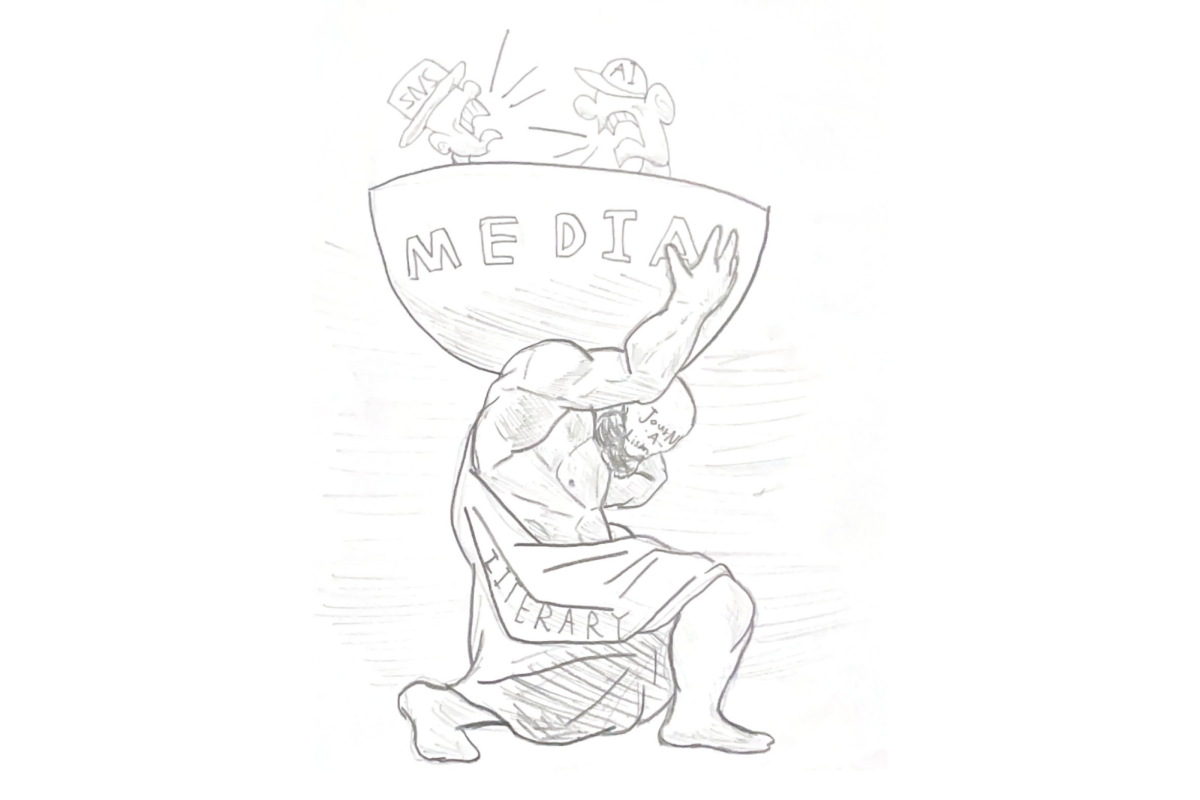
For the past few years, many people worldwide became accustomed to the integration of AI into society. Although its acceleration in the workplace is prominent, with its transformation of healthcare and rapid adoption in education, its use in modern-day media is often not thoroughly discussed, as the topic seems less serious. Society has not yet realized its slow, active integration into media.
Although many believe AI has benefits to filmmaking, implementing artificial actors should be restricted, as it takes away from human creativity, expression and employment.
Yes, oftentimes, while scrolling through TikTok, a cringeworthy Love Island fruit parody appears, but viewers do not seem to recognize the real-life impacts of AI seeping into their media. The reality is that society still does not feel an impending concern for AI in a true, heartfelt film. Beginning with the addition of the first AI actor, Tilly Norwood, made by Particle6, society saw the possibilities of AI in movie culture. Although Norwood was created for the AI genre rather than traditional film, its implementation in a film sparked backlash, questioning the ethics of AI and its potential displacement of real actors
Norwood sets a precedent for future inclusions of AI in movie media, seen through Handshake, a company that provides training data to OpenAI and other labs, which began hiring individuals to train AI models.
The inclusion of these actors overall seems inhumane and an insult to human emotion and life, completely. As humans, we are unique, complex and detailed, expressed through our emotions and expressions. Having a robot mock these distinct traits and vulnerabilities hurts the identity of humankind. Since the beginning of rising films and acting in the 1800s, the creation of stories through complex emotions and scripts has been integrated into our “media-loving” culture.
The Particle6 company is actively working towards fixing the gap in its model knowledge with specialized data labeling. Now, with this work, the AI models are able to replicate and recognize human tone and emotions.
Regardless of these advances, it stands clear that AI is not capable of replacing humans, a species capable of unique emotions and perspectives. Films encapsulate that. Actors represent people, culture, heritage and valuable traits that make us imperfect and real. When watching films, one is immensely drawn to the storyline and actors, feeling the passion from the screen. On the other hand, if we choose to move forward with AI, we will lose the true authenticity and art of acting. Acting is not simply characterized by a body’s physical movements and the different lines an actor reads. Truly, it is the character’s emotional, lived experiences that make their acting unique and interesting to watch. These key differences are truly fundamental to AI’s ability to imitate tangible gestures merely, never being able to truly encapsulate the human reality.
Many argue that the implementation of AI into films could be useful, serving various educational purposes. Some beneficial and possibly advantageous features include recreating past historical events and making crash and destruction simulations. These features could be useful for teaching purposes for future history classes, creating infamous historical events from the past. However, this is not all the company has in mind for the future. The company’s goal is to create more actors for companies to sign and use. If AI actors become prominent, it will take real-life actors out of jobs, especially new up-and-coming ones hoping to establish their careers.
By removing actors, AI takes away the significance of filmmaking and storytelling. Even various talent agencies do not seem to understand the true art of acting, as many were interested in signing Norwood, according to Deadline Hollywood.
Moving forward, the future is in the hands of the industry as well as legal professionals and government representatives, to put forth legislation to halt the teaching and integration of these models.
AI can provide numerous advantages for society and the economy, but replacing artists who are supposed to represent the human experience with technology that can only mimic it does not seem like a logical step forward. AI actors need to be stopped from existing and being produced within the media, ultimately regulating artificial usage in production. Moving forward, producers should terminate the trend of signing AI actors.