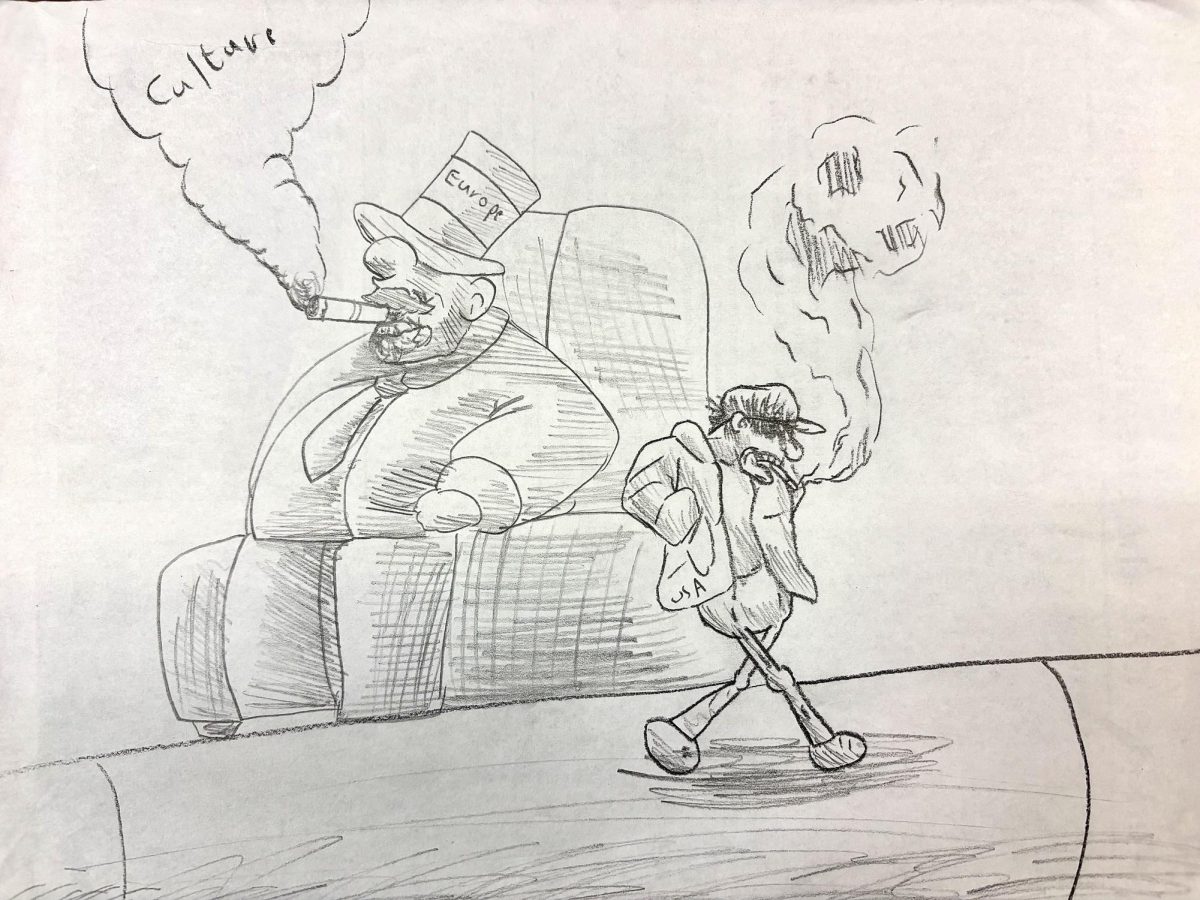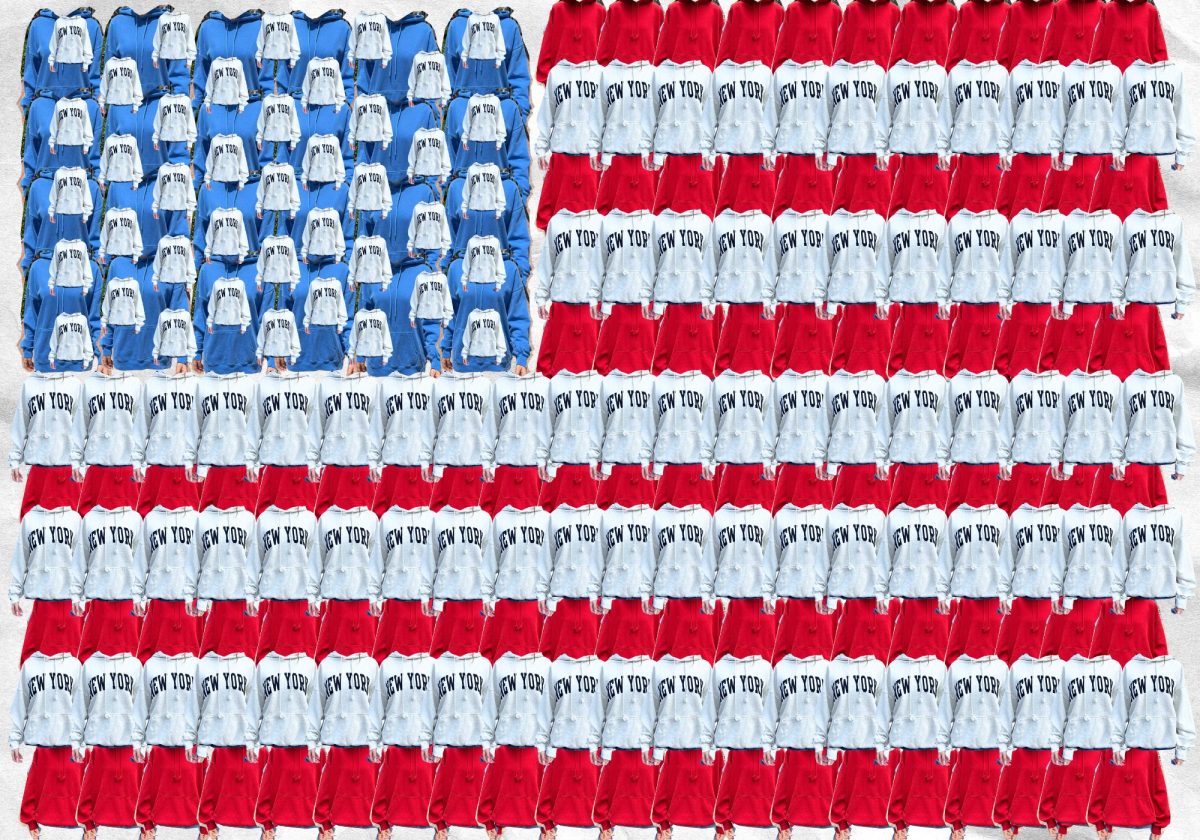


When 11% of Americans can not locate the United States on a map, an issue clearly exists. In a global study of 18 to 24 year old geography proficiency conducted by National Geographic-Roper, Americans placed second to last, only ahead of Mexico. Fifty-percent of young Americans could not find New York on a map. Almost 30% could not find the Pacific Ocean, and one third believed that the U.S. population is between 1 billion and 2 billion — it is about 340 million.
Not only is this embarrassing for our nation as a whole, but also a dire wake-up call. How are we setting up students for success if they are not even able to identify the country they reside in on a world map? Contrary to what some Americans might believe, geography extends beyond a brute memorization of borders: it provides the grounds for a worldly understanding. It extends further than remembering states, capitals and locations, but also encompasses a grasp of different political and economic systems, as well as population and natural resource distribution. Unfortunately, geography fades into the background of public education when disparities in math and reading scores take the forefront.
According to the Nation’s Report Card released by the National Assessment of Educational progress, math and reading scores dropped to their lowest levels in more than two decades among high school seniors. As a result, schools narrowed their focus on studying those subjects, cutting opportunities for studying geography to the detriment of the students. While it is certainly true that the American education system needs swift and effective remedy for the decline in math and reading performance, it does not reduce the need for adept geography education as well. Schools aim to set up the student for future success, and one of the best ways they can do so is by valuing geography education.
In a world turbulent with international conflict, it is critical to have a strong grasp of geography and how different topographical and environmental features influence global politics. For instance, the current conflict in Iran resulted in a dramatic spike in oil prices. Before the war, oil was closer to $70 a barrel. Currently, they are hovering above $100 a barrel. The cause of this change was the blockade in the geographically strategic Strait of Hormuz, the vital waterway which allows the passage of around 20% of the world’s oil traffic. As events continue to unfold in this region, understanding the topographical influence of the Strait of Hormuz on the availability of natural resources for the rest of the world will be critical to American perceptions of the war. This applies to any current event, at any place or time. Frederick Hess, senior fellow and director of the American Enterprise Institute describes how it is “impossible to talk sensibly about immigration, border enforcement, foreign policy or tariffs absent a clear sense of physical geography.” For instance, understanding the oil distribution in the world helps people spot motives behind conflicts like the one in Venezuela. Geography allows us to spatially contextualize history and present day events that foster a comprehensive, global awareness of our world, impacting how individuals vote and support policies of geopolitical consequence. The way we see the world, literally, influences how we act in it.
Furthermore, there is a glaring disparity between what students should understand about geography and what they do know. Nearly three-quarters of eighth graders tested below proficient in geography on the Nation’s Report Card in 2014, with this same trend extending through 2018 with the most recent National Assessment of Educational Progress (NAEP) of nationwide geography scores. Seeing that the last national survey of geography proficiency was eight years ago, it seems the U.S. cannot even seem to reliably administer standardized testing to measure students’ geography knowledge, demonstrating a lapse in the subject’s importance. According to the same national study, only 26% of eighth grade students were able to correctly locate cities Los Angeles, Tokyo, London and Mumbai on a map by assigning them to their predesignated pin. This is basic knowledge, and, as global citizens, students should at the very least be able to demonstrate a rudimentary understanding of the geography of the world around them. Ensuring sufficient education in this field is how our society can best prepare its students for success. If individuals are not able to locate major cities on a map, how will they be able to fully grasp the full implications of global news involving said cities?
Notably, geography is not a required subject in most states. According to U.S. News, “only 17 states required a geography course in middle school and 10 states required a geography course for students to graduate from high school.” For instance, the school does not offer a geography class in its curriculum, nor does it require students to take one.
Yet, some critics argue that geography instruction is sufficient in social studies and history classes and social studies teachers reported spending 10% of their time teaching geography, which is understandable as it is not the main focus of their required curriculum. In order to close this gap, either specific geography units should be integrated into said history classes or a dedicated geography class should be instituted. In this case, AP Human Geography is a prime example. According to College Board, the course connects “geographic concepts and processes to real-life scenarios” and is largely taken by freshmen. The addition of this course would provide students with an adequate foundation in geography and its everyday applications, cementing a stronger understanding of geographical concepts that would supplement content taught in future required history classes.
Another potential solution is the prevalence of geography-based games, including Worldle, Seterra and GeoGuesser, which prompt the player to interact and apply their preexisting knowledge of the world’s geography in gamified format. These educational games are rising in popularity in schools and even professionally, with GeoGuesser hosting its third annual esports World Championship later this year. Encouraging these games within the classroom and between peers represents an excellent opportunity to expand interest and interaction with geography. Collaborations between geography game platforms and schools could be a way to increase engagement of students in class while also building a strong foundation in this subject.
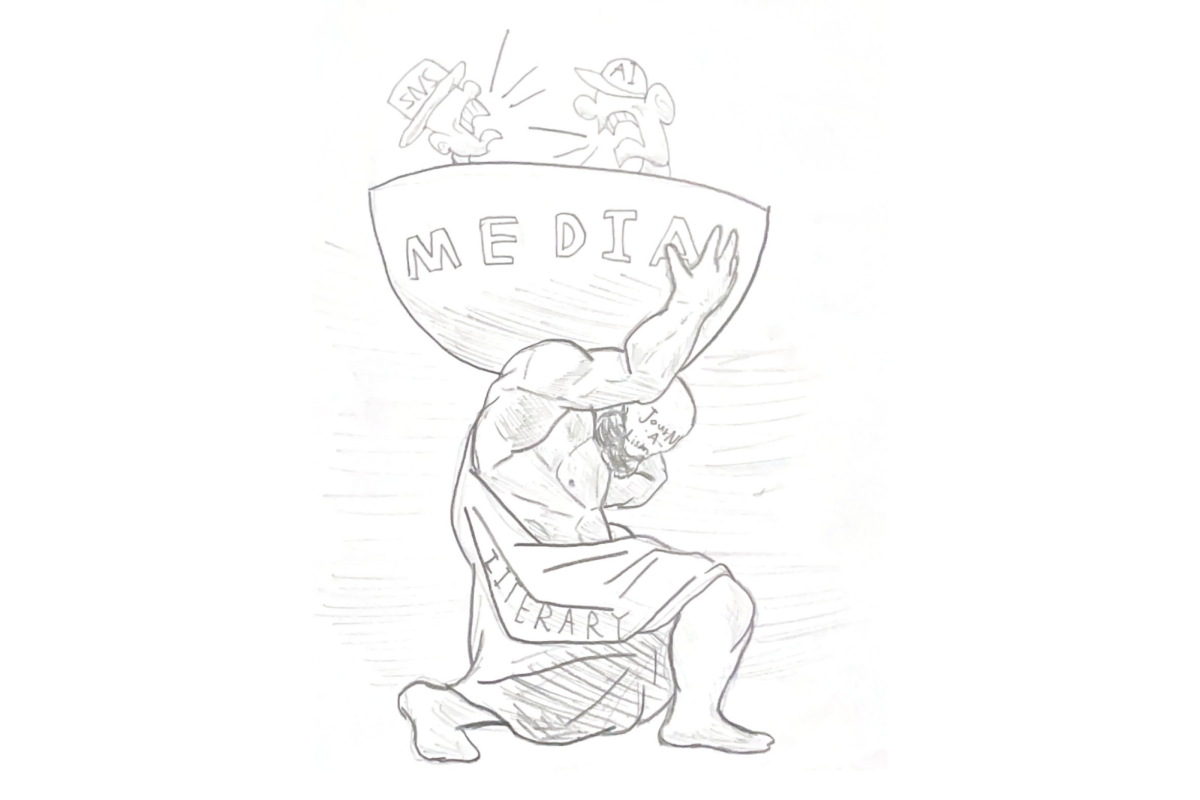
Nonetheless, some argue that geography in education is unnecessary in the face of Google and artificial intelligence, which allow the near-instant dissemination of information. However, what Google and ChatGPT cannot give students is critical thinking skills and an intuitive understanding of geospatial direction that stems from a strong early education. It also should not be left up to the individual to pursue such information from digital sources; imagine having to ask an AI bot every time to differentiate the Atlantic and Pacific Ocean. Standardizing geography teaching in education offers students a strong foundational understanding from which to build their internal view of the world. In this way, geography is more than repetitive memorization. It explores how different geographical systems interact in the environment, the implications of global policy that hold geographical weight and how the physical interconnections in our society shape the world we live in. Geography is an integral understanding that should be in the toolbox of every individual, as we are all global citizens, living in a vastly globalized world to which geography provides the means to examine. Illiteracy in this subject threatens to cloud our perception of the world around us, skewing our interpretation of the geopolitical scales to an alarming degree.
In the meantime, we can play GeoGuesser and fervently hope that one day, our efforts will pay off and Americans will be capable of locating our own country on a map.