

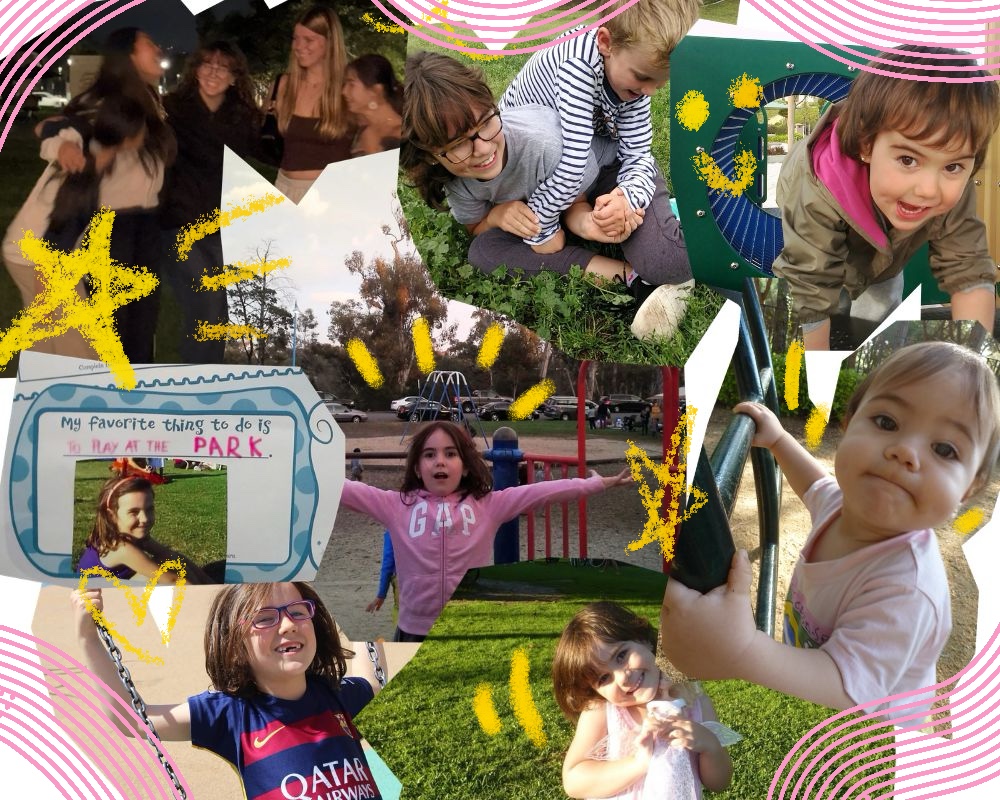
The sun bleeds through the leaves of a pine tree, draping over the forlorn grass on which my small feet trod. The rhythm of my sneakers plays percussion to the cacophonous symphony of birds flying above and children running around, including myself. A small finger taps my shoulder and asks in a minute voice if I would like to play. The answer is obviously yes.
The majority of my childhood friendships began through moments like these. Engulfed in nature, I made some of the most prized and pivotal relationships of my life.
My longest-standing friendship began in Sixth Avenue Playground, which my mother and I frequented after immigrating from Spain at 3. There, my mother encountered another Spanish-speaking mother and her child, whom I quickly befriended. 13 years and two international moves later, our families are still close and reunite every few months.
Throughout my childhood, Sixth Avenue Playground became a place of respite for my mother and adventure for me. Every scraped knee was a proud mark of my youth: the scaling of a tree, a jump off a swing, a run through the mud.
I had to temporarily bid goodbye to this park when I moved back to my hometown of Vilassar de Mar, trading pine needles for dense oak leaves. There, once primary school let out for the day, my new friends and I would rush to the park up the street, small bodies forming an overwhelming stampede of eager students, our exasperated parents trailing behind. This park is where I learned to cartwheel, play hand games and braid hair. My girlhood was cemented between bugs and sticks. I learned sisterhood through the weaving of plants and manes. It was a maternal protector, keeping me safe within her verdant womb.
Parting with this park was more painful than previous ones. Somewhere along the way, I became a sentient being, with the links of femininity pleating into my hair. I made a best friend who I cherished like a sister, I lived a street away from my two girl cousins and I was constantly surrounded by aunts. Parks were a center of congregation for all the women I loved. These connections were cruelly severed as I moved away once again.
I was vaguely reassured by the knowledge that another park was awaiting me across the sea. It was not a goodbye, just a see-you-later.
I reunited with this haven in Carmel Valley, where I discovered Sandy Park, tucked behind my elementary school. I would spend most Fridays playing in the woodchips, kicking balls through grass or swooshing against the wind on a swing. Over summer break, I would meet up with a friend and have prolonged conversations about a limitless array of topics, from our favorite movies to the ever-present fear of climate change. Once again, I had found a girl in whom I could confide and relate to.
When the pandemic hit, my isolation returned as I lay trapped in the plastered cage that was my room. Once quarantine restrictions began to be alleviated, one of the first places I ran to was this park. It was barren, not of nature, but of society. Birdsong occupied the air once littered with jovial yelps, laughs and cries. The whispers of leaves replaced parental chatter. It felt odd but therapeutic to sink into nature’s static, to make room for things I’d have once trampled over. It was here that I returned to an old hobby: rollerblading. I would glide in laps around the field, the park’s greenery and white noise washing over me in a flurry. When I skated, my fears and worries would sink into my surroundings as I became part of the earth. With every woosh of a bird flying by or the sting of the wind on my eyes, I could feel myself drifting into somewhere new but not unfamiliar.
In the moment I felt most lacking, parks became the one friend who truly mattered, one who was there for me whenever and wherever. As I grew and evolved, parks remained a steady confidant. They did not necessarily follow me, but were a constant companion as I moved countries, met new people and grew apart from others.
Nature is perennial, and parks are sanctuaries of stability, creating an environment in which anyone can connect with others and their surroundings. Especially in the concrete-infested terrain of suburbia, parks remedy the isolation imposed by every picket fence or gated community. A child scavenging for rolly-pollies. An adolescent friend group gossipping on a picnic blanket. An immigrant parent connecting with other diasporic families. A senior doing tai chi in a field. All of these people and more are welcome within the abode of nature. Once they enter a park, they are in the warm embrace of the Earth.
As Emily Dickinson once remarked, “How strange that nature does not knock, and yet does not intrude!”



Shayna • Apr 7, 2026 at 12:17 pm
so well written!!!
Jessie • Apr 7, 2026 at 10:59 am
so beautifully written Gabi! (and your photos are so cute)