
When our immigrant parents grew up, left their villages, small towns and cities and arrived with varying bits of change in pockets and American dreams clutched tight, they left behind not only their families but also a past where traditions were the gravitational center of life.
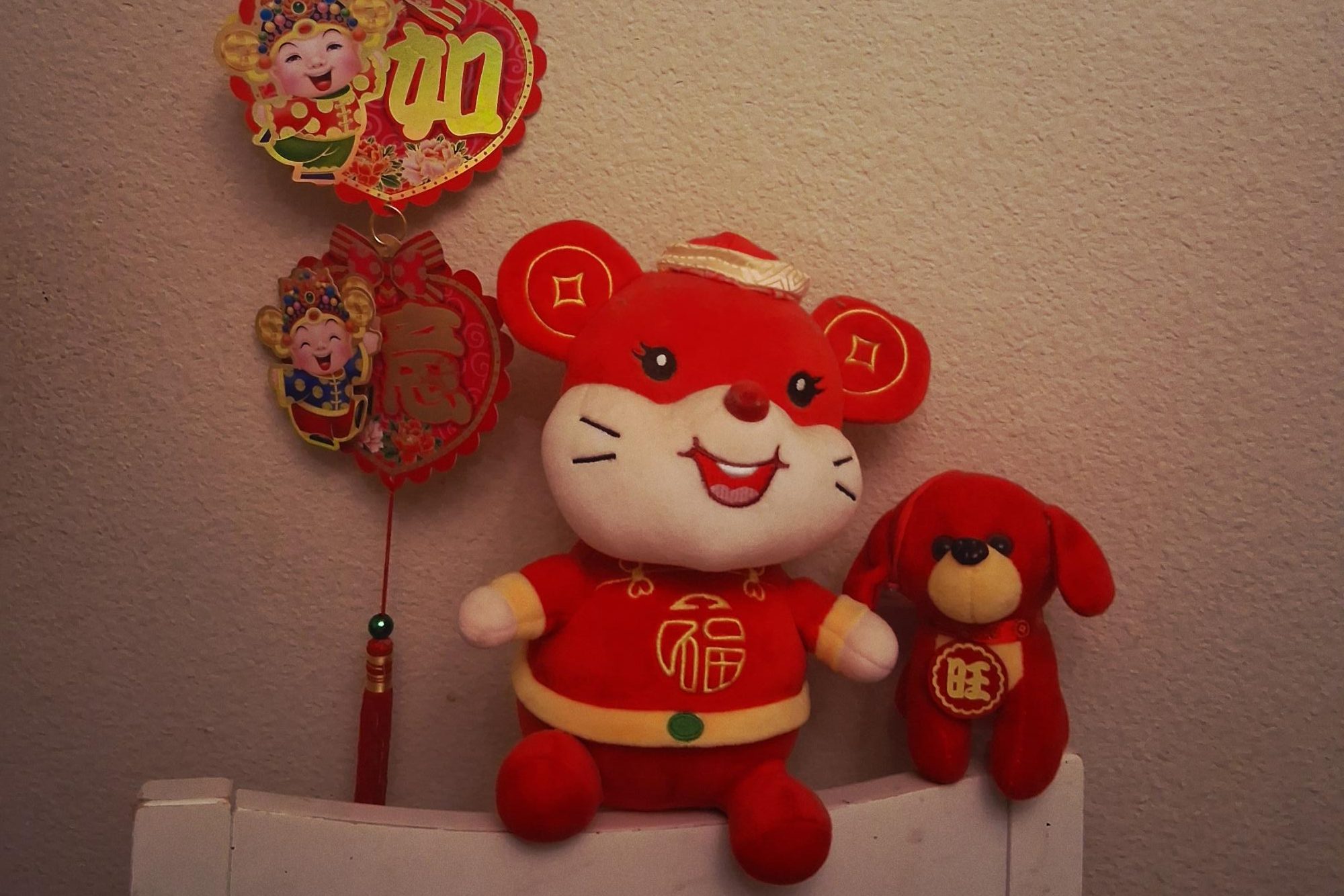
Chinese parents tell vivid stories of Chinese New Year celebrations, overflowing with sound from firecrackers and the rhythmic “yaohe” (shouts) of vendors; blinding color from red lanterns and clothing; scents from childhood street food staples and the rare, coveted meat dishes that served at the table’s centerpiece. They trekked to house after house, pulled along by entangling meal invitations across the sprawling family tree. When times were busy and difficult, the new year was for indulging in togetherness and treats, usually unaffordable. No matter where people were studying or working, they would begin a great migration back to hometowns and villages, like fish feeding back into a multi-generational stream, creating a travel rush called “chunyun.”
Our realities in the American suburbs could not be any quieter.
This Lunar New Year, which was recognized as a California state holiday in September of 2022, fell on a federal holiday. Last year, it was a school day. The two years before that were weekends. Four years ago, a school day again. While California allows absences for cultural observances, and some employees may take time off, the structural pressure of the education and labor systems mean that, realistically, few will choose to miss a test or work day. Young people studying or working far away from parents and relatives may experience this isolation the most, with no ability to make the trip home for a meal in late January or February.
Consequently, Asian American communities squeeze their holidays into the margins of American life. For many Chinese Americans, the multi-day celebration might look like a hot pot meal at the nearest HaiDiLao, a well-timed FaceTime call to relatives across the world or some words and wishes sowed for the next year, if the gap between a parent’s eight plus hour workday and child’s homework load allows. While observances may be more watered down worldwide due to general shifts of contemporary life, the diminishing festivities we see in America today are too extreme for that to be the only cause. For children of immigrant families who grow up away from their roots, unfamiliar and overlooked tradition contributes to a greater sense of insignificance. As one of my friends put it, “it never felt like I was celebrating the New Year personally … it’s never been a proper celebration — behaving like a slightly more special day.”
Lunar New Year is just one holiday out of many in South Korea, Vietnam, China and other countries across East and Southeast Asia, one that actually receives more semblance of cognizance than others. Even more so, other cultures also negotiate their special days around a Western calendar and experience waning celebrations of them. It is difficult to conclude if this is cultural erosion or natural evolution, and if we are doing enough by passing on customs to the best of our abilities.
San Diego is full of celebrations of diversity. Last week, some places held lion dances, parades, festivals and Lunar New Year activities. Students and community members often partake in events which showcase their own culture — clothing, the arts, food and more — to the public. However, for many who spent their formative years in America and witness increasingly diluted celebrations at home, these displays do not resonate, and instead exacerbate a deeper sense of removement from heritage. Sometimes, it is hard not to see them as spectacles put on for a watching audience, disconnected from lived experiences. When the only times for wearing traditional clothes or sharing an art form is on a stage, customs begin to feel like an illusion of inclusivity, a performance rather than a way of life, as if to say “please look at my culture and find it interesting.”
The modern Chinese American experience, if not all Asian American and expatriate experiences, is a perplexing contradiction of increased availability and visibility coupled with decreased depth and understanding.
Aesthetic inclusions are everywhere: cultural foods are a convenience and products or fashion borrow elements from diverse heritages. Every few months, a new Chinese song or dialog is a fleeting trend on social media. A dish, from soup dumplings and tanghulu (the same can be said for foods like fufu and egusi, balut, kimchi and birria tacos) is an eye-catching new exhibit in a food influencer’s spread. A foreign city or town somewhere is the new best place to travel to this summer. While these inclusions are usually positive or at the very least lack malicious intent, they are disorienting for kids who grew up with lunches labelled as “stinky” or “gross,” discriminatory bullying or comments, the pressure of being a “model minority,” proliferating hate crimes and a history of systemic scapegoating.
The weight of respecting context tends to take a backseat. In history classes, lectures span Eurocentric conflicts and monolithic empires in detail, but events like the Nanjing massacre and other brutalities in Asia and Southeast Asia during World War II might only get a very brief, albeit serious, mention. The “war” on Christmas seems like a relatively trivial issue when Christmas is a dominant period of American life that falls into a multi-week school break while other celebrations have never felt truly acknowledged. Worse, the West continues to misconstrue distinct identities. In perceiving Asian communities, it frequently blurs Chinese culture into that from Japan or Korea, a flattening that disregards the connections behind true similarities and differences and tends to only focus on major East-Asian countries, glossing over Southeast and South Asian identities.
Visibility is conditional and variable: the current of public opinion changes direction on a whim. Just years after the COVID-19 pandemic and spike in Asian hate, a survey from the Asian American Foundation finds that many Americans still feel like they do not belong, and that a quarter of Americans see Chinese Americans as a threat to U.S. society. For years on social media, people were quick to label any positive portrayal of China’s landscape, customs, society or development as communist propaganda. Now, it could be a “very Chinese time” in anybody’s life.
The cycle of compound, nuanced cultures being distilled into simplified, palatable and homogenous versions of themselves for the sake of mainstream traction is becoming a pattern. Much like previous cultures which gained widespread Western acceptance, especially in gastronomy and entertainment, being Chinese is flattened into one globally digestible aesthetic and lifestyle. The embrace of the aesthetic and lifestyle is a hollow, sanitized reception that scrubs away historical struggles of distinctive origins and diasporas.
Sometimes, expectation makes us feel like we should be grateful for the Diversity, Equity and Inclusion checkmark. We should be grateful for the mere and brief acknowledgement that some of our holidays exist. We should be grateful for how, at the very least, identifying with our ethnic roots feels safer than it used to. Perhaps the quieter observance of a celebration is a natural mechanism of syncretism and assimilation. But this is proof that while there are voices countering the long-held identity of America as a “melting pot” because it incorrectly implies blending into a uniform population, little has changed about reception of other cultures to justify this relabeling.
America should no longer be a society that seasons itself with the flavors of other cultures without dedicating space to the proper foundations and staples necessary for a true multicultural nation. Accepting a diluted Lunar New Year means accepting that our holidays are only worth recognizing if they fit into the spare time not dedicated to being American, into a non-threatening expression limited in breadth and depth. It means accepting that it is not worth passing our traditions to future generations, not worth fighting for them to feel the significance of their identity despite being geographically separated from it. If we continue to treat heritage as a garnish, something only to be acknowledged through a Western lens or in spare time, we will never reach the potential of being a mixed nation, and we will never build a mosaic of true diversity.