
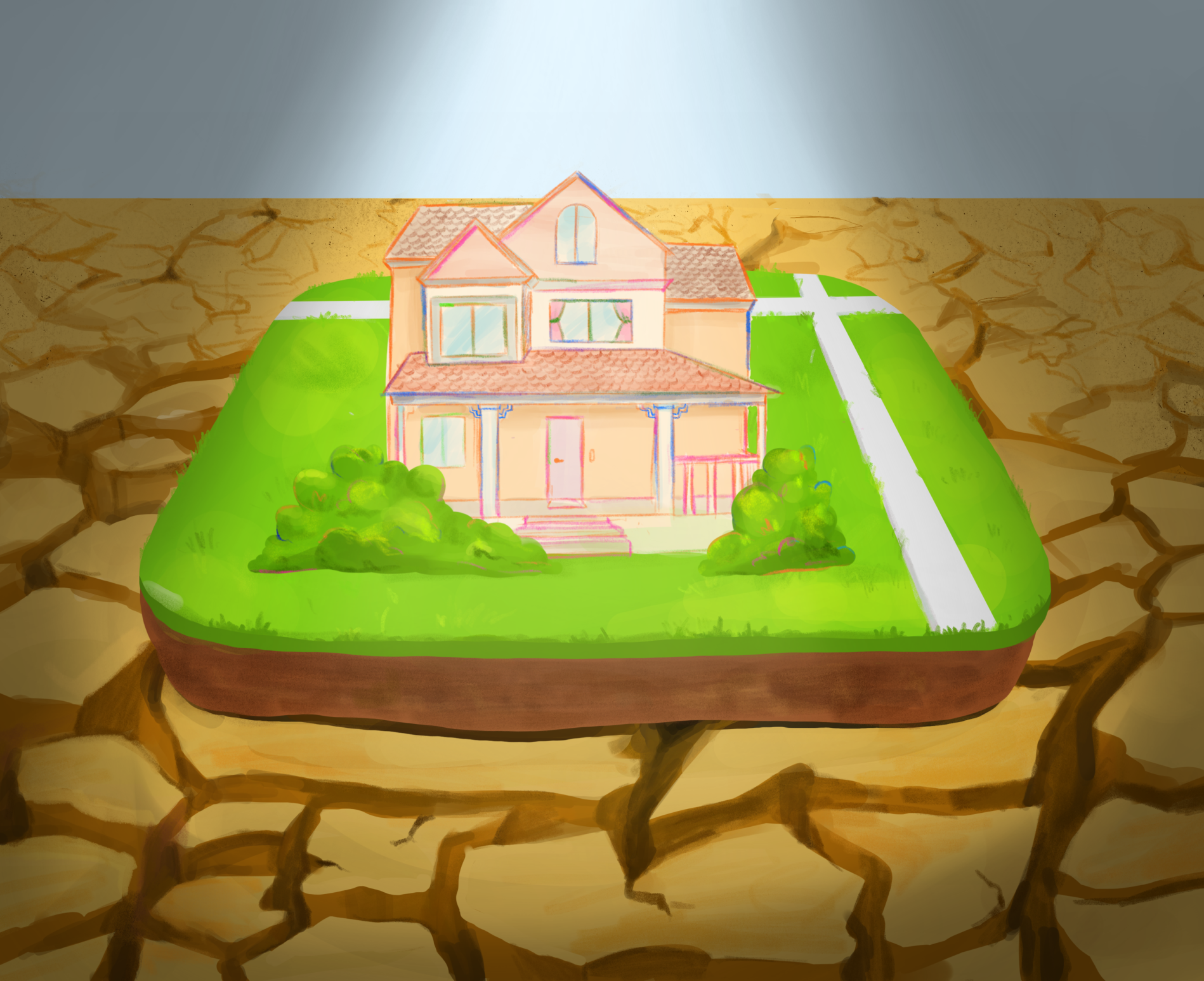
At 5 a.m., suburban household sprinklers whir to life. While the community is still asleep, lawns are swiftly watered and runoff trickles down storm drains, maintaining the crisp front yards iconic to suburban life.
We rarely give our lawns deeper thought than, perhaps, to mow it on a Sunday morning, admire the neatness of the edges while parking in the driveway or complain about the neighbor’s overgrown weeds. But is it not strange? Rectangular pieces of manicured greenery on display in front of each house, adorned by a mailbox, picket fence or trimmed bushes — somehow, this is the standard. We misuse gallons of valuable water every week and spend excessive time and money leafblowing or mowing away. Suburban landscaping culture has been painfully inefficient for far too long. Our obsession with our front yards is aggravating environmental degradation, following outdated ideas of beauty and representative of micromanaged conformity.
Lawn care activities, which around half of households in the United States invest in, have unnecessarily intensified the current climate crisis. 9 billion gallons of water are used to irrigate lawns each day, nearly a third of all residential water use. According to the Population Media Center, this is especially damaging for the “arid regions [of] southwestern United States,” potentially worsening water scarcity in areas like San Diego, where water supply is largely imported.
But suburban landscaping extends beyond irresponsible irrigation. Toxins from pesticides and fertilizers leach into soil and pollute local waterways. Leafblowers cause noise pollution. Native plants are uprooted and replaced by invasive species, such as fountain grass or feathertop grass, contributing to the loss of local biodiversity. Gas-powered lawn equipment can emit as much carbon dioxide per hour as some cars driving hundreds of miles. In 2020 alone, they released a total of more than 30 million tons, which is more pollution than “the tailpipes of 6.6 million cars over the course of a year,” according to Environment America. Sustaining these landscaping practices has cost us too much for too long, all while the global climate reaches tipping points.
It is true that many have already switched to artificial grass, especially in drought-prone areas. However, fake grass is made from polyethylene, which leads to microplastic pollution and easily overheats, becoming a potential hazard for local ecosystems, pets and children. Installing synthetic grass also reduces the environmental productivity of that area, even if it is only a few square feet. Less atmospheric carbon is absorbed, soil organisms can no longer burrow and sheets of plastic block the cycling of organic matter. This harms entire ecosystems from the bottom up.
Despite all this, HoAs across the nation enforce “proper” landscaping, policing the way homes are decorated. Communities are expected to look uniform and tidy to ensure property value. Fences, ornaments, patios — any changes to the basic appearance of the house — are strictly regulated. In some communities, grass is even measured and required to be a certain length. Even something as trivial as paint color is limited to give the neighborhood a cohesive palette. Over time, we internalize that each suburban house should look a certain way. We neglect researching which plants would be the most eco-friendly or how our homes can easily become more sustainable. We are discouraged from customizing our default copy of the mass-produced suburban home into our own personalized space. We accept lawns as the norm, and we are taught to cultivate them without complaint.
Why do we continue to bear the burden of lawns? When, where and why did this standard arise? In truth, they have lost significance, becoming a mere remnant of history.
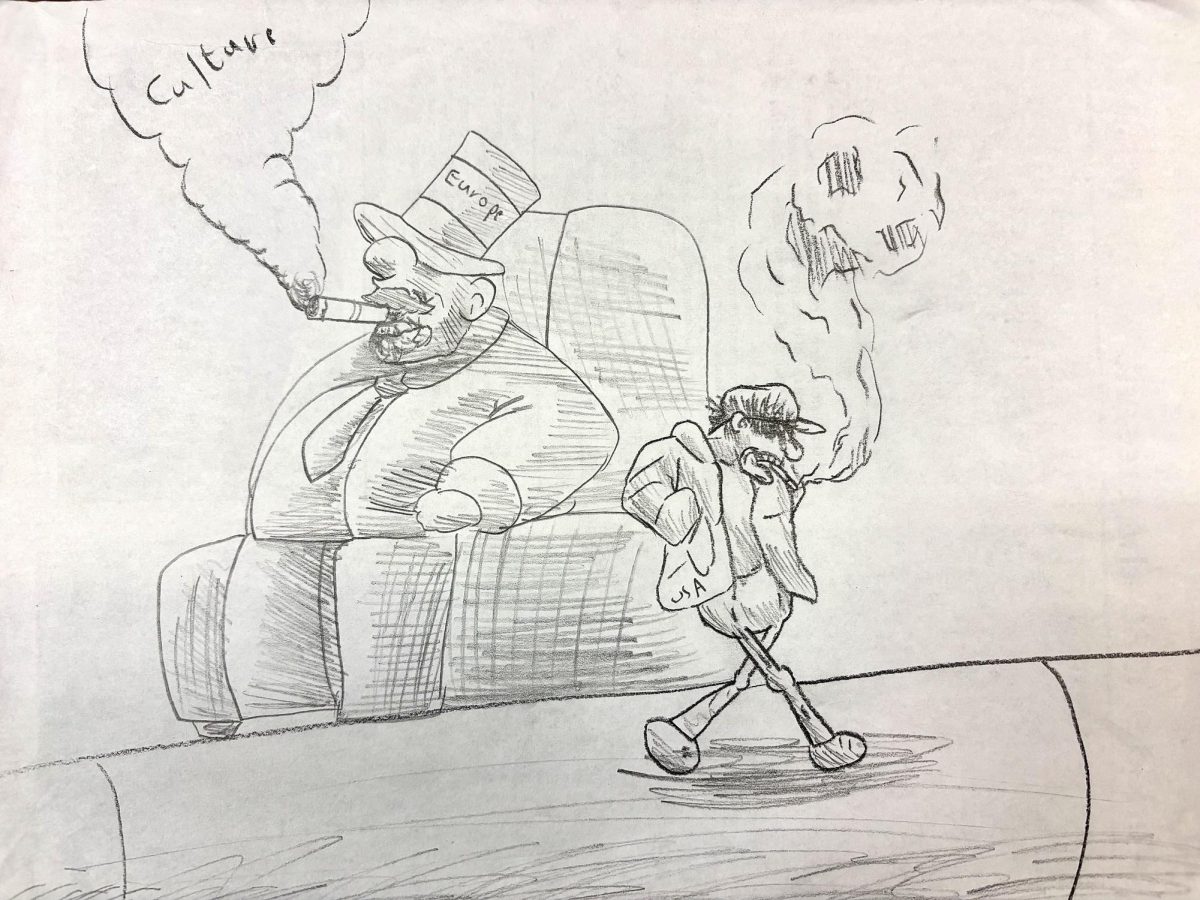
Landscaping practices are rooted in 17th century European aristocrat culture. Well-groomed grounds were a status symbol; only the wealthiest nobles could afford to hire gardeners. Common people, on the other hand, used their land for crops or livestock. Lawns embody unpractical, man-made beauty, a way for the wealthy to separate themselves from the working class.
Those in the United States soon followed the styles of European manors, bringing lawns to America. Later in the 19th and 20th centuries, as suburbs emerged across the country, many envisioned idyllic neighborhoods as a sort of paradise for domestic life. The pioneer of this suburban design was Frederick Law Olmsted, commonly known as the father of American landscape architecture. Olmsted believed that lawns should not be exclusive to wealthy landowners’ private gardens, but accessible for middle class citizens living in the suburbs. Thus, lawns became democratised. They became central to the image of a utopian domestic life, aristocratic extravagance turned mundane.
Now, the aesthetics of neighborhood landscaping are largely outdated. Expansive parklands with pruned bushes are mostly admired at places like the Palace of Versailles, and the days of overly-romanticized, American-Dream-type family life are dimming away. Stripped of its past glory, only detriments remain.
It is time to shift the aesthetic of the suburbs. Many communities already minimize lawn space, opting for clusters of bushes, succulents or stone walkways. But we are missing out on the plentiful resources that have thrived in our local communities for millennia. Instead of clinging to an unsustainable vision for the suburbs, we should embrace the beauty of the land long before industrial civilization. In our local chaparral biome, there are so many diverse native plants to choose from: adorn sidewalks with white sage; let verdant bushes of laurel sumac grow full and fruitful; fill empty spaces with lemonade berry shrubs. San Diego’s natural vegetation is beautiful and resilient, adapted to dry summers and mild winters. Lawns could never compete.