

The U.S. Department of Education recently defined certain degree programs as “professional” in relation to education and labor market outcomes. Degrees labeled “professional” will gain eligibility for increased federal loans of $50,000 per year and $200,000 in total borrowing, while unlabeled professions receive a loan cap of $100,000 total.
As part of the Big Beautiful Bill, degrees that are not labeled as “professional,” such as nursing, teaching and electrical engineering, are receiving loan caps in order to hopefully force universities to reduce their heavy costs. Majors classified as professional include medicine, law, pharmacy, dentistry, theology and more.
This distinction is misleading and harmful. Under these classifications, nursing, teaching and electrical engineering are not considered “professional,” while theology is. This distinction makes little sense economically and socially. Electrical engineering is one the highest-paying and most in-demand careers in the country. Nursing and teaching are foundational to public health and education systems, systems that uphold a prosperous society and democracy itself. Yet, these degrees are dismissed, while theology, a field with far fewer direct societal impacts, is elevated. Inconsistency in their categorization reflects that the issue is not about income or utility, but perception.
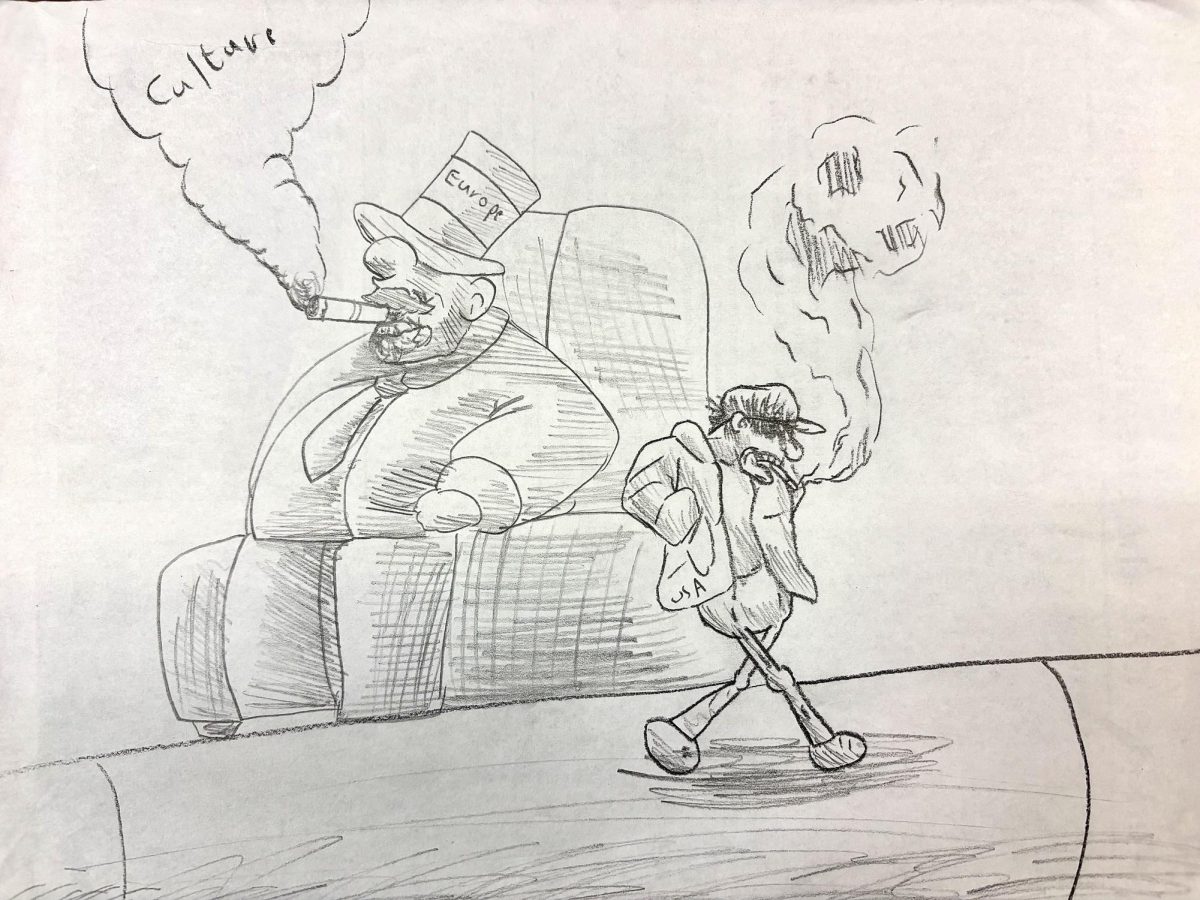
That perception is cultural. Categorizing fields does not reflect their value to society; instead, it reflects outdated assumptions about prestige, gender and worth. Many of the degrees deemed unprofessional are held by women. Teaching and nursing are female-dominated fields that are historically undervalued despite their importance. According to National Nurses United, “Women account for 88% of nurse practitioners, 84% of students in Master of Social Work (MSW) Programs, 70% of community and social service workers and between 61-97% of preschool through high school teachers.” This pattern reflects persistent patriarchy, as our society places less emphasis on care-oriented professions.
When core majors are receiving less financial aid, fewer people have opportunities to access them. Over time, this leads to shortages in essential fields and reduced opportunities, especially those from disadvantaged backgrounds. If these professions continue to be overlooked, women may face fewer vital career options in female-dominated fields, reshaping the workforce and higher education in ways that deepen inequality.
Financial realities worsen this issue. A college education costs an average of $105,584 over four years, making it difficult for an average family to afford an undergraduate degree. Therefore, this makes graduate education financially unrealistic for many. This disproportionately affects students who lack college funds but may want to attend graduate school for a higher income career, limiting upward mobility and growing socioeconomic divides.
The Department of Education appears to have anticipated public backlash, attempting to justify these classifications by referencing isolated examples of tuition reductions as a result of student loan caps. However, economic landscapes of higher education have shifted dramatically since the 1960s. Using outdated definitions from legislation written nearly sixty years ago ignores the realities of today’s workforce, cost of living and regressive cultural ideas.
At the same time, universities are facing budget cuts. Nursing programs, which require extensive clinical hours and research training, are expensive to operate. Colleges heavily rely on tuition and state incentives to function, so these cuts only increase pressure on students to pay heavy costs and colleges may be more inclined to accept students that pay full tuition.
If the goal was to reduce student debt and make education more accessible, this approach does the opposite. Devaluing essential degrees stops students from lower socioeconomic backgrounds from entering stable, necessary professions, while higher education shifts towards wealthier demographics. When combined with university budget cuts, results are less like reform and more like exclusion.
This debate is not just about which degrees deserve financial aid; it is about whether we, as a society, value the people who educate our society’s children, care for the sick and keep essential systems running. Instead of labeling careers as unprofessional, efforts should focus on fair pay, adequate funding and genuine support for students pursuing these paths. The future workforce depends on it.