
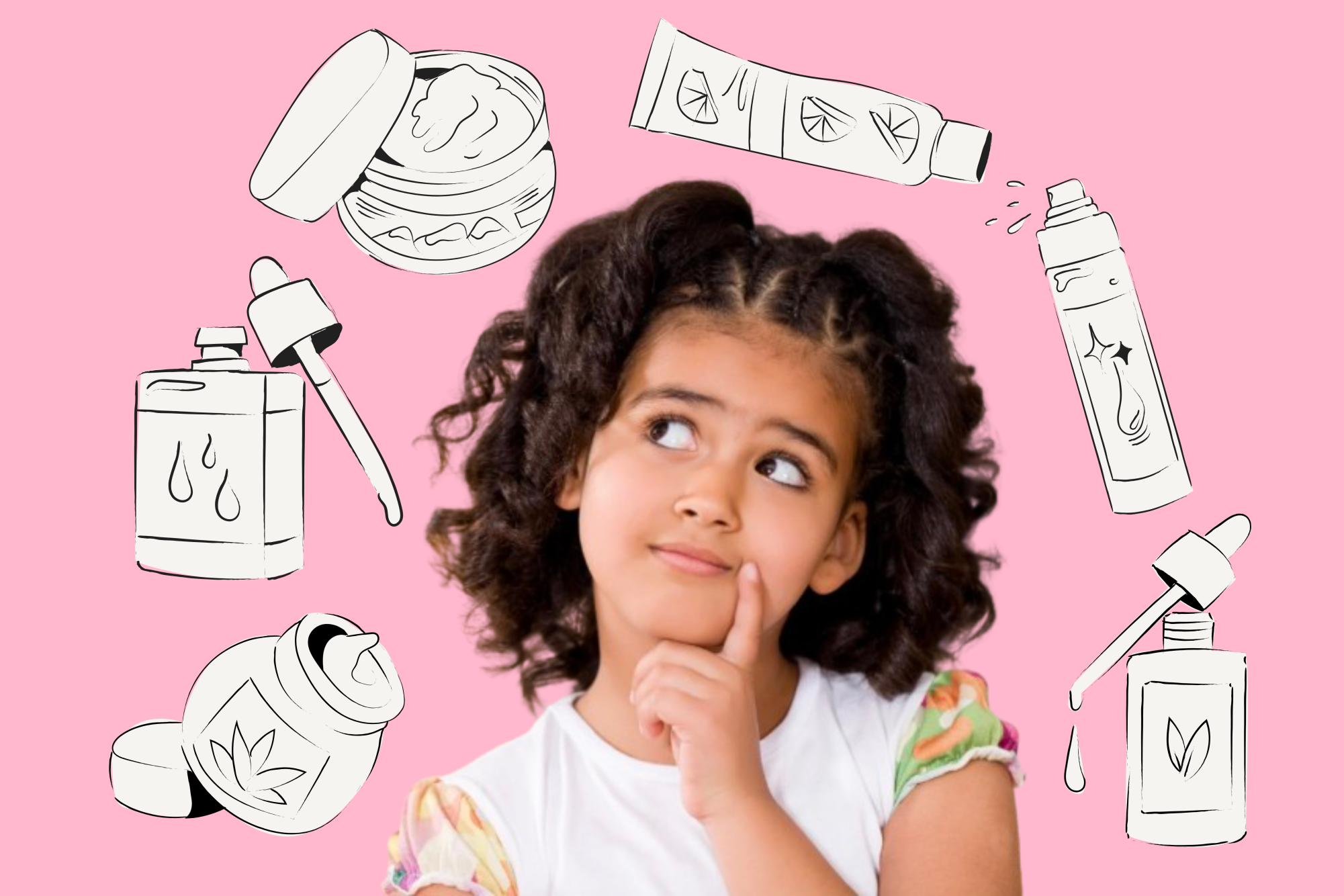
As you doom scroll through TikTok videos, you come across another mindless get-ready-with-me (GRWM) video, only this time, the person on your screen is not a beauty influencer but a child. Now, children apply serums, use headbands and mimic influencers. The only difference? A much younger face.
During the 2022 to 2023 rise of TikTok GRWM videos, the clips formulated their own category in the social media world. For many younger siblings, beauty inspiration comes from older siblings who tend to be a guiding light. For other children, it is the endless consumption of social media and watching GRWMs that persuades them to start using skincare. On social media, influencers make GRWMs look like a universal, essential need. Because of this intense focus on skincare, many younger fans want to use similar products in an attempt to connect or relate to their favorite influencers, becoming part of a growing concern that today’s children are maturing too quickly.
Not only are skin care items often luxuries, but products are typically made for adults or teenagers with more mature skin. According to the BBC, the only necessary products younger children need are moisturizer and sunscreen. When children use products containing ingredients like vitamin C or retinol, their skin is susceptible to damage because children’s skin does not need these harsh ingredients. Both vitamin C and retinol are potentially harmful to children’s skin because they can damage the skin barrier and cause irritation, as these ingredients are primarily used for anti-aging purposes. It does not make sense for people to spend money on these luxury skincare products, as children using anti-aging chemicals will likely damage their skin.
It does not help that in recent years, brands have begun to produce skincare items directed to children when it is completely unnecessary. Companies like rini are made with a target audience of children, labeling products as “gentle” and “trustworthy.” From face masks to cleansers, rini carries all the same types of products that influencers use in videos. These companies are avoidant of the fact that these products, while claiming to be safe, are not only unnecessary but at times create an unhealthy fixation on perfect skin.
For most children, skin blemishes or imperfections are uncommon as kids have more collagen and a pervious skin barrier. The idea of kid-influencers worried about “fixing” their skin sends harmful messages to other children at an extremely young age. Normalizing beauty standards to kids who have not even experienced childhood creates an unhealthy environment that results in an obsession over their appearances to an extreme level.
Overall, this trend is both unnecessary and unhealthy for children. Through marketing and social media, society has pushed children to mature quicker — in this case, through skincare. As a society, we must reconsider what self-care means, as the idea of nurturing oneself has become a publicized and status-filled activity. With each year passing, children have consistently matured at earlier ages. This leaves parents in a difficult position, whether to allow their children to have similar experiences to their peers or to hold them back from the societal norms of their generation. Children do not need a five-step skincare routine; they need an environment that lets them enjoy and appreciate childhood rather than cutting it short.