

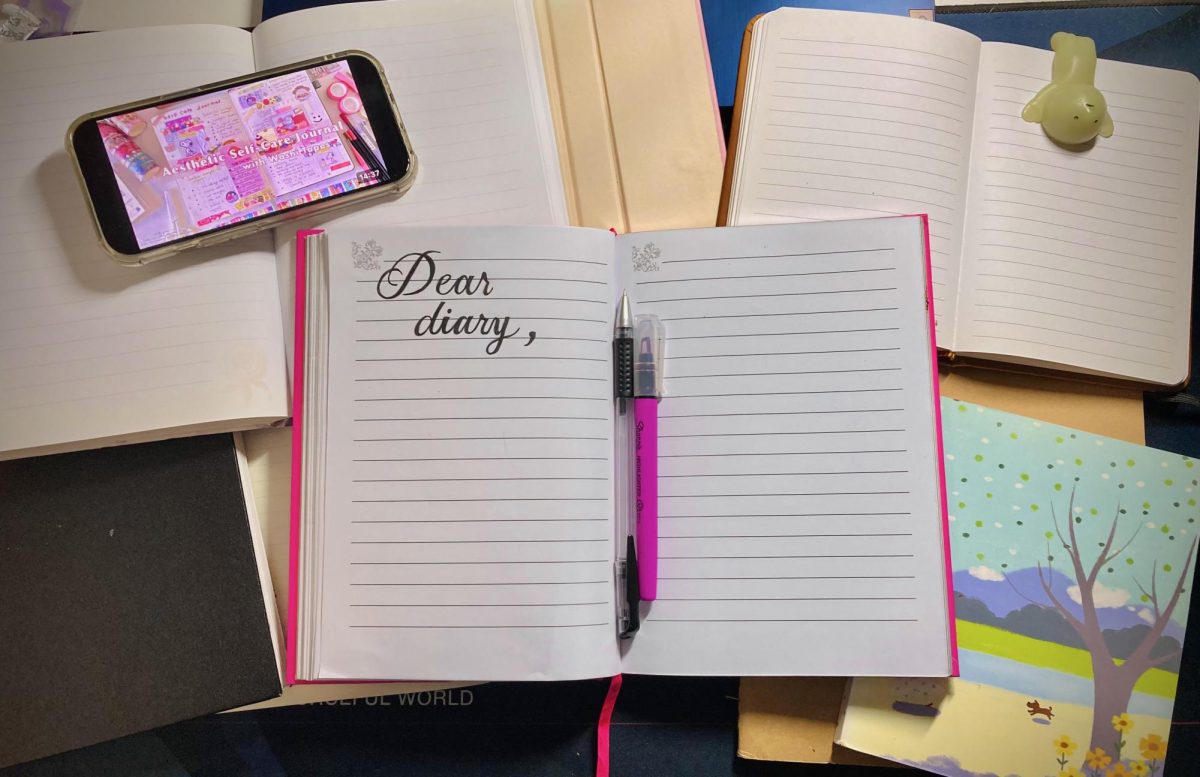
“Dear diary,” and that’s where my annual journal entries would end.
Since before I could properly spell my name, I have been obsessed with the concept of keeping a physical log of my life — any way to keep track of where I was and where I wanted to go. The worst part is that I just could not do it.
From my Mattel Password Journal, which I lost in 2015, to my scattered notes app today, my life is full of change that I am unable to catalog. When I was little, I would be so excited to start a new journal, but I could only ever get one page in before setting it aside and forgetting its existence. Journaling became a hassle, not an outlet; I felt like I was performing for an unknown audience. Even in my own diary, I struggled to be honest. My inability to document my life accurately in writing haunts me; why do I struggle to capture it? Why can I not write what I am thinking?
Journaling is touted as a beautiful, expressive way to de-stress, but honestly, it only heightens my anxiety. Even in a diary where I am allowed to be vulnerable and introspective, I am trapped by my need to perform. The pressure to produce beautiful prose or Pulitzer-level essays hinders my authenticity; I even catch myself erasing parts of an entry because it’s supposed to look a certain way.
Journaling is intended as a powerful tool for reflecting on the chaos of life, helping you process overwhelming emotions, thoughts and events and transform them into an understandable, structured narrative. It acts as a “pause button,” giving you time to process what is going on in your life and step away from your stressors while developing a clearer perspective. This, in turn, can improve mental well-being and foster a sense of control.
But this is not just a me-problem. The culture surrounding journaling, especially with today’s evolving social media influence has taken away the safe space journaling is supposed to produce.
Unfortunately, life is not always a tidy narrative that can be easily categorized. Still, when I see people on social media with their put-together lives, even if it is just a performance of their own, I forget this. This forges unachievable goals in my mind, and my attempts to jot down quick thoughts do not meet them. As more abandoned journals collect dust in my room, I become embarrassed by my failure. The need to be perfect is leeching into other, private aspects of my life — even my journal, or lack thereof.
The struggle to capture the messy, complex flow of life within neat little entries is ironically taking me away from living in the moment. Desiring to capture a moment based on someone else’s standards perfectly is sacrificing the lived moment for a potential future memory.
Social media has skewed perceptions of journaling and self-care. Ignoring the curated lives seen online to focus on personal and unique experiences is necessary; everyone’s journey is different, and journaling should reflect that individuality.
This is entirely the opposite of what journaling should be. At some point, journaling shifted from an escape from reality to a performative facade that ostracizes people who aren’t perfect. Journaling should be messy; people should prioritize free expression over perfection. Dirty, raw feelings captured on a page are often more meaningful than well-crafted prose.
In light of recent conversations surrounding mental health, it feels essential to reclaim journaling as a raw and unfiltered practice. We should focus on documenting our most genuine emotions: joy, sadness, confusion and everything in between. These imperfect reflections can serve as a reminder of our human experiences, inspiring connection rather than comparison.
Another element to consider is the therapeutic potential of allowing yourself to write without judgment. When I write while feeling overwhelmed, words flow freely if I let go of expectations.” Instead of a polished, finished product, perhaps writing my true stream-of-consciousness helps liberate my thoughts. Engaging in this process may ultimately reveal aspects of my life I have been hesitant to confront, providing insight and clarity that would not emerge from a meticulously crafted entry.
Ultimately, journaling should be about the journey, not the destination. Embracing the messiness of our thoughts can lead to deeper self-discovery and acceptance. In place of chasing a specific format or aesthetic, it’s time we redefine what it means to journal.
As we reflect on journaling, we should prioritize authenticity over perfection. Instead of letting societal pressures dictate our approach, we can carve out a space for personal reflection, allowing our journals to become true representations of our lived experiences. Now, more than ever, that feels like the kind of expression we need, not just for ourselves, but for each other.





Claire Zhou • Dec 5, 2025 at 7:50 pm
So proud of this one!
Viktoria Kiss • Dec 5, 2025 at 11:52 am
This is very well written and realistic, Shayna! Great piece