

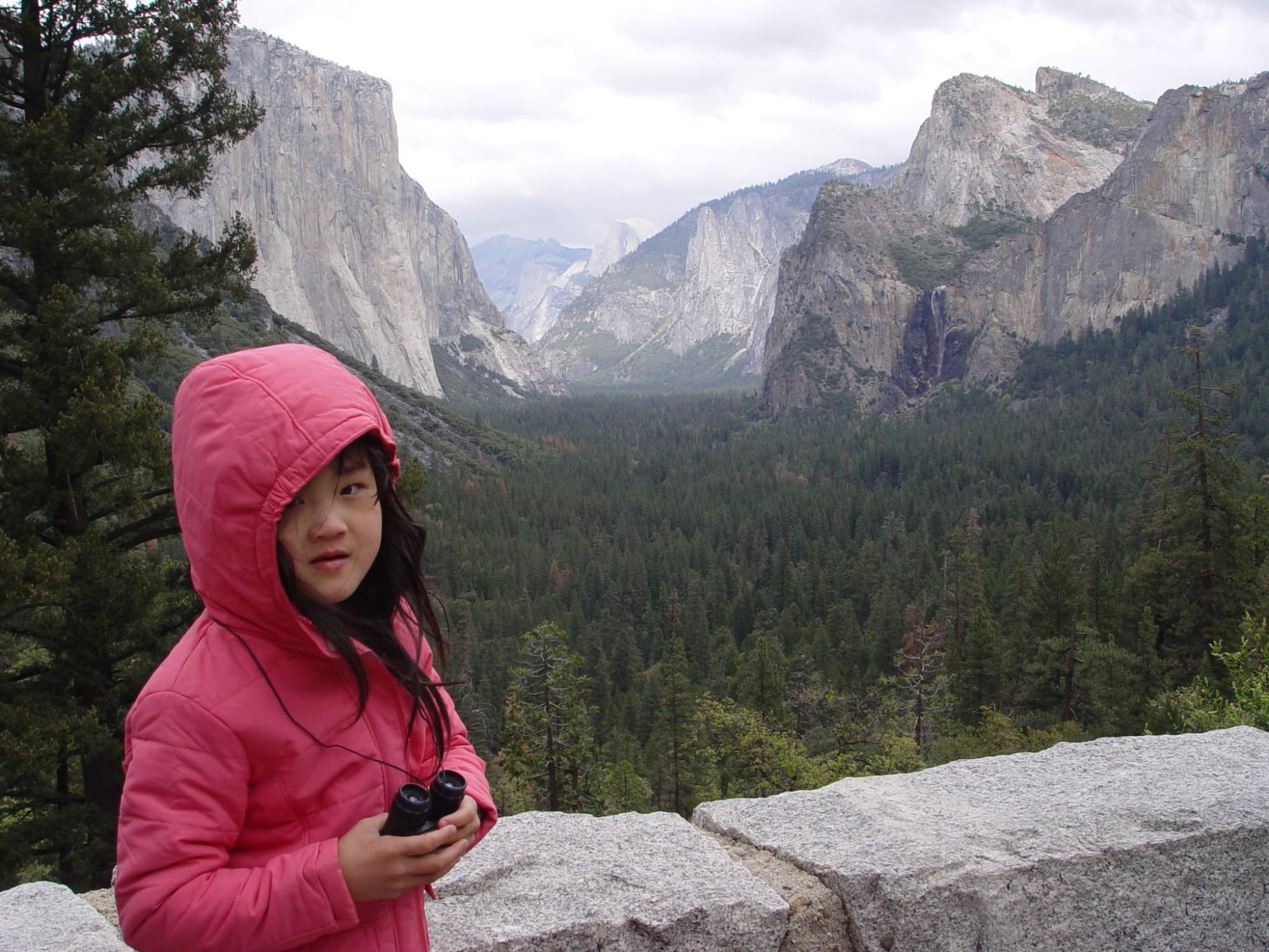
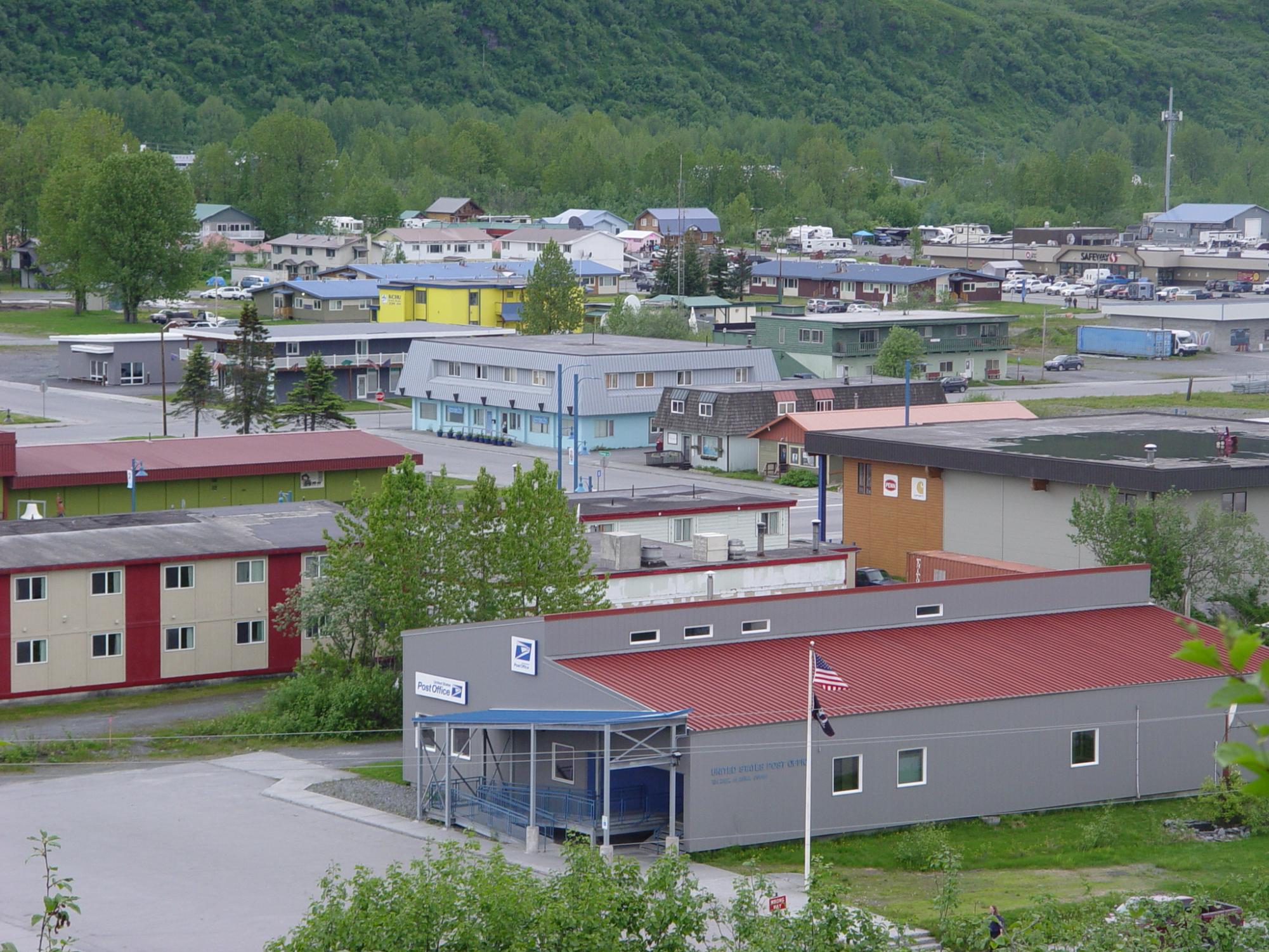
“I have outwalked the furthest city light.” — Robert Frost
The sidewalk here is speckled, cracks spaced congruently. Between each, I must not take an odd number of steps, and so, in transit, I watch the lines slip backwards each time my foot touches the ground. From this point, it is all uphill; it has been uphill for a while.
When deadlines are demanding, hunched over my desk or sprawled across the floor, I finish days’ worth of responsibilities in advance so that I might walk aimlessly for a while. My peripheral vision is unconfined by the borders of a screen or jacket hood. The road in front of me widens.
I tread across places carved into existence with an engineer’s precision and ones that could be recreated with a few intentional strokes of my grandfather’s paintbrush. Cities with no ground left untouched and reserves with acres of pristine wilderness. People, birds and cars swarm up a cacophony of chaos, but as they travel from vertex to vertex, order is born from emergent patterns.
“I love you without knowing how or when this world / will end … I love you like this because we’ll only survive / in the nitrogen rich compost of our embrace, / so close that your emissions of carbon are mine, / so close that your sea rises with my heat.” — Craig Santos Perez
When I was a toddler, my dad carried me on his shoulders every weekend up the mountain at the Torrey Pines State Natural Reserve. On my own two feet, I find our favorite place where, on one of the side trails, you turn a corner, and the entire ocean unfolds in front of you, a hundred scalloped white waves sweeping towards and clawing at the shore. He pulls me up this mountain on my worst days, jogs up the last stretch with me on my best and as we stand, cradled by blue above and blue below, unencumbered beneath the sea breeze, I tell him my concerns.
I am five and my mom is cheering me up a mountain towards a double rainbow waterfall. I am ten and the top of the world is “just a few more minutes” away. I am fifteen and the snow-white landscape is melting to gray. I am so worried, I tell them on occasion, I am so worried that the world will burn up before my children get to see it and I don’t know what to do. On days when my futile anxieties are strongest, I see the apocalypse every way I turn.
Retreat is safety; when I am most overwhelmed by the need to “get somewhere,” I can lie unmoving on the floor for hours. Time and memory become a nonlinear inception, weeks collapsing into a day, a day stretching to span a week. My happiness is situationally dictated. I feel less and less like I can afford to not know things, to change my mind about previous beliefs. I must be singular and exceptional; I must know if and how I will transform the places I reach. In Iowa City, I learned about the flâneur, which embodies the concept of wandering, specifically in an urban setting, without purpose. More contemporary is cyberflâneurism, which involves aimlessly traversing the internet’s infinite space. The flâneur is a controversial figure, often described ambivalently as lazy or too idle, but contributes an irreplaceable sentiment to historical and modern culture.
What I like most about the flâneur and its counterpart flânerie is how they acknowledge the world’s vastness and how little we experience in an instant. To us, these instances are amplified out of proportion. On walks, I must keep a general motion but can set my own pace. I can pause at an intersection, admire a bakery display window that catches my eye; still, time maintains its steady flow, and eventually I am lulled back into motion. So, though I may walk in any direction and retrace my footsteps whichever way I please, time insists that I will revisit old sights as a new me, and the place, too, will have changed. I cannot relive a second identical to the person I was before.
This notion is comforting, because I am clueless about the big-picture trajectory of my life: the decisions I must make to balance all the voices in my life; the possibly problematic compromises between my moral beliefs and a stable future. When I stroll aimlessly, I like to take the scenic route, find comfort in the myriad images I see, and treasure the dried-up flowers and bottle caps I pick up along the way. At any point, I am intrinsically driven to continue down a certain path, to cross the street, to follow a captivating scent or sound. People have explained this feeling to me in different ways, and it boils down to this: if we believe that this is our only life — or at least the only one we will remember — everything is significant, but from moment to moment, nothing is that serious.
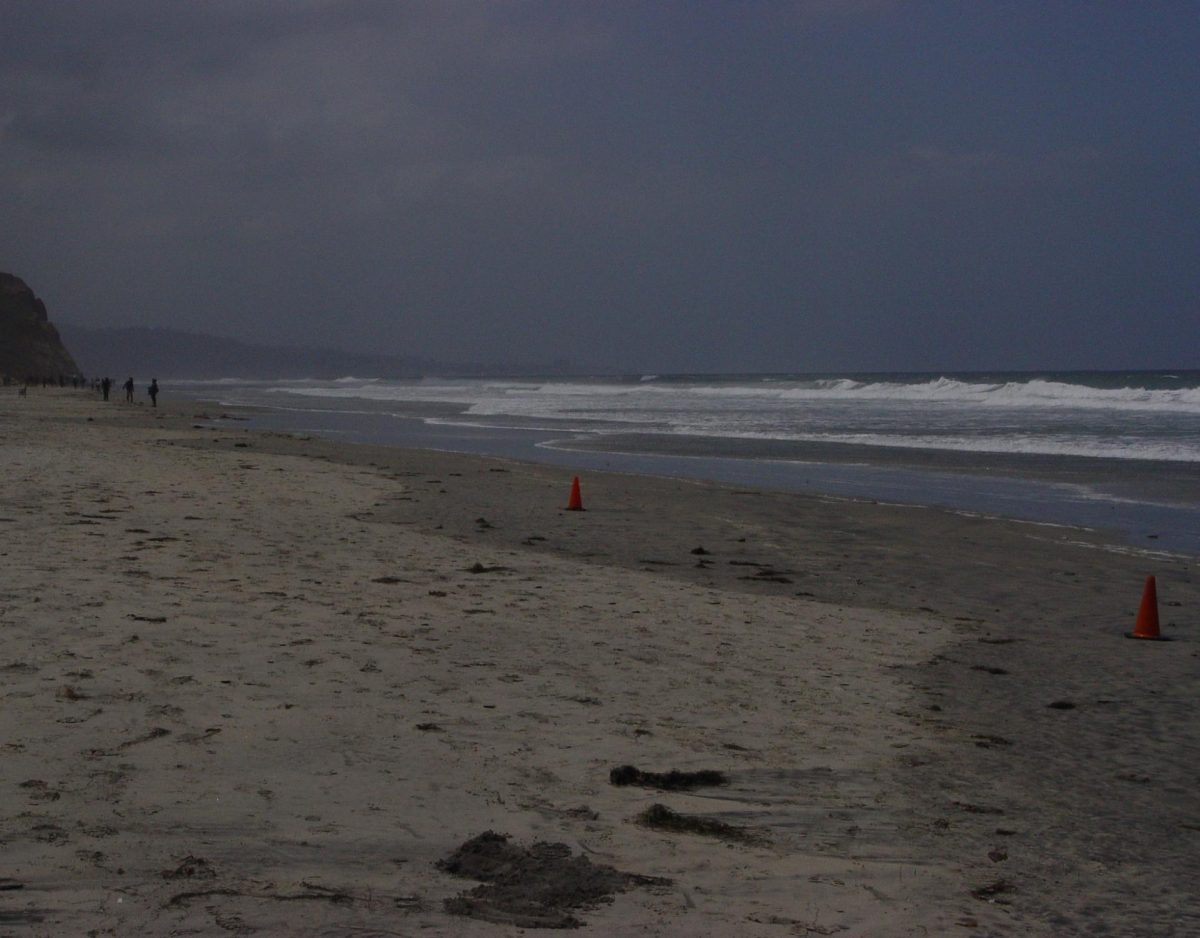
“I walk among them but none of them are noticing.” — Sylvia Plath
Sometimes I like to float through these places like a specter. I like to let the sounds and colors phase through my body. In daily interactions, I am hyperaware of how I — often unsuccessfully — alter my behavior to come off a certain way to various collectives or individuals. However, when this grows tiring, especially in large groups, I grow silent. I am content with the act of observing, a fly on the wall to what is happening.
In any case, we change our behavior when observed, according to the Hawthorne effect, which draws a satisfying parallel with the quantum observer effect. Depending on the observer, the observed and the relationship between them, we may be influenced more or less by another’s gaze. For what, to me, seems like an extremely sparse group of people, no gaze influences their behavior. In line with the gaze’s pressure is the persistent need for validation: to have a reason behind each action we take. Some argue that this is necessary for society to function, but it is hindering in extremity. Since we walk as a means of transportation, to walk without a destination or time to spare feels like a rebellion. Whether or not it exists, I feel closest to free will.
“Look, and look again. / This world is not just a little thrill for your eyes.” — Mary Oliver
In “When You Reach Me” by Rebecca Stead, Miranda Sinclair’s mom says that we walk through the world with a veil in front of our faces and the world is “kind of blurry, and we like it that way.” But sometimes, the corner of that veil lifts and we “see the world as it really is” for just a little bit, “all the beauty, and cruelty, and sadness, and love. But mostly we are happy not to.” My mom’s veil lifted when I sat down halfway through our nighttime walk. She let me lay in her lap on the cold sidewalk and point out constellations without once asking if I had unfinished work. Stead writes that when we learn to lift the veil ourselves, we no longer depend on the wind.
“There will be time, there will be time / To prepare a face to meet the faces that you meet.” — T.S. Eliot
In middle-of-nowhere, Georgia, we try to get to the Korean BBQ store. It is our third time taking the few-blocks walk. G and I stop to buy felted chickens from a mother and daughter at the craft market and after a while, everyone goes on. “They’re leaving,” I say, maybe a little agitated, but G doesn’t appear to care. We take our time paying and talk to the pair about their business and we eventually still make it to lunch.
B and D and I are leaving the Iowa Prairie Lights Bookshop when they steer me towards the old man on the street corner with a wagon full of poetry. And he is saying something great as the lights of chain stores and restaurant fires flare in the night. He is showing us the book in his hand and coming off wrong sometimes but we are still listening. Mid-passage, our friend who grew up with an unsafe downtown thinks we are in trouble, makes some excuse and pulls us away.
In the San Diego airport rush, I drop my phone and a stranger picks it up. We have the same flight, but I live where she is leaving and she lives where I am going. As we speed walk to the terminal, unecessary since our flight boards in forty minutes, I ask her about places I might stop by while I am there. She and her husband watch my luggage as I go to the bathroom, even though later I find out that one should never watch a stranger’s luggage at the airport.
Before Admit Weekend opening ceremony, I want to see the campus art museum. Pulling away from the already-growing queue, a security personnel — who’s been pointing in one direction and repeating “ceremony that way” for a long time — stops me, annoyed, to say that the “opening ceremony is right there, that way.” I tell him I want to see the arts center and he becomes a man revived. “That’s the best place on campus,” he says. I ask him if I should join the line instead and he waves me off, spouting directions that I forget immediately. He re-iterates, simplifying: “you’ll see a big ‘YO’ on the sidewalk, it’s literally saying ‘yo!’,” or something like that. “You can’t miss it.”
Maybe I would sell my soul for a drink on any day. During free drink night at a student-run cafe I walk slowly as the line crawls, pausing to doodle on the community board, and one of the baristas manning the cash register mistakes me for someone she’s met before. I understand why the line has been moving so slowly when we ease into conversation. By the end I find myself promising her I will commit to this school and work at the cafe in the fall, which she jokes is in return for a strawberry matcha.
Street interviewing with Z at Balboa Park, we approach residents with “we’re student reporters” and I remember how much I love this label. With it, I approach strangers with places to be and they propose “let’s walk and talk.” I ask if I can record, fumbling with my phone and they are okay with my inelegance, probably since “student” precedes reporter. As we get past logistics, the “yeahs” turn into “great questions” and they let spill the wisest, most genuine perspectives I never heard before while half out of breath.
Your donation will support the student journalists of Torrey Pines High School. Your contribution will allow us to purchase equipment and cover our annual website hosting costs.


Zhixin Chen • May 27, 2026 at 5:05 pm
whimsical thoughts coming from such a beautiful heart. i’ll miss you dearly sarina
Gabi • May 26, 2026 at 7:33 pm
u da real shakespeare, Sarina. i will miss your pensiveness and dry humor greatly