

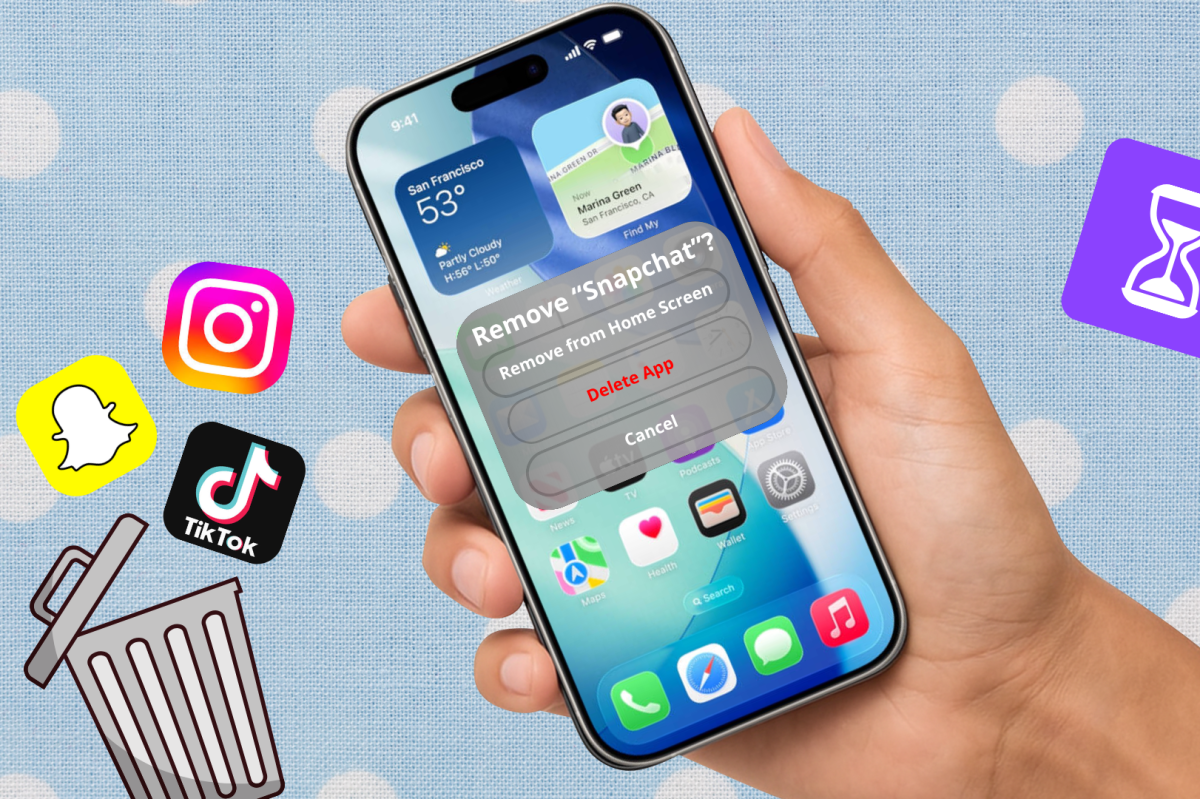
I hate being on my phone; I am always on my phone. This paradox traps me in a never-ending cycle of screen time, stress and regret.
Growing up in this new age of online interconnectedness, having a phone is a necessity, but being on my phone drains me mentally. My phone usage is almost compulsive, causing stress and headaches while keeping me from being present. Addictive scrolling apps and dopamine rushes from notifications keep me hooked, even with a self-inflicted time limit and other apps to block my usage. I feel like I am sucked into a never-ending pit of blue light and brain rot, like I become a dissociated zombie whose life depends on moving my thumb up and down to the next video or double-tapping and commenting a soulless compliment on yet another post.
Even when I am outside spending time with my friends or studying in a cafe, my phone is haunting me. It weighs me down into a void of brain fog like a brick in my pocket, slowly drowning me. When my procrastination brings me two minutes away from the 11:59 p.m. deadline, I chuck my phone across the room or hide it somewhere I will forget. I hate it. It feels like no matter how much screen time I have, my phone usage is excessive and pulls me away from real-world connections, replacing them with bland online interactions.
I have had a phone since fifth grade, but the initial allure was not scrolling apps; it was social status. Slowly, as the kids around me held phones, it became a need, not a want, to conform to societal pressures and feel “in.” Communication with my friends drifted from FaceTime and messages to Snapchat and TikTok, solidifying social media apps’ prominence in my life. In my mind, deleting these apps was not really a possibility.
The interplay between social pressures and the physical addiction to my phone creates a compelling cycle that is hard to break. The constant need to compare myself to others online fosters an environment of conformity by amplifying how often I see a filtered version of someone’s life, making me feel less than, but more so obligated to stay engaged. At the same time, the chemically addictive nature of scrolling and notifications taps into my brain’s reward system, delivering intermittent dopamine hits. This combination not only fuels my compulsion to check my phone but also leads to feelings of guilt when I realize how much time I have lost. Ultimately, it is this blend of social expectations and the neurological drive for instant engagement that keeps me trapped in a loop of phone dependency.
In early March, my Advanced Placement World History teacher, John Milner, mentioned an optional project he assigned for his sociology class: delete social media for three weeks for a pizza party. While he was discussing it, he brought up making it an extra credit opportunity for our class.
“I need this,” I thought.
This was my opportunity to delete the apps that were keeping me chained down with an actual reason, giving me an excuse when I felt judged by people who kept saying, “I could never.” So, I deleted TikTok, Instagram and Snapchat on March 10, determined not to redownload them until Spring Break, March 28. The rules were simple: delete social media apps, screenshot your weekly screen time showing no app usage and write a daily journal entry.
Immediately, I felt a rush of relief, but that was quickly followed by an immense feeling of fear of missing out. The cultural norm to stay connected and informed weighed heavily on me. Honestly, I was embarrassed that I was missing out on whatever funny thing my friend posted on her story or seeing what my long-distance friends were up to in their latest Instagram post. It felt like everyone around me was glued to their phones, and being offline somehow made me less relevant. Although I had messages and phone calls, I still felt left out.
I wanted to fill the “void” in my brain; I wanted to replace the feeling of not having to think and just absorb information from scrolling without much effort. My solution was music and podcasts. Spotify quickly rose to the top of my screen time, and my car radio was always tuned to the National Public Radio station. It brought me a sense of calm while filling the gaps in auditory stimulation social media left, helping prevent me from giving in and redownloading.
Gradually, I noticed myself getting better sleep. It all started when I made the conscious decision to stop reaching for my phone first thing in the morning or scrolling right before bed. The change was subtle at first, but it soon became evident that I was waking up feeling well rested and energized. I was less distracted and finally able to focus on what was happening in the present without getting pulled out of the moment by a notification. Without the false sense of connection from “likes” and online updates, I gained more meaningful, in-person connections that felt less superficial. Although it was initially very isolating, I felt my stress reduce from having a stabler, healthier sleep schedule, enabling me to have a greater capacity for interactions that brought me clarity and calmness. I even noticed a decrease in the severity of my migraines because my brain was not overstimulated from the constant flow of information and quick shifting, minimizing the mental strain required to rapidly process information. Essentially, my brain had a moment to rest. I still used my phone, but it transformed from being a dependency into a tool I could control.
Deleting social media was difficult; I doubt I would have done it without being academically incentivized, but I am grateful I did. It gave me a chance to reflect on my relationship with my phone and create a healthier balance between social media and myself. Since the extra credit opportunity ended, I re-downloaded apps, but my usage is intentional rather than obsessive. Deleting social media made me feel in control of how I spend my time and energy, and I realized that I have sovereignty over how these apps affect me. I know that if I have an important test coming up or feel like I am losing myself to scrolling, I can delete these apps without worrying about the social consequences. I also turned all my notifications off because I do not care if I am missing out on what someone posted or what new song is trending; I can check at my own pace without taking myself away from the present moment.
This experience taught me the importance of setting boundaries with my phone. Being intentional with my screen usage and filtering out distractions has cultivated a healthier lifestyle that allows me to engage deeply with the world around me. It is empowering to have a choice in how I interact with technology rather than feeling like it controls me. While social media has benefits, finding a healthy balance that works for me was invaluable. Now I approach my phone with purpose to ensure that my time and energy are spent on what I think matters; I am finding authentic connections, personal growth and moments that bring me joy.






Viki Kiss • Apr 12, 2026 at 6:25 pm
This is so beautifully written and relatable. Congrats Shayna!