


I used to love telling people what I wanted to be when I grew up, though I grew to hate that question. In reality, I just wanted to be a child, live in the present and not worry about the future. Being a first-generation oldest daughter of immigrant parents, I realized at a young age that I needed to pick the “right” profession. With many influential adults in my life, I was always a little reserved when the question arose: “What do you want to be when you grow up?” I compared myself to my friends. They wanted to be business owners, doctors and lawyers — all professions that are important, valued and come with a high salary. Knowing how much my parents sacrificed to raise me, I felt as though my true passions were always tucked away.
Singer, 5 years old
The “singer” in me was manifested by my adoration for music, which came from my parents. Like second nature, I found it while being dragged to loud Greek music concerts with my dad until I fell asleep to hypnotizing bazouki and baglama and millions of “Opas.” It emerged on early Sunday mornings when I woke up to Spanish music videos playing on the television as my Mom cleaned the house. From Luis Miguel to Enrique Iglesias, I would bring my microphone and sing as my mom danced across the tile floors. I sang out loud, without care, because I had nowhere better to be and no one to judge my off-key, whiny voice.
Restaurant owner, 7 years old
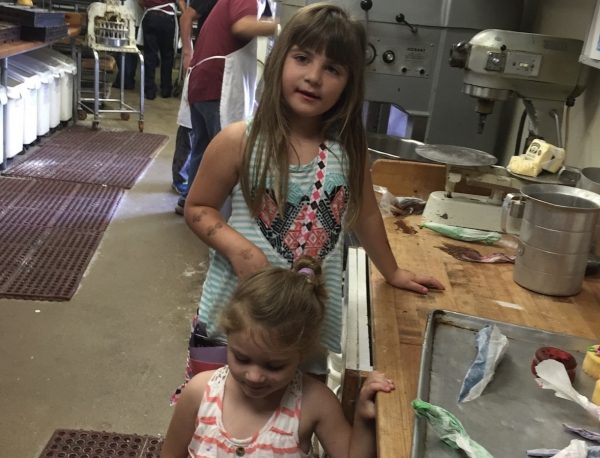
Going to work with my dad was my favorite part of the week. Being greeted by the waitresses, bussers and hosts with a smile made me feel at home in my dad’s restaurant, D.Z. Akin’s. From shadowing the host and seating customers to learning how to count change at the cash register, I saw how the systems worked together to make my dad’s restaurant run smoothly on busy mornings and packed afternoons. Going to the bakery was my favourite part: I would ask a baker for some cookie dough and set up my station on a table in the back. With chocolate chips, colorful sprinkles and cookie cutters, I was entertained for hours cutting and molding the desserts I would take home for the day.
First female president, 10 years old
I remember yelling at the screen, frustrated and confused on a cold winter morning. I asked my dad why someone who could win the popular vote would lose the presidential election due to something called the “electoral college.” With the new found understanding of how the voting process works in America, I wanted to be a part of the run-up. At the time, I think I would have rallied to raise awareness about climate change, energy conservation, immigration reform and tackling the wealth gap. “President” carried a lot of weight on my tongue whenever people would ask me what I wanted to be. The thoughts and moments that I remember most from this “era” are the parallels between the different things I wanted to be. Celebrations and smiles accompanied the restaurant owner, whereas furrowed brows and uncertain expressions complemented “first female president.”
Immigration Lawyer, 12 years old
As a well-spoken, eldest daughter of immigrants, people could see immigration lawyer plastered on my forehead from a mile away, which I still take as a compliment. When Donald Trump ran for office, I listened when the news was on. It was the only thing my parents ever watched. Going into elementary school, my teachers would not take me seriously when I told them I would watch the news for fun until I discussed my beliefs with another boy in my class, who did not share those beliefs. Facing the consequences of my fight with him only fueled my passion to speak up for the migrants who help to build our country every day.
Occupational Therapist, 15 years old
My first year as a summer camp counselor came with obvious struggles, such as herding kids to focus during an activity, modeling healthy communication skills and balancing fun and responsibility with a large group of 5 year olds. During my last session at camp, a first grader and his older brother in fourth grade constantly had problems staying in the circle during music time. For a week, I negotiated, telling them it was important to stay inside the circle, but every time I turned around, they would wander off. After a couple days, I sat them down and asked them why they had never listened to me the entire summer. I expected an excuse along the lines of “I do not care about singing,” but the frustrated first grader teared up. The circle was too loud for him and it made him nervous. The older brother did not like the noise either. Instead, they would build villages in the grass with sticks and rocks. After comforting them, I realized I needed to take this matter to the director because no one was advocating for these campers the entire summer.
The following morning I brought a lanyard-making box to one of the tables. I told them they had to stay for two songs, then they would be able to come and make lanyards with me. In this, I realized the average summer camp experience was not flexible for students with sensory issues, especially younger campers who had a hard time expressing their needs. Looking into occupational therapy I realized I could help young children practice daily life alongside their peers, which was what I ultimately wanted them to feel. While the small change in their morning did not seem like much, they got into less trouble, had an easier time listening to instructions throughout the day and left camp each day more relaxed instead of overstimulated and exhausted.
Teacher, 16 years old
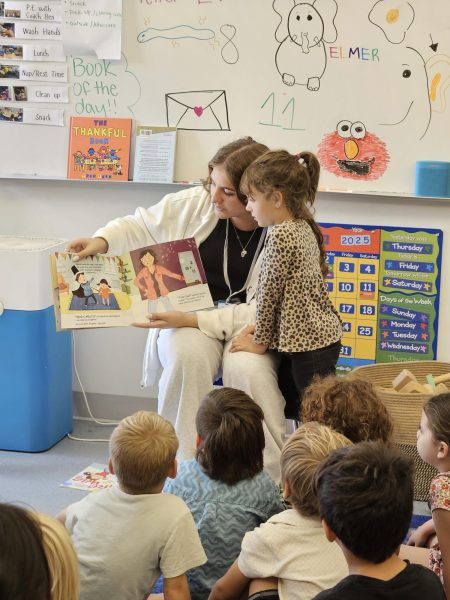
I turn 16 years old today, and while I feel as though I am supposed to have a grand celebration and hold the keys to a new car, I only feel as though the experiences that came before me have only proved to be a milestone to another year. I write “teacher” here even though I was discouraged by my fellow peers to pursue this profession. It is like a routine for people to respond with, “You’ll get paid nothing!” or “I could never do that, I don’t like little kids!” Oftentimes, people are caught up in their own dreams and passions and forget to realize that other people’s dreams are equally as important and no less important or valuable. Our entire youth relies on the dedication, hard work and perseverance of strong human beings that become educators. I have been a teacher assistant at a Sunday school for three years now, and Sunday is the day that I wake up most happy. Working alongside a teacher who still finds meaning in her work after many years proves to me that education is not for everyone. It is for the people who stick to it for the kids. Not only do I teach, but I also watch students grow, make new friends, understand hard concepts, teach emotional regulation and be there when they are having a rough morning or a proud learning breakthrough. As the year comes to an end, I wait to see what this group of kindergartners will go on to do in their lives knowing I have done my best to teach them how to be kind to each other and to themselves, to respect boundaries and most of all, to not give up on their dreams.
Out of all of my chosen professions so far, the one variable that stays constant is the reaction from people around me; negative and positive. A sweet 5 year old saying they want to be a pop-star, grinning from ear to ear, is adorable. I saw it as a compliment when adults suggested I pursue law after talking back to them because I was willing to speak up. But why does one frown upon my desire to support the social and emotional needs of the next generation through education? As I grew older, I realized that negative responses tie back to the value of the degree necessary for that job and how high the job’s salary would be. Yet, telling a young child that they should not continue to follow their passion or dream takes away their spark, dimming the individuality that they bring into this world.


Zhixin Chen • Apr 8, 2026 at 1:12 am
Happy Birthday Priscilla!