
Looking back at history, we often recognize influential individuals who mastered their craft: mathematicians who established complex equations, artists who wield stellar control of brush and pencil, musicians who composed revolutionary pieces. These figures are characterized as “prodigies,” the epitomes of human performance. Their excellence was dictated not solely by technical expertise but also by the creator’s dedication and passion towards their trade.
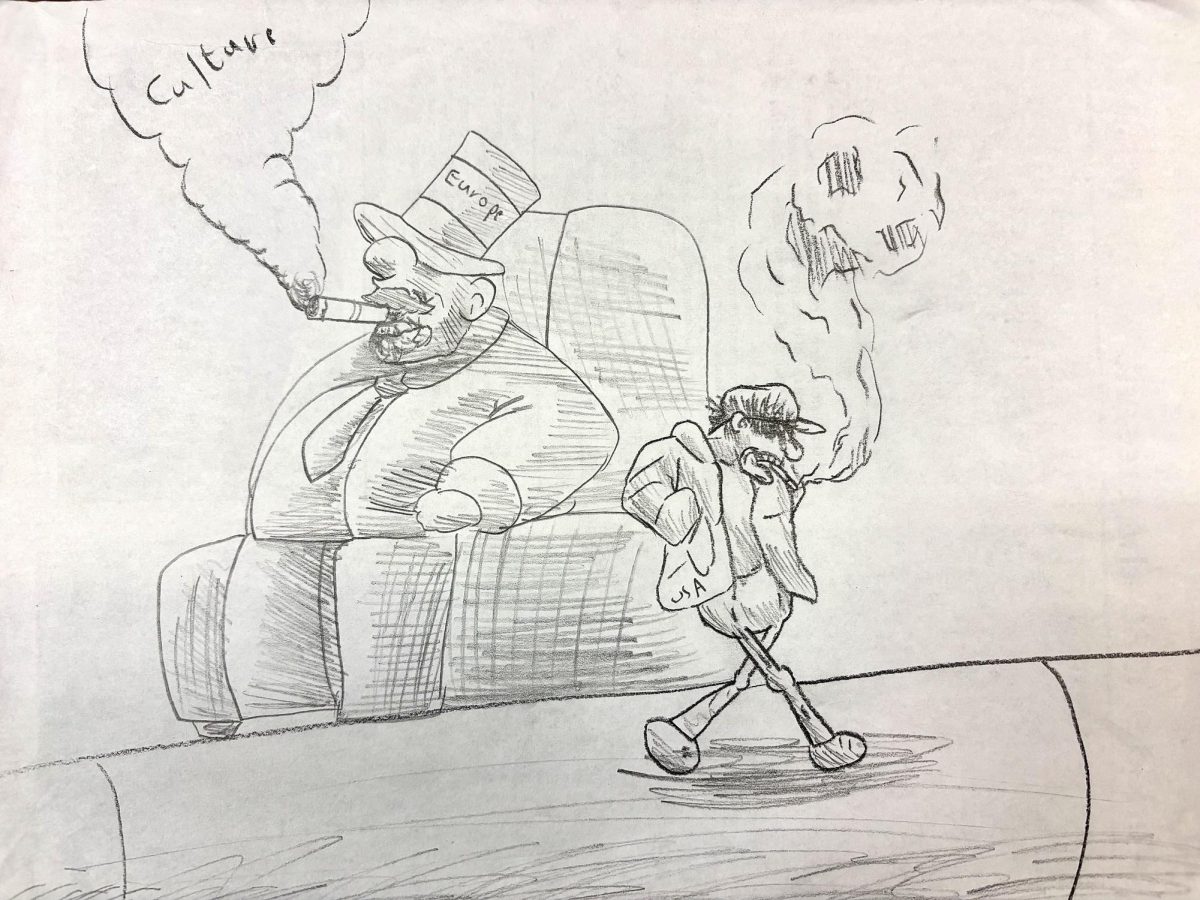
As the world has evolved, however, these key figures were cemented in the past; no modern rendition of their genius is on par with them. As we crave immediate but ephemeral entertainment over long-lasting intellect and growth, the modern world does not reach its full creative potential.
All we see now is excellence. Social media exposed us to a constant stream of content, human-created or not. Ironically, though, this renders us as passive observers rather than active participants in creation while we indolently observe others. We become so accustomed to visual stimulation that we no longer engage the other senses needed to create something physically. This, in turn, further desensitizes us to the effort that goes behind a thirty-second video of a 7-year-old piano prodigy or ZHC’s wife solving complex math problems in her head.
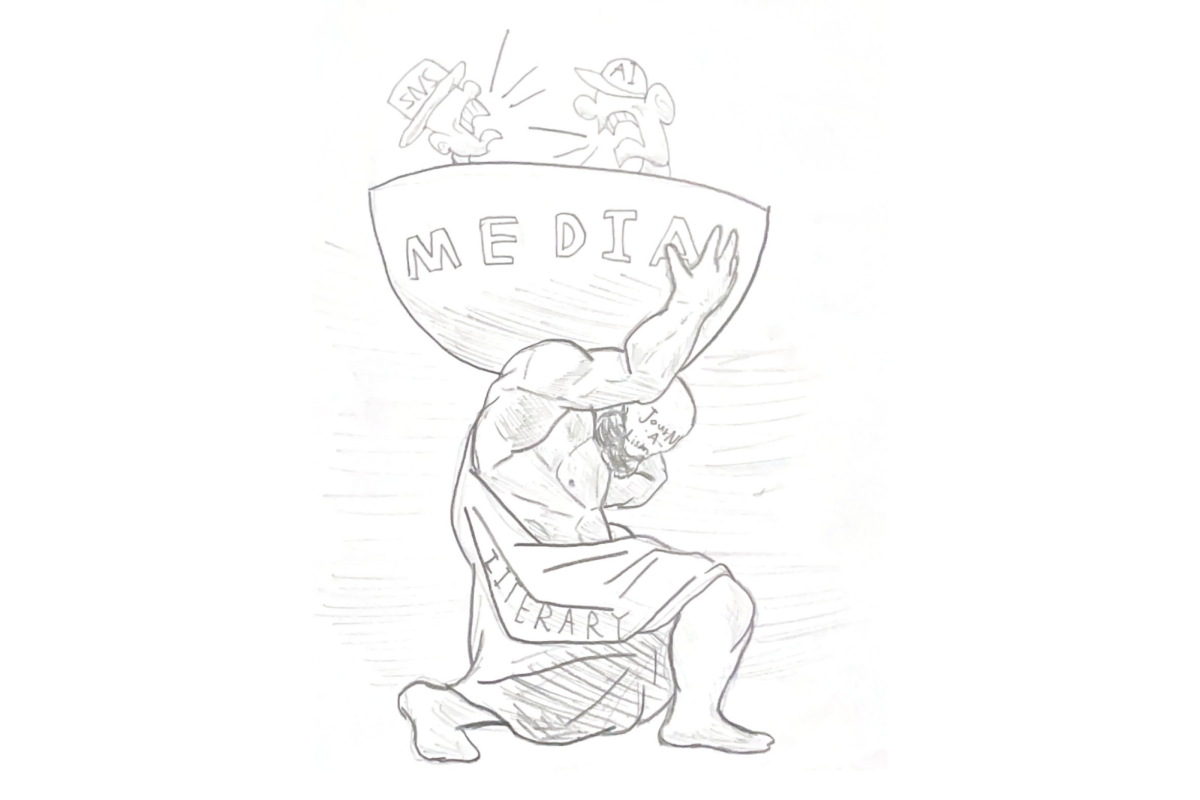
Countless other pieces of media, unfortunately, drown out these individuals who do participate in art. As soon as scrollers swipe, another packaged piece of content appears on their feed and conquers their attention. They hold no significant place in society because the attention they receive is limited to the framework of social media. Creation and brilliance have not waned, but rather, their exhibitors are no longer remembered long enough to be held in high regard.
If anything, our world is more abundant in advancement now than ever before, with technologies facilitating the expansion of intellect. It is this facilitation that subsequently normalizes mastery. We are apathetic toward greatness because it no longer feels as unattainable as it once did, making us more indolent in striving for it.
It seems a shift in this indifference has occurred, though, especially prevalent through the renowned figure skater and Olympic gold-medalist Alysa Liu.
Emerging as an internet hyperfixation, Liu distinguished herself as an athlete and artist by challenging the antiquated strictness of her sport. Ice skating was long considered a highly disciplined and stern sport, with a strong emphasis on the intricacy of performed moves. Liu is not lacking in this criterion. In fact, she is considered a prodigy, landing quadruple jumps at the ripe age of 14. It was this prodigiousness that ultimately drove Liu away from the sport, as she became overwhelmed by the rigidity of her life. Constantly striving for perfection and fighting to keep her title as a child prodigy eroded her love for the sport.

She retired at 16, but rediscovered this passion after skiing and experiencing a resurgence of love for the feeling of gliding. This visceral reawakening stripped skating to its core, liberating Liu from the pressures of perfection. Only then was Liu able to return to the sport, this time willingly. Her performances were not shallow or designed to capture a judge’s attention. Instead, she skated for the purity of the movement and the enjoyment it evoked.
Liu has expressed that she does not worry about winning at competitions, stating that “these titles are huge, but I don’t want them to overshadow who I am and what I do and what I am all about.” This nonconformist philosophy, as well as her unique, alternative aesthetic, taught many that “you can still be a baddie even if you’re a little quirked up.”
Liu is authentic because she is unencumbered by societal pressures, expressing herself in a way that is confidently self-assured. Through the genuineness of her movement, Liu turns into more than just a micro-trend; she inspires people to move and partake in disciplines they love.
Some may argue that social media provides plentiful inspiration that can help people be more creative, while also offering outlets for many artists. While this is true for content like tutorials, simply showing someone partaking in a creative act traps people in a cycle of watching someone do something rather than doing it themselves, falling victim to social voyeurism. Furthermore, when artists become preoccupied with making themselves digitally prominent, they sometimes sacrifice their individuality for what is most favorable or trending at the time (see also: lime lips). Another contention is that not everyone is as “quirked up” or extroverted as Liu, and solely choosing to express the technicality of their skills should not make them any less genuine. Authenticity should not be defined by unconventionality. While this is true, adherence to the status quo is not always a conscious decision. The commodification of creativity, proliferated by social media, influences many to follow trends and formulas that focus on quantitative success. You do not need to stand out to be yourself, as prodigiousness should not be tethered to materialistic desires for external validation. Creation comes from within. As long as one’s choices are not dictated by external factors, one is being genuine.
Ultimately, to rekindle a culture that fosters this lost sense of creativity, society must value uniqueness and self-expression beyond the shallow pursuit of perfection and recognition, which has long defined prodigiousness. Self-reflection is necessary in this perspective shift. One must ensure that they are acting upon what they truly desire, not what they are conditioned to want by others. Intellect cannot be commodified, caged by a short-form video or achieved through an algorithm. To reach the depths of one’s intellect, authenticity must be uncovered first.