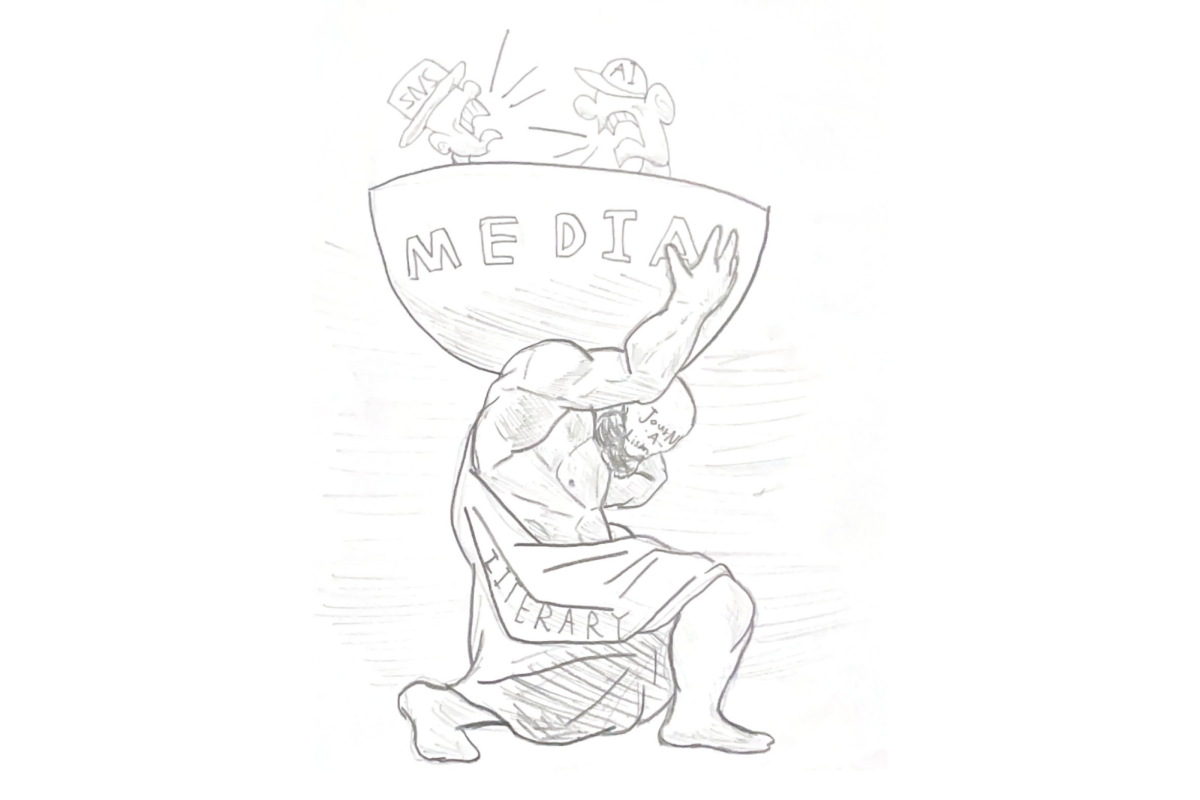

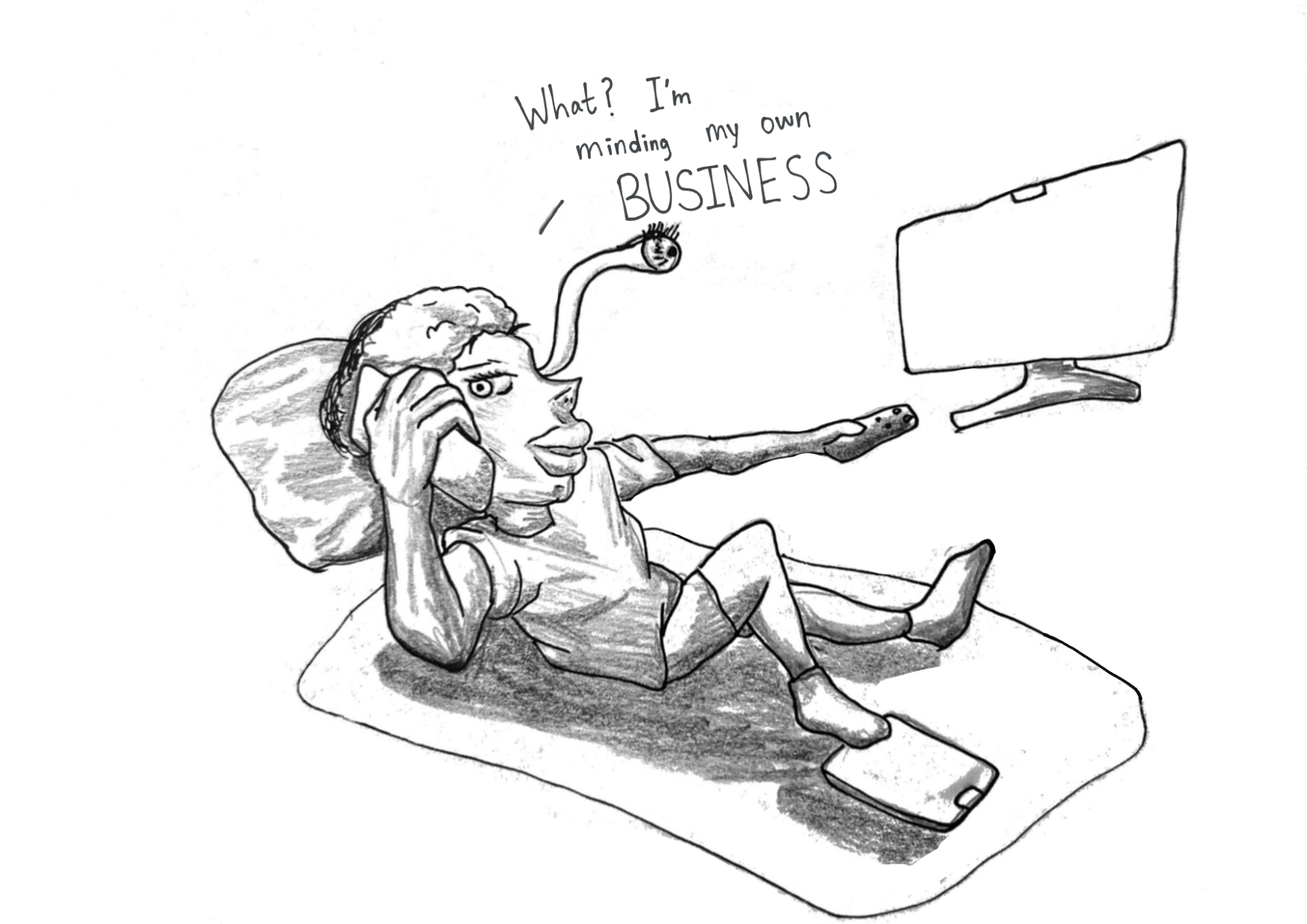
Society has reached a point where one highly-addictive, bright-colored screen is not enough to keep us entertained; we require two at minimum. Terrified of spending a single moment without stimulation, people reach for their phones while the television plays in the background. Audiences are able to grasp just enough while half-watching so that they can keep up with the plot and all the new episodes. What better way to watch a show than to accompany it with leisurely scrolling or even finishing homework, right?
Distracted watching stems from the lack of focus and short attention spans. Starting assignments and exercising our brains seems daunting, so we put on a show in the background to “ease” the pain of boredom. Sitting through the occasional monologue of a TV show is not exciting enough, so we couple it with games or videos on phones that have maximized dopamine release. When people have entertainment at their disposal, it is tempting to indulge in as much of it as possible, but practicing this builds detrimental habits and a mind more susceptible to boredom.
Scrolling every time we watch television trains our brains to expect constant and instant gratification that we are gradually gaining immunity to. This is how the seemingly harmless cycle begins; people are not entertained in silence, so they put on a show. Then they get bored watching the show, so they pull out a second device. Eventually, two screens will not be enough.
Streaming platforms have noticed this shift and adjusted accordingly. Netflix produces hundreds of titles every year, many of them purposefully made for distracted watchers. Screenwriters are commonly encouraged to have their characters announce everything they are thinking and doing in the moment so that audience members can still grasp the plot of the program while being checked out.
One such Netflix original, “Irish Wish,” is regarded as a second screen film and uses this method.
“We spent a day together,” protagonist Kelly tells her lover, James, in Irish Wish. “I admit it was a beautiful day filled with dramatic vistas and romantic rain, but that doesn’t give you the right to question my life choices. Tomorrow I’m marrying Paul Kennedy.”
“Fine,” he responds. “That will be the last you see of me because after this job is over I’m off to Bolivia to photograph an endangered tree lizard.”
Elements of mystery disappear, and the faces on screen no longer seem as complex, conscious humans as they unrealistically narrate their every move.
This is a disgrace to the art of film. This is not to say that every project must be a dramatic masterpiece with complex film sequences and thought-provoking dialogue; cheesy rom-coms, when done right, hold a special place in the audience’s hearts. However, reducing a movie to a mere distraction by purposefully over-simplifying the script sabotages its chance to touch hearts before it is even released.
It is much more rewarding when an audience member is able to follow a storyline from close attention to the way the music shifts, the glances intensify or subtle foreshadowing. It captivates people. Instead of just watching, they are now wondering, feeling, suspecting, reflecting and waiting in anticipation. This heightened experience is impossible if a second screen is there to “rescue” people from every slow moment.
The one arguable exception to watching second screen TV shows is doing so while completing easy homework or a mindless task because the goal is not to get the best viewing experience — it is to motivate productivity. Even though this is understandable and less offensive, doing so harms one’s health and reduces their quality of life to mediocrity.
Filling the times we need to get through busy work with multi-screen use creates the habit of filling every moment of boredom with multi-screen use. All of a sudden, people find themselves relying on screens as a crutch throughout the day, no longer having time to think, daydream or be creative. Not to mention, the overuse of technology can lead to eye strain, headaches, high rates of stress and anxiety, disruptive sleep and disconnection from ourselves and other people. Why settle for something harmful and dulling when life has much more to offer?
Society is unknowingly making it difficult for simple joys to delight us as they once did. It is terrifying to think that not only are conversations and natural wonders insufficient for our entertainment, but television as well — something originally made to be stimulating and addictive — is not enough to satisfy us. Long gone are the days when watching a crackling fire or a breeze in the trees is amazing, and now, apparently, gone are the days when one highly-addictive, bright screen can hold our attention.
It is crucial that the next time one finds themselves reaching for the remote while attempting productivity, they instead devote their full attention to the task, let their mind wander, sing along to some music or call a friend. The next time one’s hand instinctively grabs their phone during a movie, they must abandon the urge and instead try to appreciate what is already displayed on the screen in front of them. This builds lasting habits, so when they find themselves in a position that requires focus, they are capable; when they are somewhere technology can not reach, they are content with only their five senses, and when they happen to be watching that masterpiece of a film, every pause or quiet scene is a gift rather than a moment of torture.