

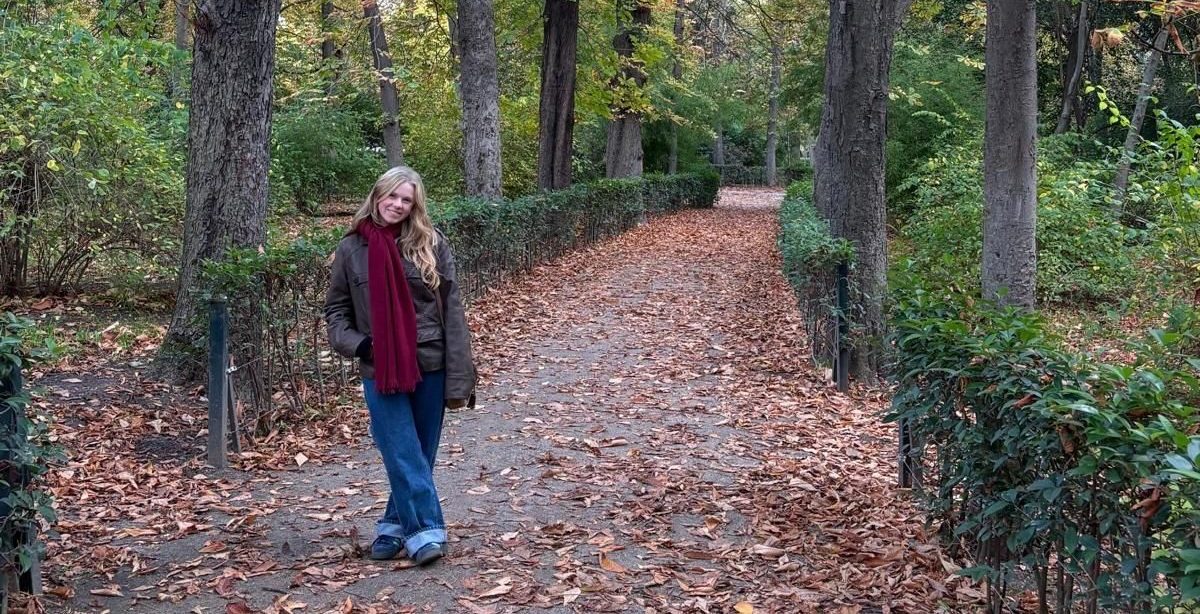
In André Aciman’s novel “Lavender,” he writes, “Each bottle contains a part of me … one could rub each bottle and summon up an earlier me.” Aciman represents his life through fragrances, namely Lavender. This is his way of translating his life into something tangible. Like Aciman, I store my memories in objects, but instead of fragrances, my medium is gifts. When I share a gift, I offer a small piece of myself wrapped with care.
Gift giving translates how deeply I care for someone without relying on words. It is how I open myself to be understood. Aciman’s emotions and experiences are on display as a scent museum, stored safely in his bathroom drawer, while mine are stored as gifts scattered around my host family’s house in Spain.
I walk through the house like walking through a museum, admiring physical manifestations of my time abroad. I imagine people discussing my gifts as though they are art, analyzing them, asking about their inspiration. If they looked closely enough, I think they would fall straight into my subconscious.
This museum is also a timeline. On the living room counter sits the charcuterie board I made for my host family when I first arrived, seamlessly blending in beside family photos. I can still see the watermark of my tears, a reminder of the night I nearly withdrew from the year abroad program. As I walk down the hallway, which has become a threshold to the past, I see the dead flowers I once gave my host mom. I had spotted white daisies in a shop window and was instantly enchanted, remembering the way she decorates her room in elaborate shades of white.
On our windowsill, which has slowly become a library, is a book I gave my host sister. I bought two copies of the same book, one in English for her and one in Spanish for me. On sleepy Sundays, we sneak into the living room and read together, whispering questions about words we do not understand. We keep our voices low, as if speaking louder might shatter the quiet world we created.
The centerpiece of my museum is a pack of CDs I gave my host dad for his birthday. When he opened them in the middle of dinner, he stood up to play the music, and we danced through the entire album. It was so loud I thought the neighbors would knock, but we kept dancing anyway.
These gifts are pieces of me scattered throughout the house. In their place are the memories of when I gave them away.
I came to believe that gifts are a universal language. They do not need to be translated, only accepted. Early in the year, I found a “Teach Yourself Spanish” book in my suitcase and gave it to my math teacher at the time, who had moved across the ocean without knowing a word of Spanish. I left it on her desk with a small note. Next math class she thanked me, but it was the extra confidence in her step that gave the gift its significance.
Some people hold onto the things that represent them. I do not. I give my gifts away because I am never fully fulfilled until they are in someone else’s hands. After all, gifts only truly become gifts when they are given to those meant to receive them. Even after they are gone, they remain part of my museum abroad. I appreciate their existence without dwelling on their departure.
To me, gifts are a currency: a dollar, a euro, a yen. They help me communicate my thoughts and how I feel about those I love. They are the art pieces in my museum, faintly scented with lavender.


Mia Boardman Smith • Jan 17, 2026 at 8:25 pm
Beautifully expressed, Reese! I’m so proud of you.
Priscilla Akin • Jan 16, 2026 at 10:01 am
This was so beautifully written. We’re going to miss you!!
Viki Kiss • Jan 15, 2026 at 6:47 pm
Amazing piece, Reese! This was a very compelling read.