

The school’s Peer Assistant Learners (PALs) hosted the annual Red Ribbon Week on Oct. 27-31.
As the week fell before Halloween weekend, PALs focused on educating students about the dangers of driving under the influence through activities and speaker events. All activities were planned to reduce the stigma and discomfort surrounding the topic of drunk driving, especially for teenage audiences.
On Monday morning, PALs hosted an “Apple Slices and Bracelets” event, where students gathered to enjoy a treat and craft. PAL leaders used the opportunity to connect with the students and advocate safe choices for the upcoming weekend.
The next day, students found red Gatorade and therapy dogs at the lunch tables. At 6 p.m., a parent panel took place regarding the prevention of driving under the influence.
Today, the red ribbon represents a commitment to drug prevention and a drug-free lifestyle. All over the nation, it is a visual reminder and color associated with the people’s need to make healthy choices and stay away from drugs.
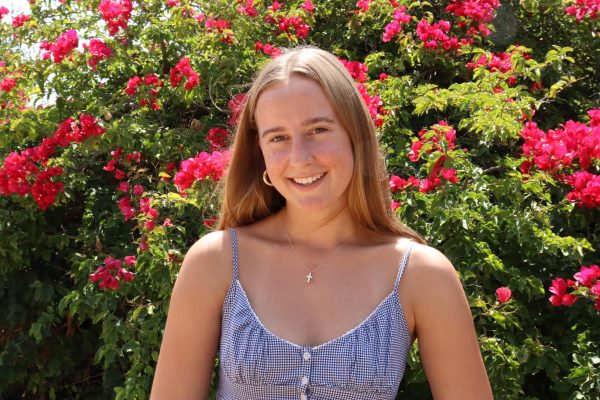
PALs President Maddison Harrell (12), described the importance of Red Ribbon Week.
“I really feel like it was a big thing with our school, [being able to] educate our students,” Harrell said. “I feel like there’s not a lot of talk in the outside world about the dangers of drug use and substance abuse.”
On Wednesday, with the smell of pancakes circulating in room 9, PALs gathered students to listen to a Mothers Against Drunk Driving (MADD) representative share her personal experience of driving under the influence and explain her immediate and long-term life consequences, injuring her body and losing partial ability to speak.
“Our biggest impact was definitely the pancake panel,” Harrell said. “The high schoolers were really quiet and took in her message. I loved seeing how people responded to that, and just such gratitude for her coming in. Everyone understood that it was really hard, and I think the message really got across.”
To carry on the week, the PALs had their second round of therapy dogs along with Red Vines. Then, concluding the week, they had their Trunk or Treat event, where students were able to walk around room 9 and collect a variety of candies.

In addition to the events each day, the school displayed a crashed red car in front of the administration building for the duration of the week.
“Stories like the crash car story have impact,” Angela Willden, PALs Advisor as well as Advanced Placement and Honors Chemistry teacher, said. “I saw so many students stopping and reading, and I think that just has an impact.”
Students walked by the car every day to get to their classes and saw the “big bold signs surrounding it.”
“I was able to read about the car and learn that it is very dangerous to drink and drive,” Jade MacInnis (10), a student who attended the Therapy Dogs and Red Vines Red Ribbon Week Events, said. “It will help me remember that it’s not a smart choice and it will have consequences and hurt other people.”
MacInnis also witnessed changes over the course of the week.
“A few people that I know decided not to go to rager parties because they knew there was going to be alcohol and it could lead to bad decisions,” MacInnis said. “I think the PALs’ events definitely made some substantial impact in the community,”

In choosing the car, the PALs reasoned with the possible positive impact and the reminders it will give to students.
“We wanted to show the physical impact of it, because I think it’s kind of brushed aside when you’re just like, ‘don’t drink and drive,” Harrell said. “So, that was a real incident that happened, that had to do with drunk driving. We had a real story there — just the visual aspect of it, just really moved the campus.”
The focus on red, in Red Ribbon Week, originated from citizens in Calexico, California, where Enrique “Kiki” Camarena was murdered in Mexico while on police duty. Camerana was a Mexican-American DEA agent who dedicated his entire life to fighting drug trafficking. When working in Mexico in the 1980s, he was kidnapped and then killed by drug traffickers. His death brought attention to the dangers of drug abuse to the entire nation.
So, his friends and community then began to wear red ribbons in his honor. Later on, this movement then grew into a national campaign that encouraged young people to live drug-free lives and make healthy choices, namely Red Ribbon Week. In addition, the creation of “Camarena Clubs” in California high schools grew and the tradition of holding this week in October developed.
According to Harrell, PALs began planning in early October and “started with a lot of brainstorming — like, what do we want our message to be?”
“We think about what we want, like our theme of the week,” Harrell said. “Then we break out into our committees and plan the actual events.”
Led by Harrell, the PALs identify the “key events,” then break down plans for each event, such as people that are going to be there, and “how we can get the message out.”
According to Willden, after planning, PALs address their goals of “[getting] people thinking about the consequences of choices involving substance abuse, involving drunk driving, the types of things that teenagers are at risk for.”
Willden focuses on the ways leaders hope to inform and teach students about these topics.
“It’s just trying to give them informed information, so that in those moments, they can make choices that’ll keep them safe,” Willden said. “Mostly it’s just about keeping them safe, both mentally and physically, in the face of the challenges they face regarding substance abuse.”
To ensure the PALs efforts are successful, they make sure to look at the Healthy Kids Survey that they completed from the entire school.

“We can track it year to year and see what kids are saying about how they feel, how connected they feel to the school,” Willden said. “The trends we’re seeing show that connection is going up and substance abuse is going down.”
A challenge Harrell found was walking the line between “educating people but not triggering people” without “overstepping.”
Harrell reassesses the goals for the week.
“We wanted to get the word out, and focus on the topic of, like, substance abuse, not driving impaired,” Harrell said. “We really just wanted to reach, like, all levels of campus, freshmen through seniors.”
Over the course of Halloween weekend, PALs aspired to decrease drinking and driving, ensuring safety among the student body.
“I’m really hoping people stay safe this weekend, and understand that, like, it’s okay to say no to peer pressure,” Harrell said. “You don’t have to be in a certain group, or do things you don’t want to do, and just the importance of your safety.”
Willden explains the upcoming events that the student body should expect from PALs in the month of November.
“We usually use early November for some of our philanthropy projects… like the USC Street Medicine Drive and the Monarch School Drive,” Willden said.
Into the next year, PALs is working on planning the Challenge Days in January, actively looking for student leaders. In addition, they are continuously hosting their Welcome Wednesdays every 1357 Wednesday of the month. They put on different themes and activities like “pancakes, movie days, Mario Kart, bracelet making,” according to Harrell.
For students wanting a “quieter and safer space,” PALs welcome them during lunchtime for support.
Looking into the future of Red Ribbon Week, the PALs focus on having “bigger events and working with more organizations.”
“Eventually, we [want to have] a presentation go out to every kid on campus and [all] classrooms,” Harrell said. “I’d love to have a walk or something at the end of the week, a setup, or just some big event that we can invite the whole campus to.”