

A tidy skein of yarn begins to unravel, slowly but surely. With each tug at the coil, a stitch is delicately added by deft fingers, the hook swiftly swooping up and over, down and through. What could be in the making? A cat-eared beanie or a striped sweater? An amigurumi giraffe or a detailed floral doily? Maybe even one of those massive temperature blankets, where each row’s color corresponds to the temperature of a day in the year?
-
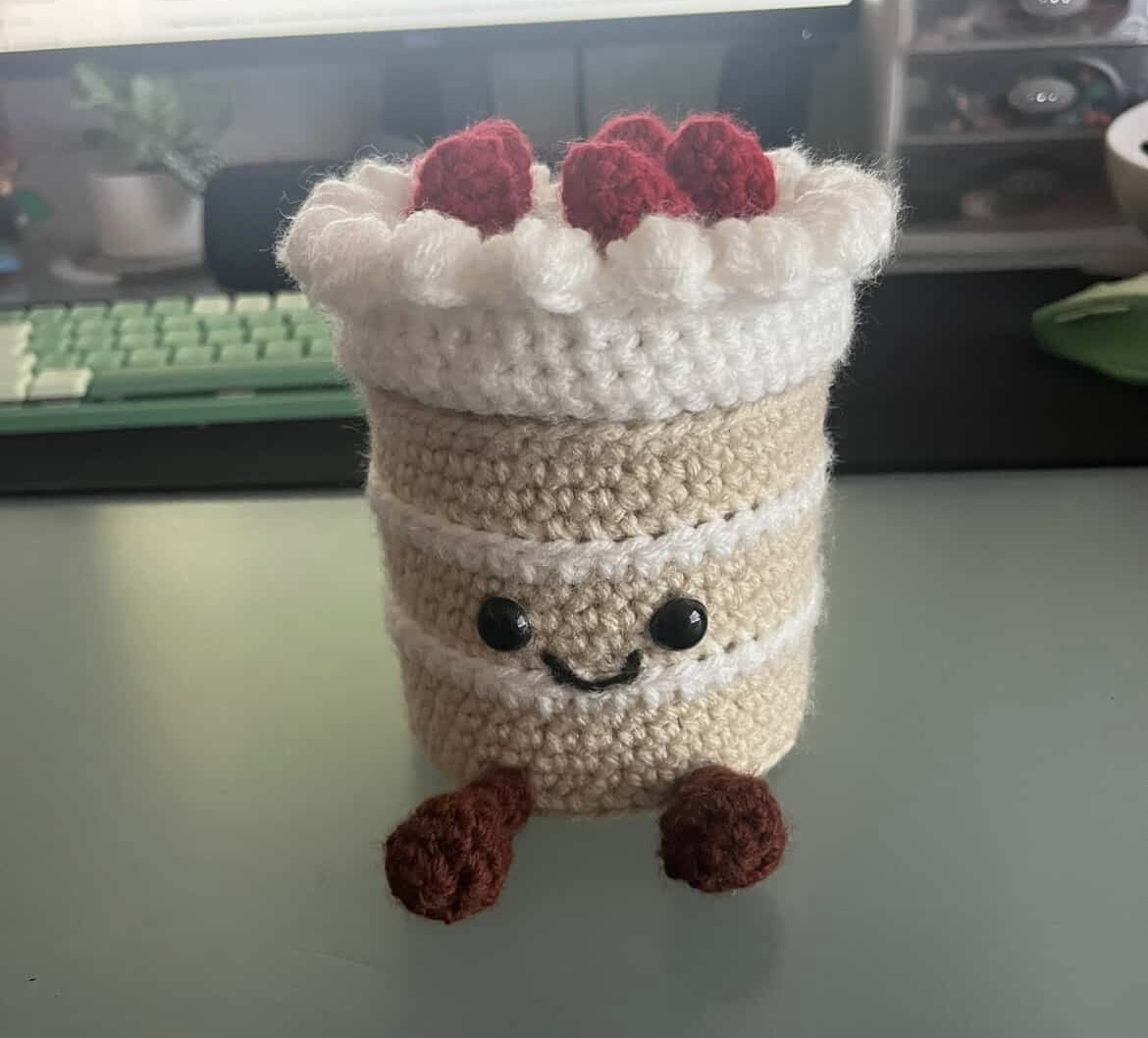
A silly smile and eyes form the face of this crochet cake. It was modeled after the Jellycat Amuseables Birthday Cake. Photo courtesy of Syd Roenfeldt.
-
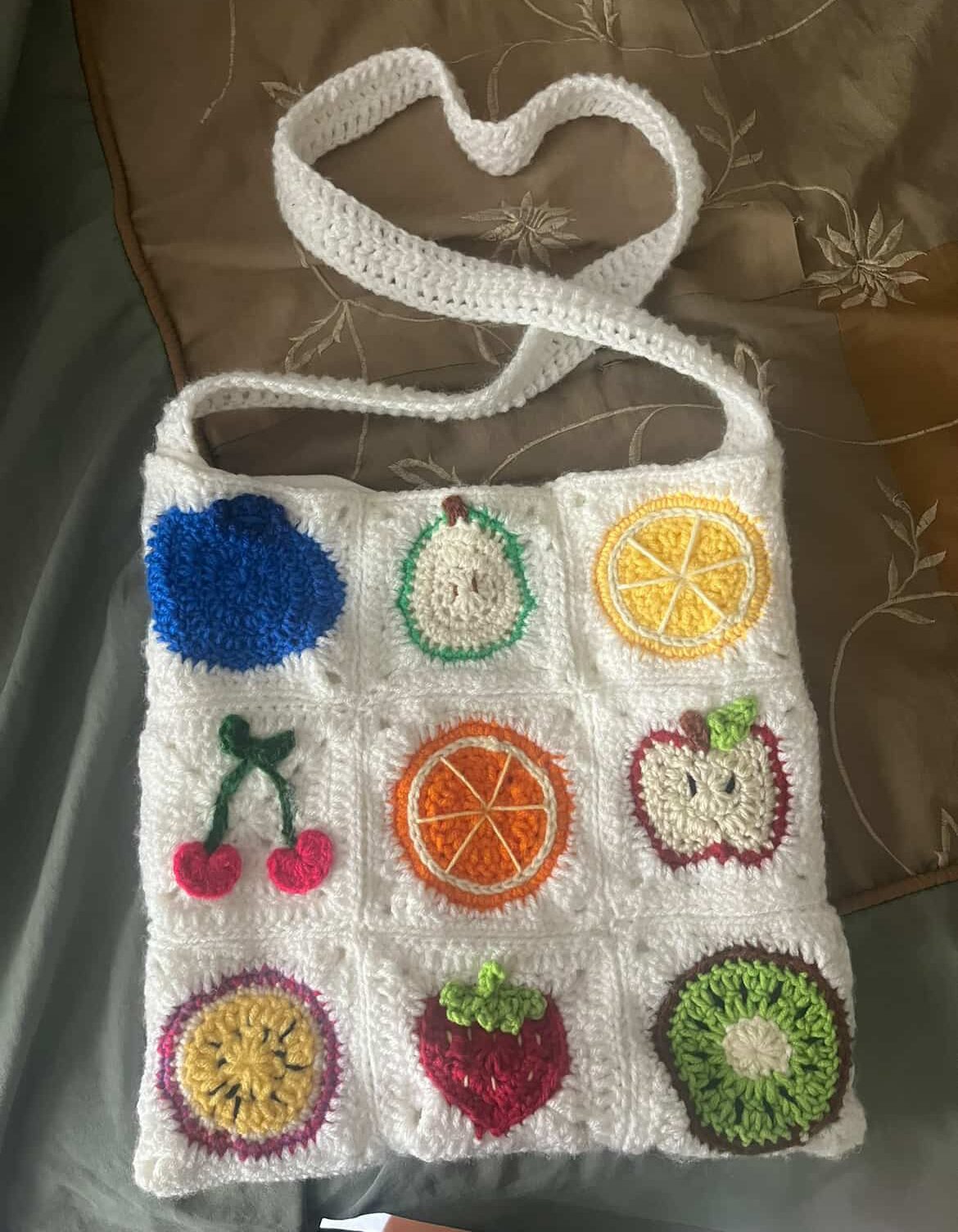
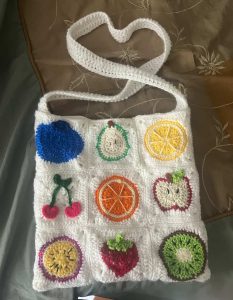
Each square on this crochet tote bag is a different fruit. For many hobbyists, crochet offered a fun way to make practical items. Photo courtesy of Syd Roenfeldt.
-
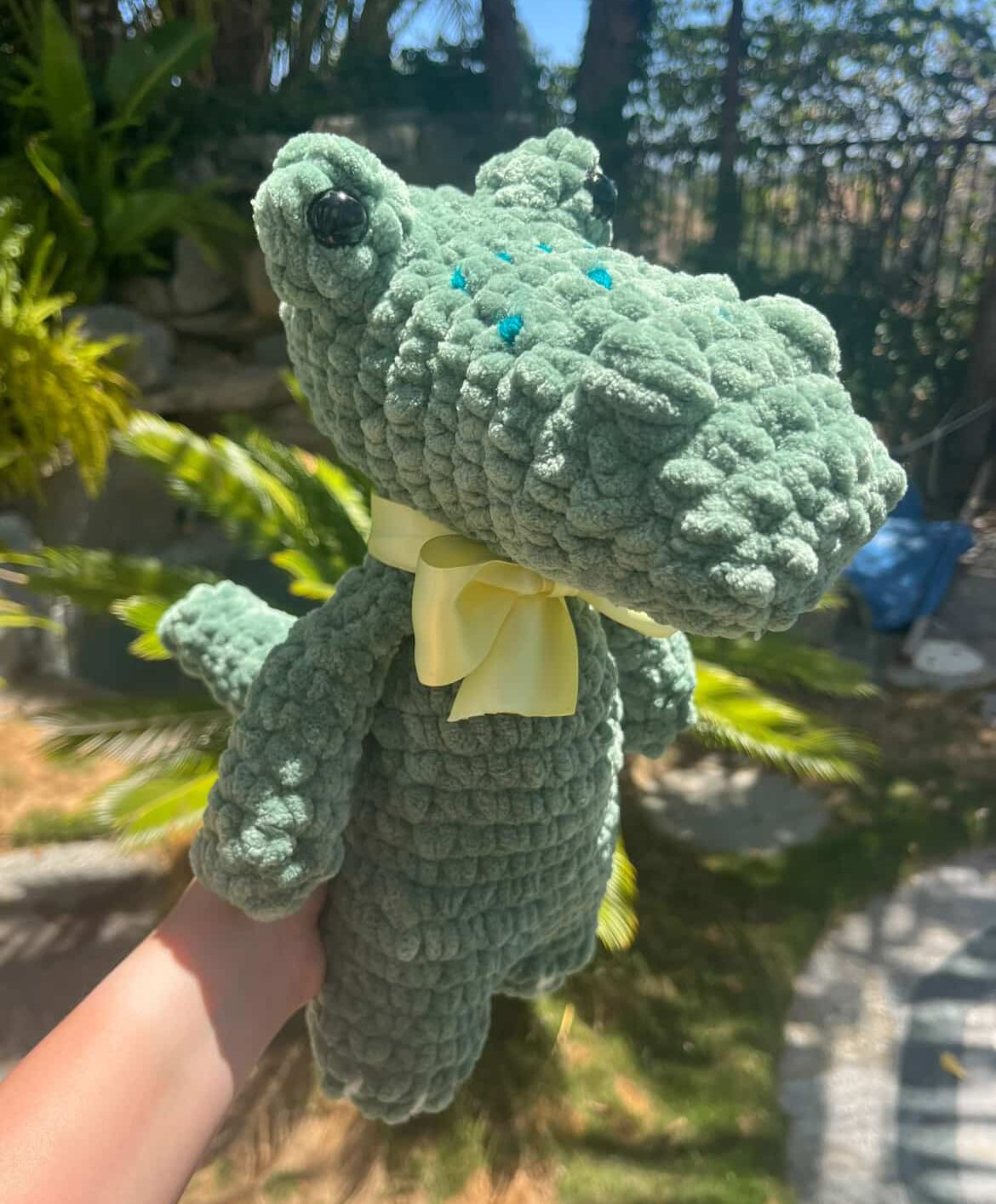
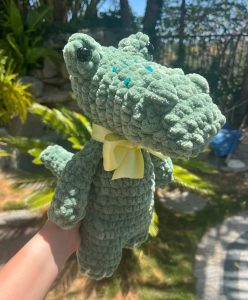
Thick, green yarn creates chunky rows on this crochet alligator. The term amigurumi, the art of crocheting or knitting stuffed animals out of yarn, originated in Japan. Photo courtesy of Syd Roenfeldt.
-
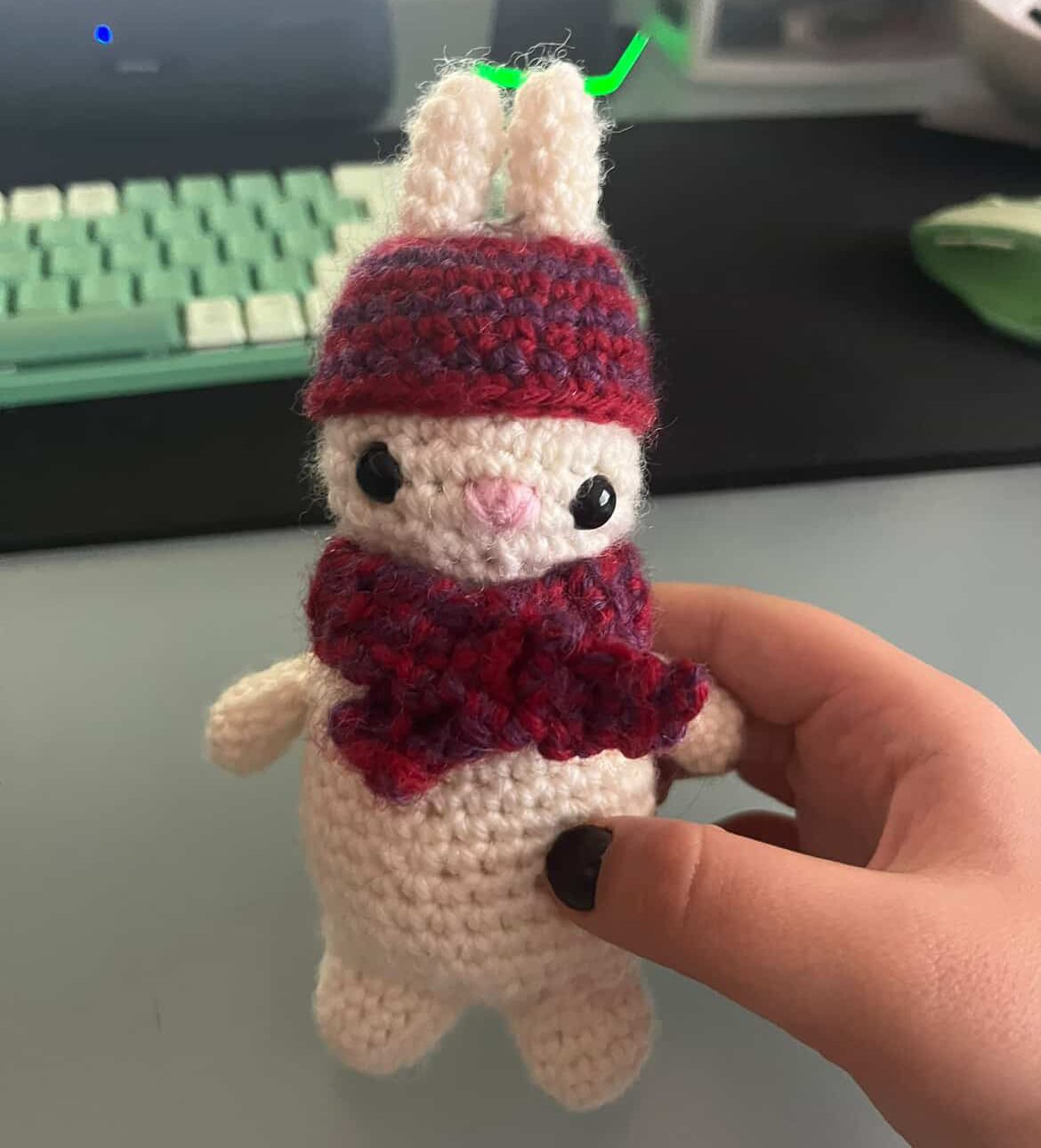
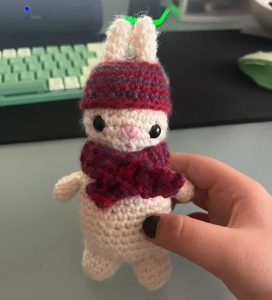
Wrapped in a cozy hat and scarf, this crochet bunny is a product of stitches, chains and loops. Syd Roenfeldt (11) enjoyed crocheting stuffed animals the most. Photo courtesy of Syd Roenfeldt.
-
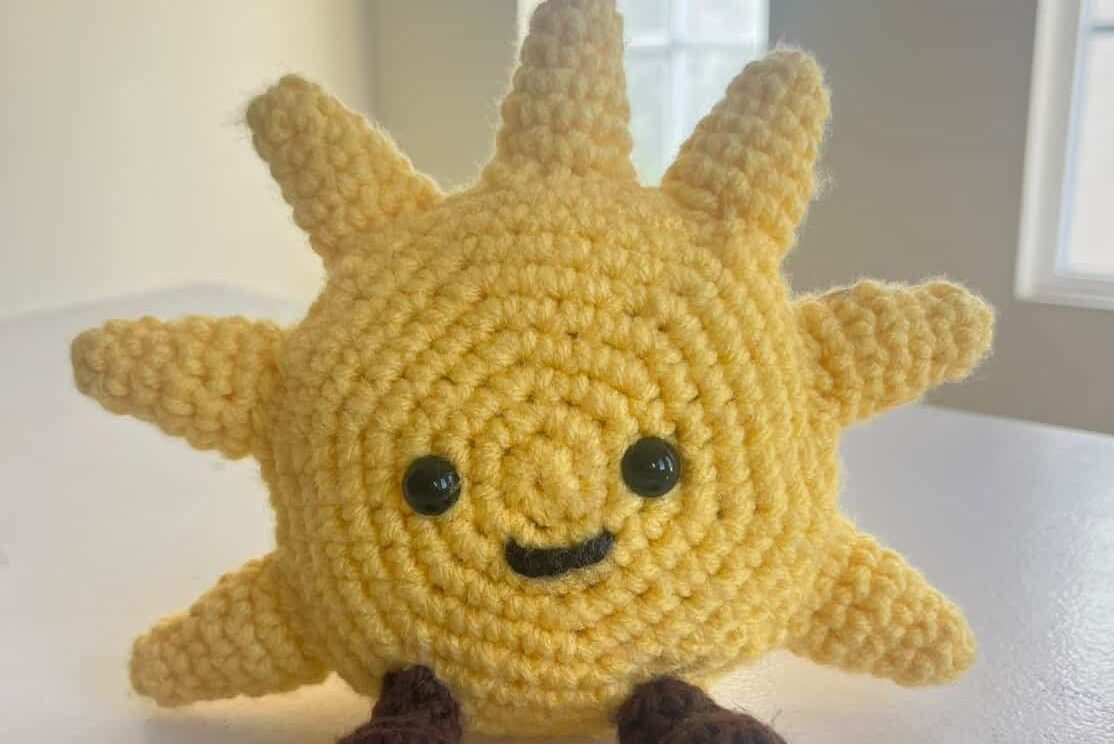
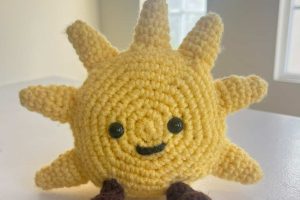
This crochet plushie has a sunny smile. It was modeled after the Jellycat Amuseables Sun. Photo courtesy of Syd Roenfeldt.
-
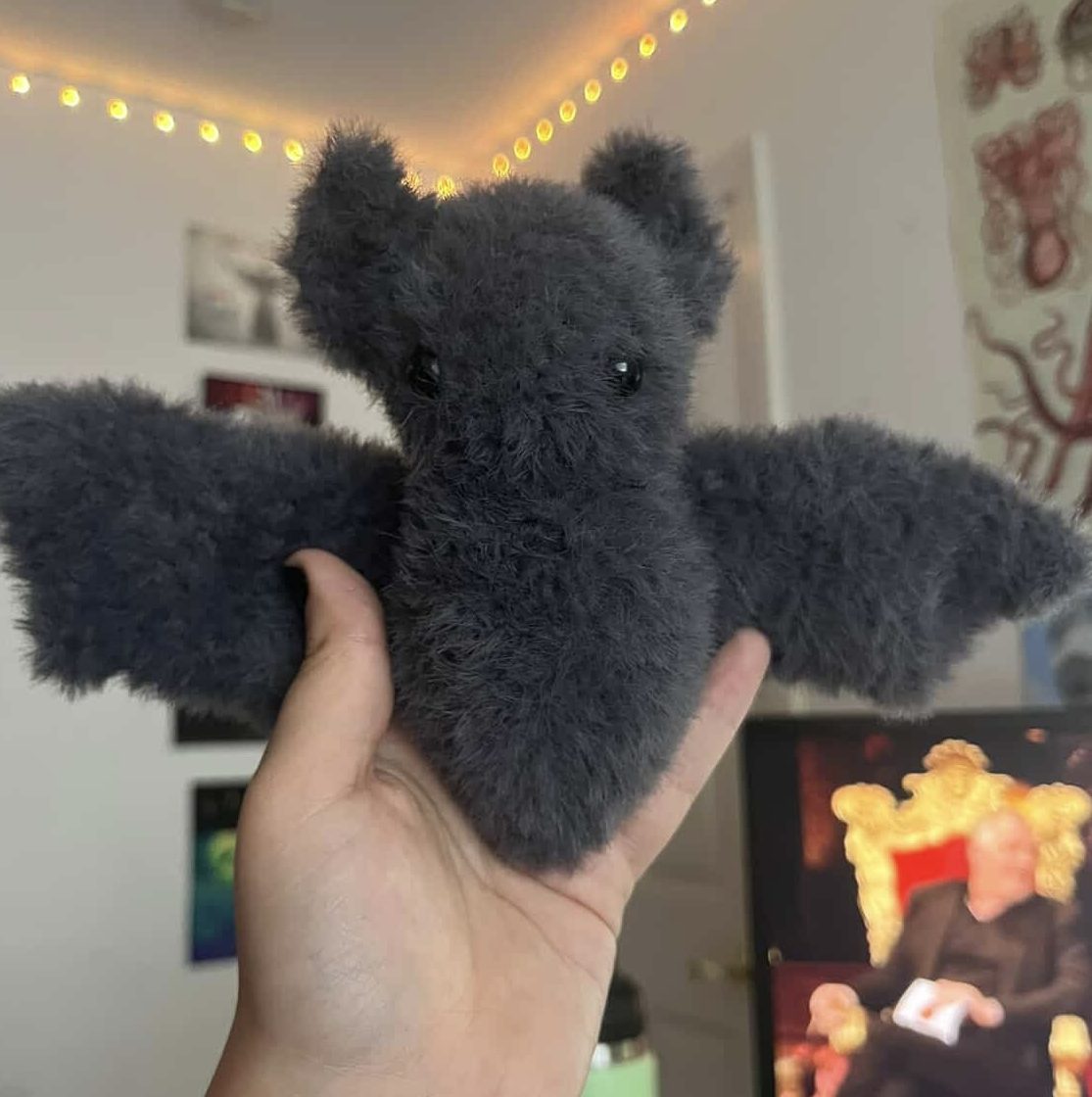
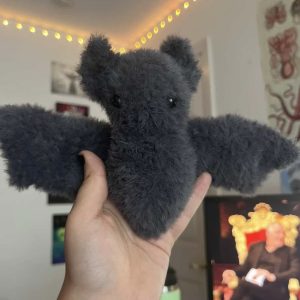
Made from fluffy yarn, the rows of crochet stitches on this bat are hidden beneath the fuzz. Syd Roenfeldt (11) also made a version with non-fuzzy yarn, available on their Etsy store. Photo courtesy of Syd Roenfeldt.
-
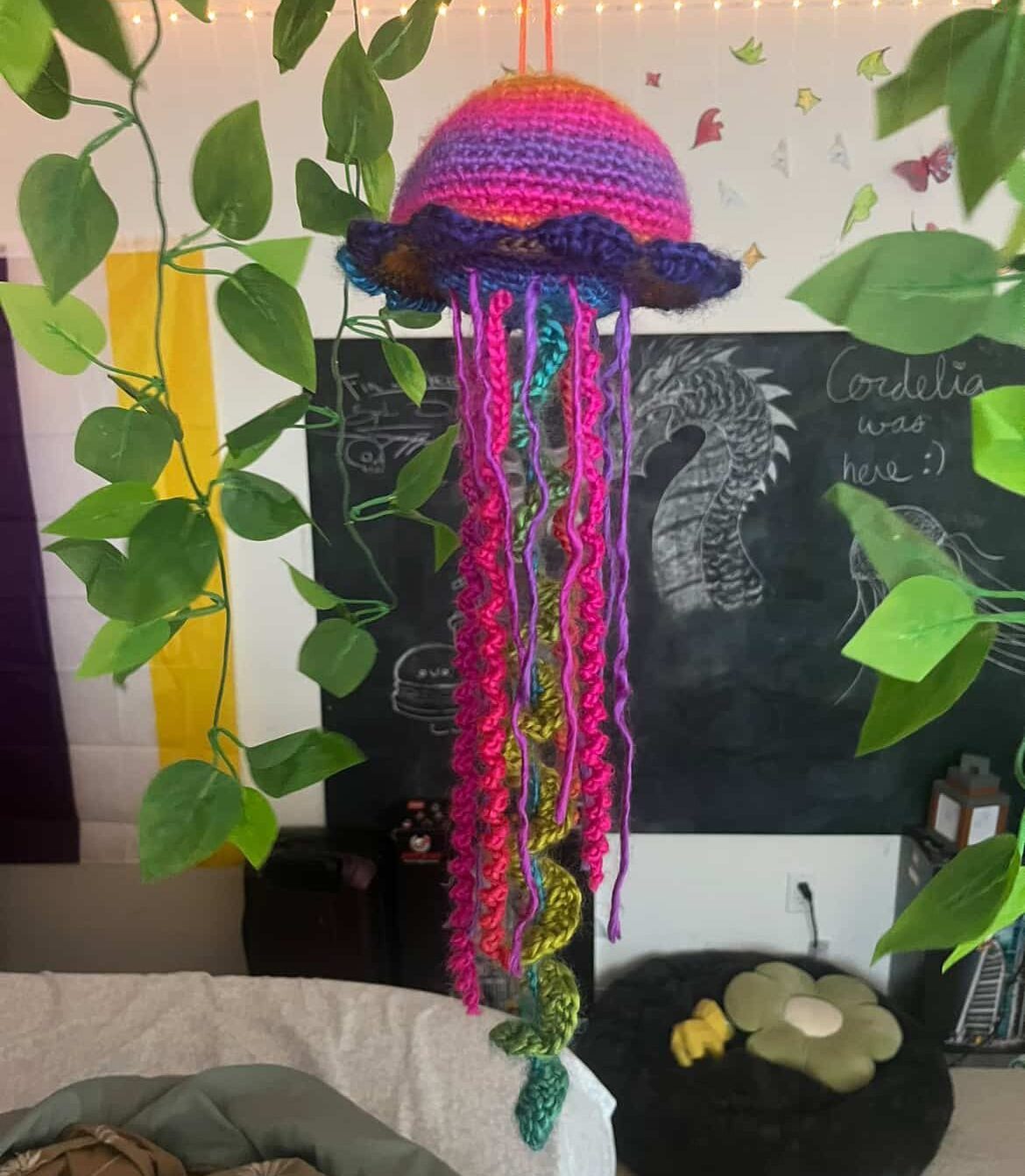
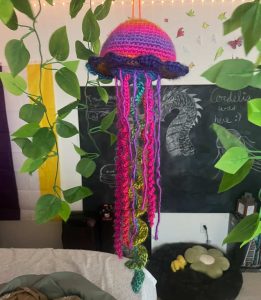
Sunset hues of yellow, orange, pink and purple create a gradient on this crochet jellyfish. Syd Roenfeldt (11) designed the pattern for this hanging jellyfish decoration. Photo courtesy of Syd Roenfeldt.
-
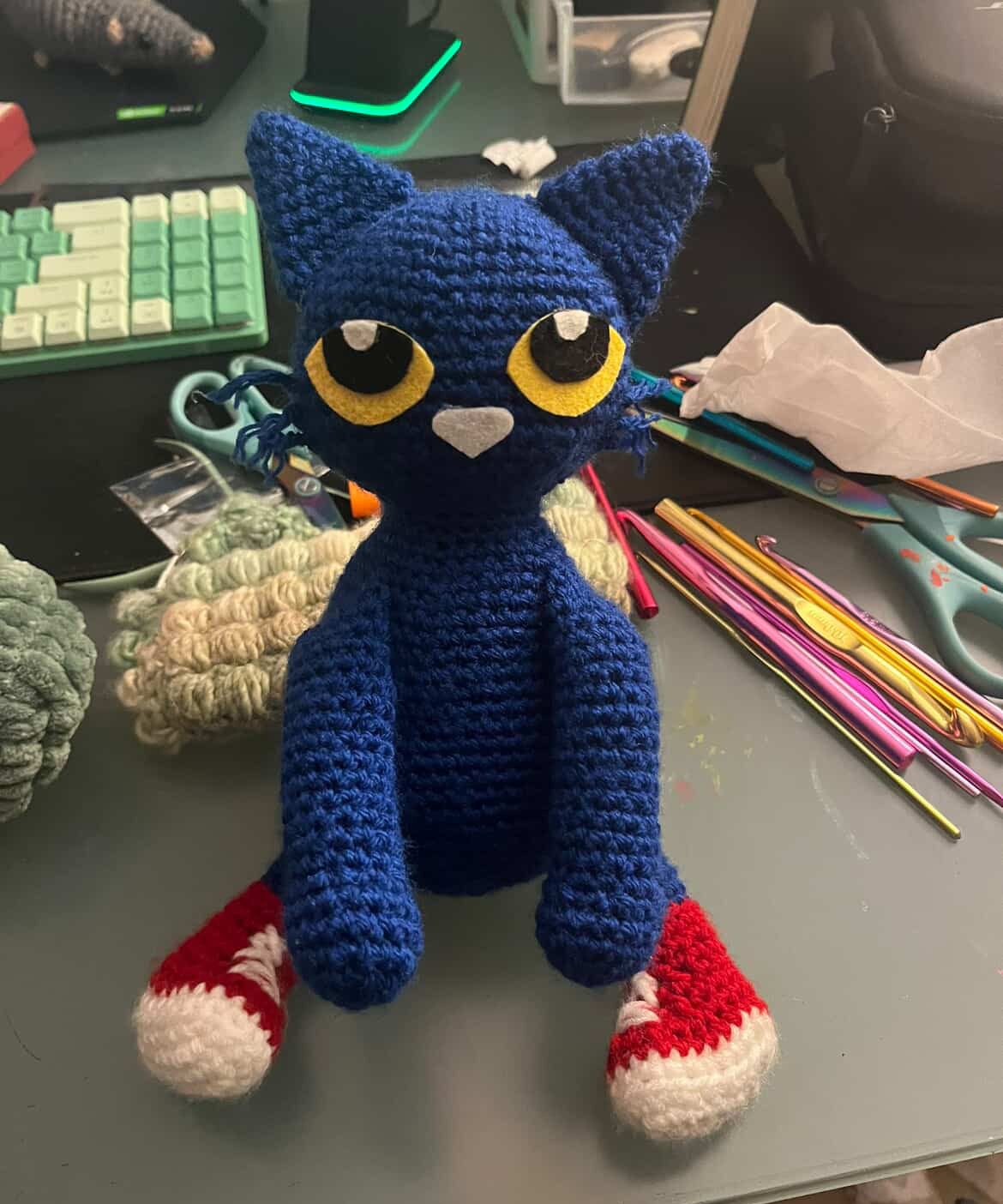
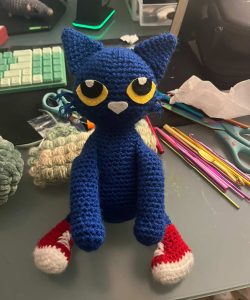
With his signature blue fur and red sneakers, Pete the Cat sits on a desk filled with crochet hooks and yarn. His eyes were made of felt fabric. Photo courtesy of Syd Roenfeldt.
-
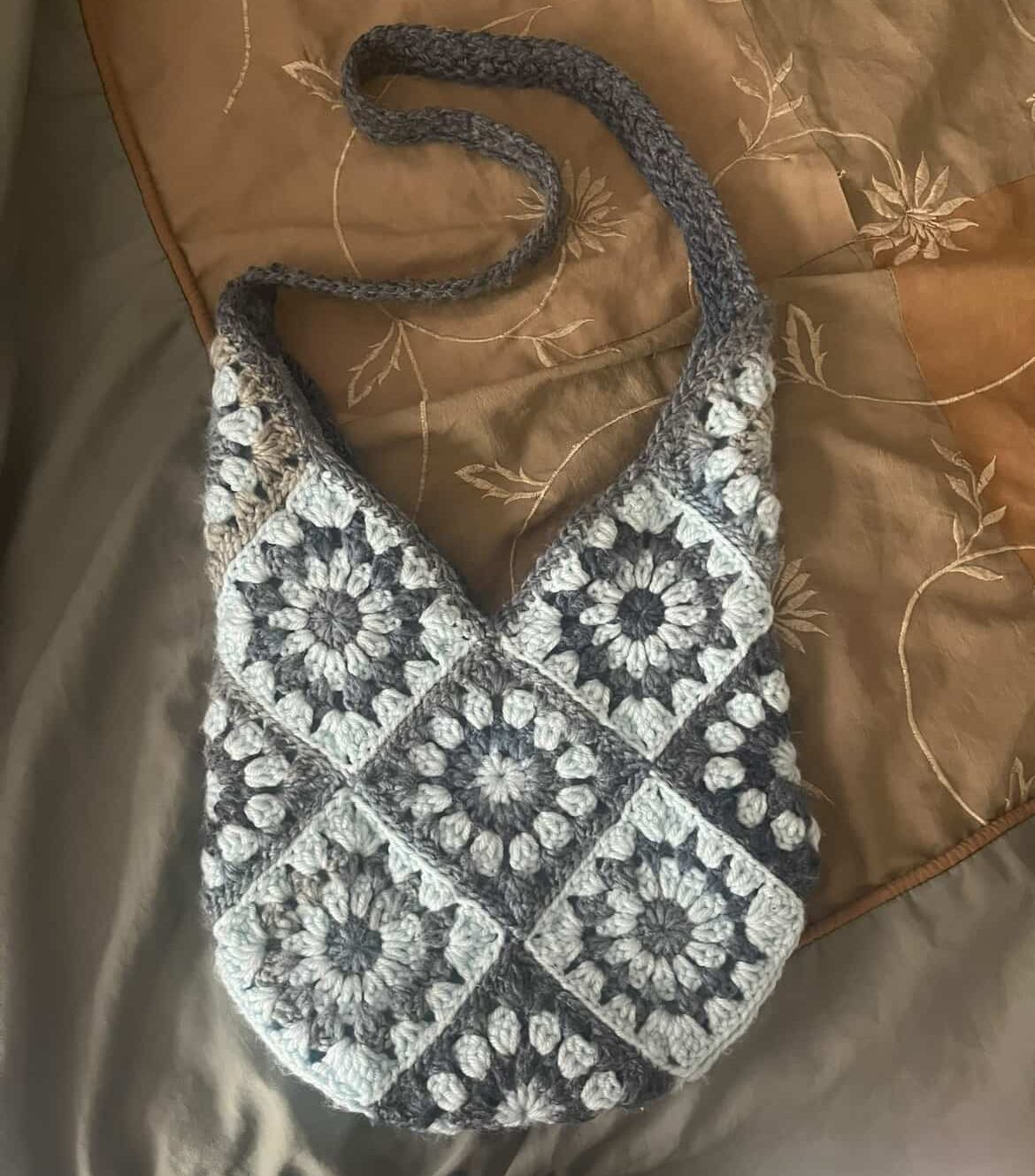
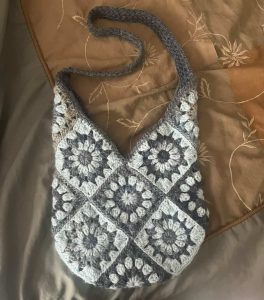
Gray and white granny squares with flowery designs piece together to create a bag. This was crocheted by Syd Roenfeldt (11). Photo courtesy of Syd Roenfeldt.
For many, the allure of learning crochet lies in its aesthetics, versatility and creativity. The neat rows of stitches, colorful bundles of yarn and shiny crochet hooks draw in art and fashion enthusiasts, Pinterest users, plushie collectors and chronic crafters.
Macey Seiter (11), a member of the Crochet Club, sparked her passion for crochet while scrolling through the endless columns of Pinterest.
“I just saw a lot of cute clothes that I liked [on Pinterest], and thought that [it] would be cool to make them instead of spending money [to buy] them,” Seiter said.
Similarly, Soren Crutchfield (11) was also scrolling Pinterest when he stumbled upon pins of “cool outfits that [he] didn’t want to spend a lot of money [buying].” Crutchfield only picked up crochet two months ago, but by the time Halloween rolled around, he realized his vision of making his own clothes by crocheting a spider web top.
When the world was locked inside their homes more than five years ago, many picked up new skills, a phenomenon that was further expanded by people sharing their hobbies online. This was how Syd Roenfeldt (11), president of the Crochet Club, discovered the limitless world of crochet.
“I definitely got into crochet through TikTok during quarantine,” Roenfeldt said. “Just seeing people making so many different things, like clothes, blankets, stuffed animals and tapestries really excited me. So I got into crocheting. I wasn’t very good at it, and it was really hard at the beginning, but eventually I just hit this point where it became really easy for me, and I was just crocheting everything [and] as much as I could.”
Roenfeldt created a TikTok account specially designated for crochet, displaying a variety of works, from crochet Pete the Cat to small Pikachu keychains. For Roenfeldt, sharing the passion of crochet is a source of joy.
“I started giving [crochet gifts] to people, and it really made me so happy seeing them smile, and seeing that I can make this small little thing and it can make someone so happy,” Roenfeldt said. “So I started an Etsy, and I started making stuff for people all the time. I [also] got into the Crochet Club here at school.”
On Etsy, Roenfeldt sells crochet Jellycats, hanging jellyfish decorations, patterns and more.
“Pretty much every single thing that I create [now] I’m creating from my mind, so I don’t really follow any patterns,” Roenfeldt said. “The hardest thing when I’m making a pattern is having to write it down and figure out exactly what I’m doing because, usually, I just [create] as I go, and I just do it where it looks good. But then having to find [a pattern] that is able to be repeated consistently is really frustrating. It’s really hard to make sure that I’m getting everything right consistently so that other people can make it without struggles.”
-
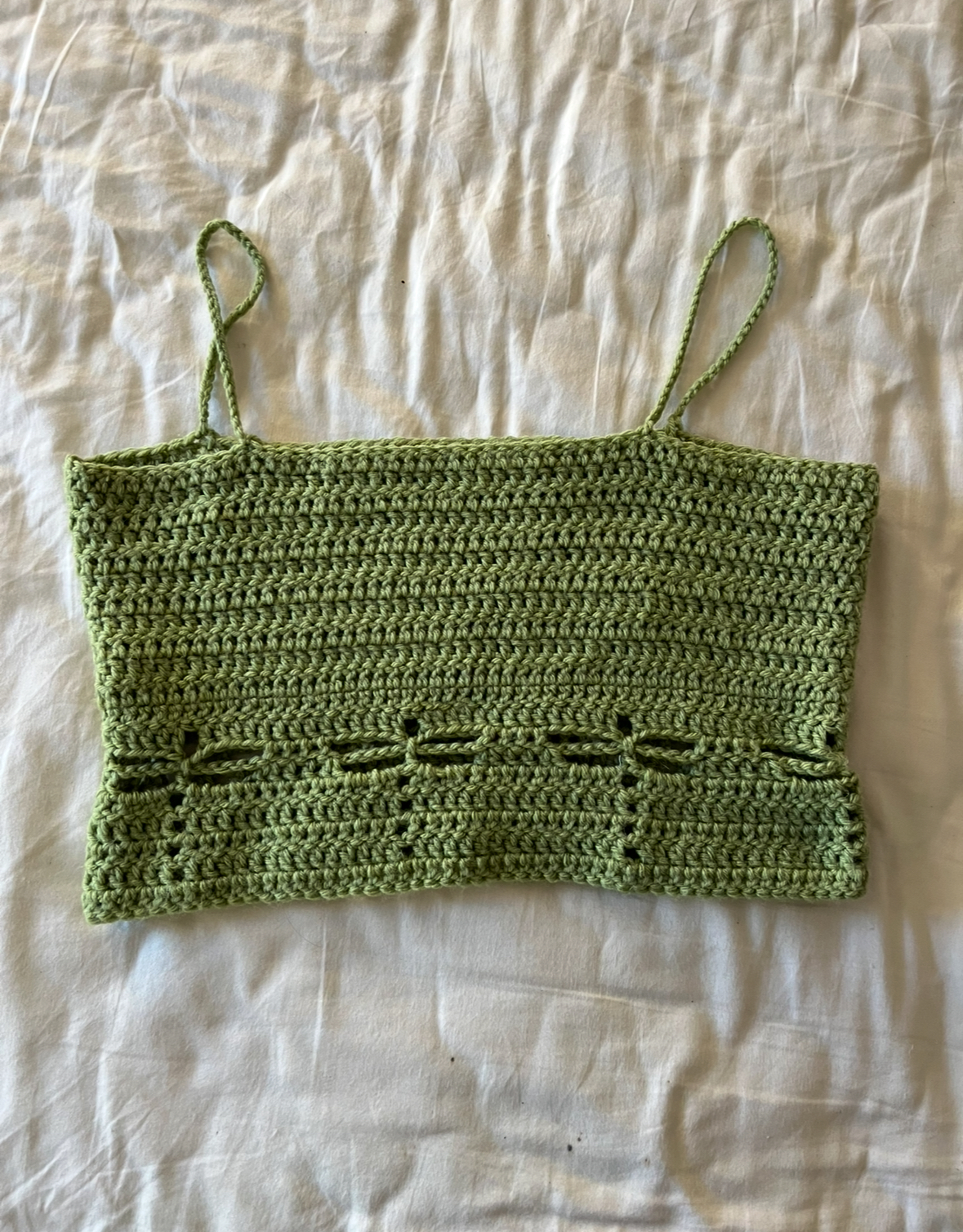
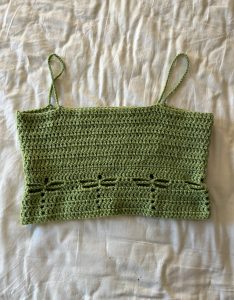
Macey Seiter (11) stitches a green top with spaghetti straps and dragonfly shaped cutouts. Seiter began crocheting when she saw crochet clothes on Pinterest. Photo courtesy of Macey Seiter.
-
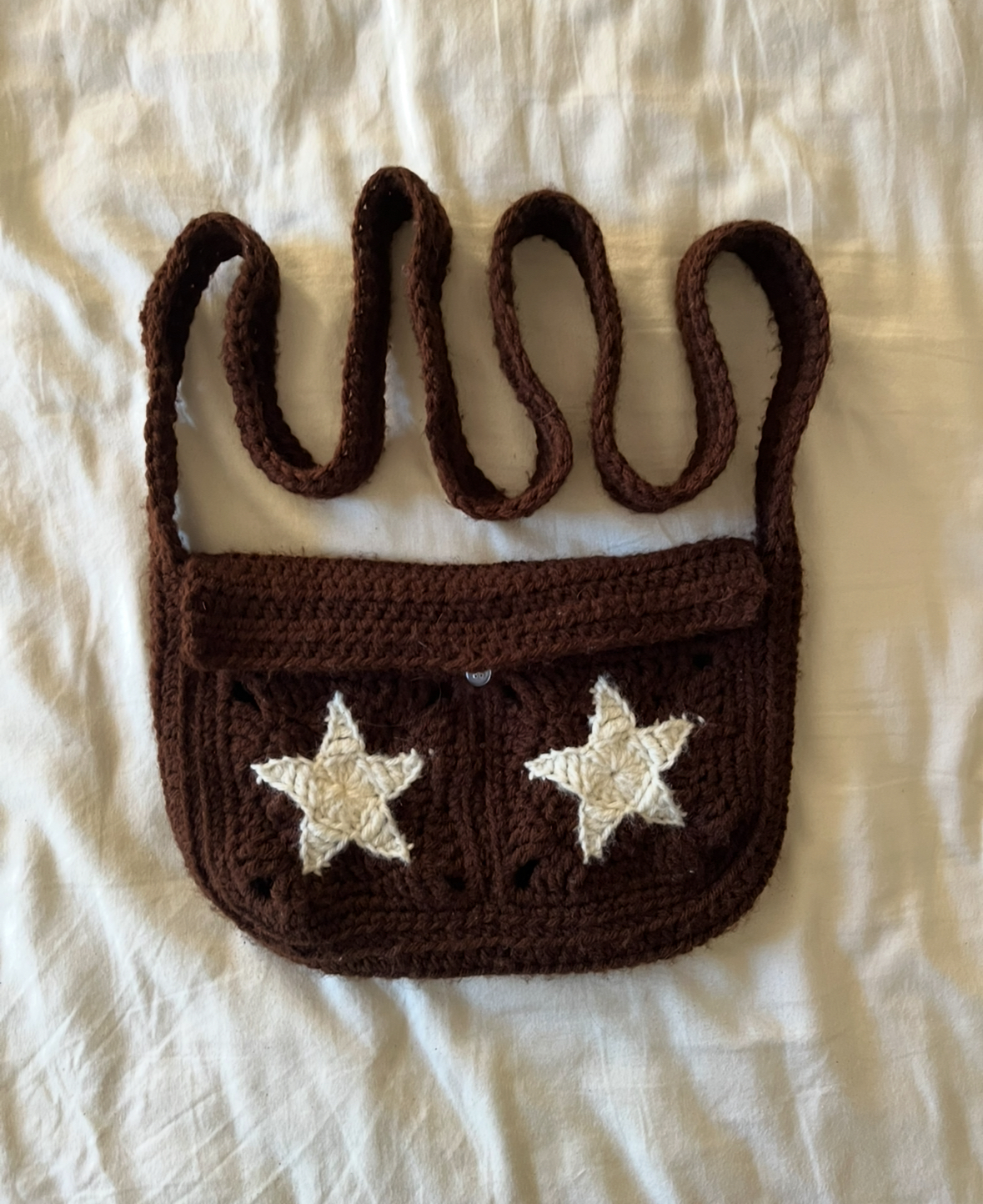
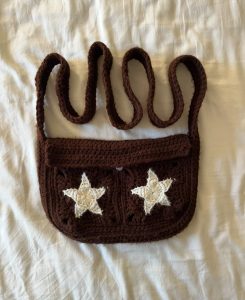
Macey Seiter (11) primarily crochets a variety of bags. This bag was made with a long strap and star shaped designs. Photo courtesy of Macey Seiter.
-
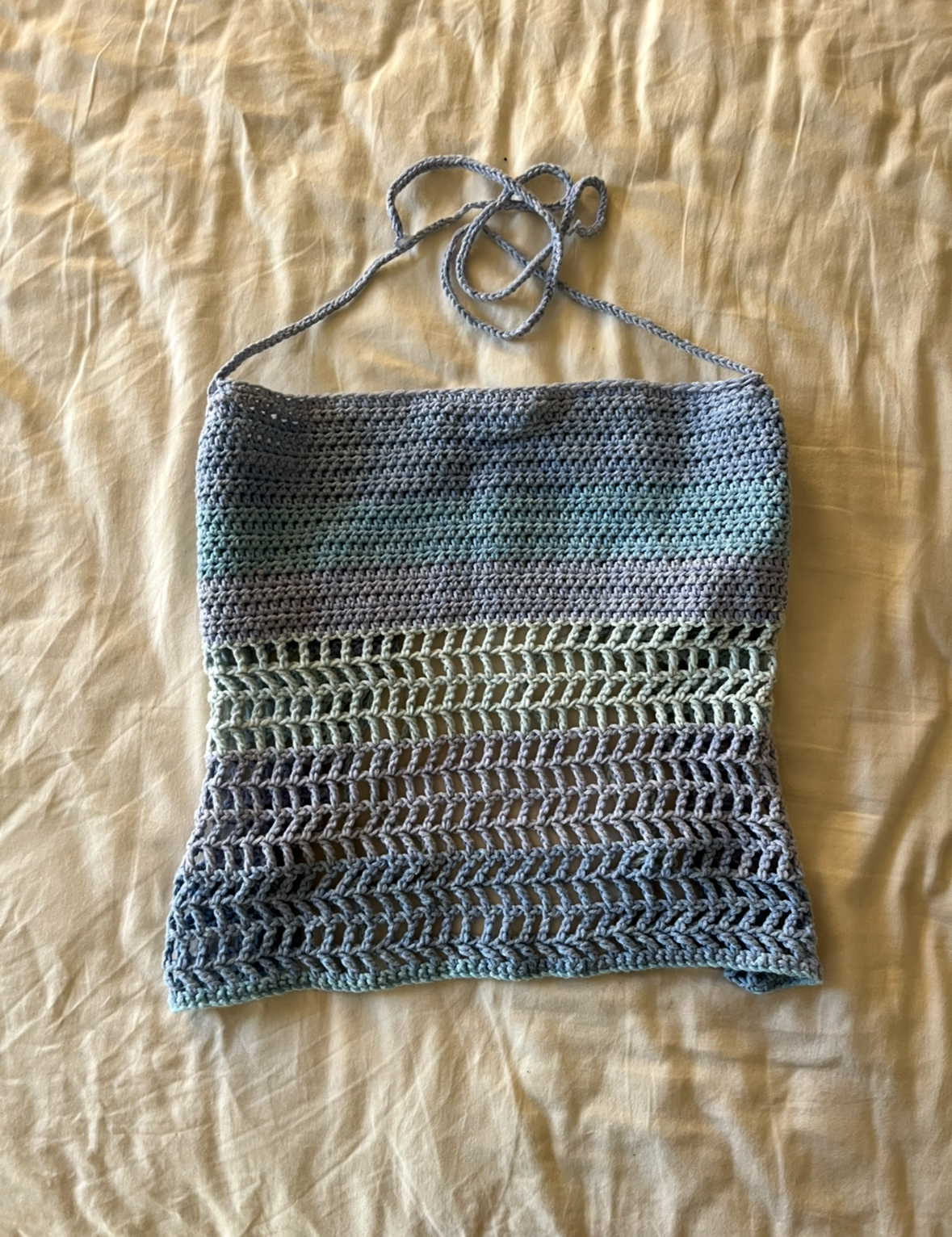
Macey Seiter (11) crochets a top with shades of muted blues, greens and purples. It also contained intricate zig zag designs. Photo courtesy of Macey Seiter.
Balls of yarn slowly slim as they are curled into complex pieces, the crocheter’s mind commanding each stitch, chain and loop at their will. Are the precise designs and formulas in mind, or does the imagination work through impulse and artistic intuition?
For many, crochet is a relaxing and fulfilling pastime. For others, it can be a form of creative self expression. English 9 Honors and English 9 teacher Lara Haines emphasizes the nebulousness between these perspectives.
“It gets [into] the conversation of what is art versus what is craft,” Haines said. “That’s always been a really blurred line, especially across hobbies that typically women have. I hesitate to say that [crochet is] not art, because it is a form of art, and I think that deserves a lot of respect. But for me, personally, it’s more making things for myself and gifts, so it is more in that craft realm. I view it as something that I can do, rather than an artistic endeavor.”
Likewise, Roenfeldt sees crochet as a “peaceful hobby” and prefers to “keep it fun” instead of turning it into a job, which might make the activity feel like a chore. However, Roenfeldt also embraces the artistic aspect of crochet.
“It definitely is an art form and a way to express yourself, to create something and [to] give something,” Roenfeldt said. “I think you can make it political, you can make it kind, you can make it have no meaning. It can be anything. I think [crochet is] very versatile.”
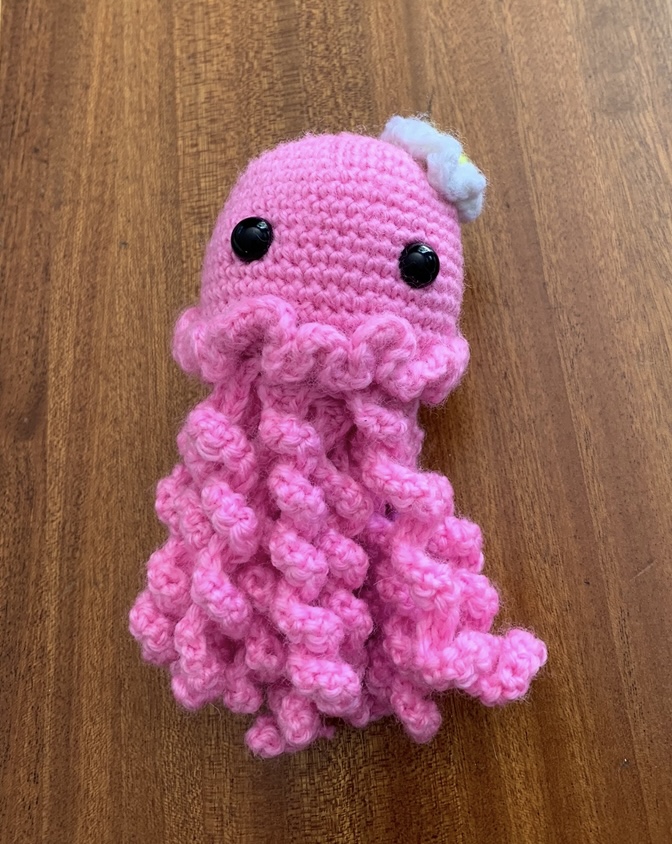
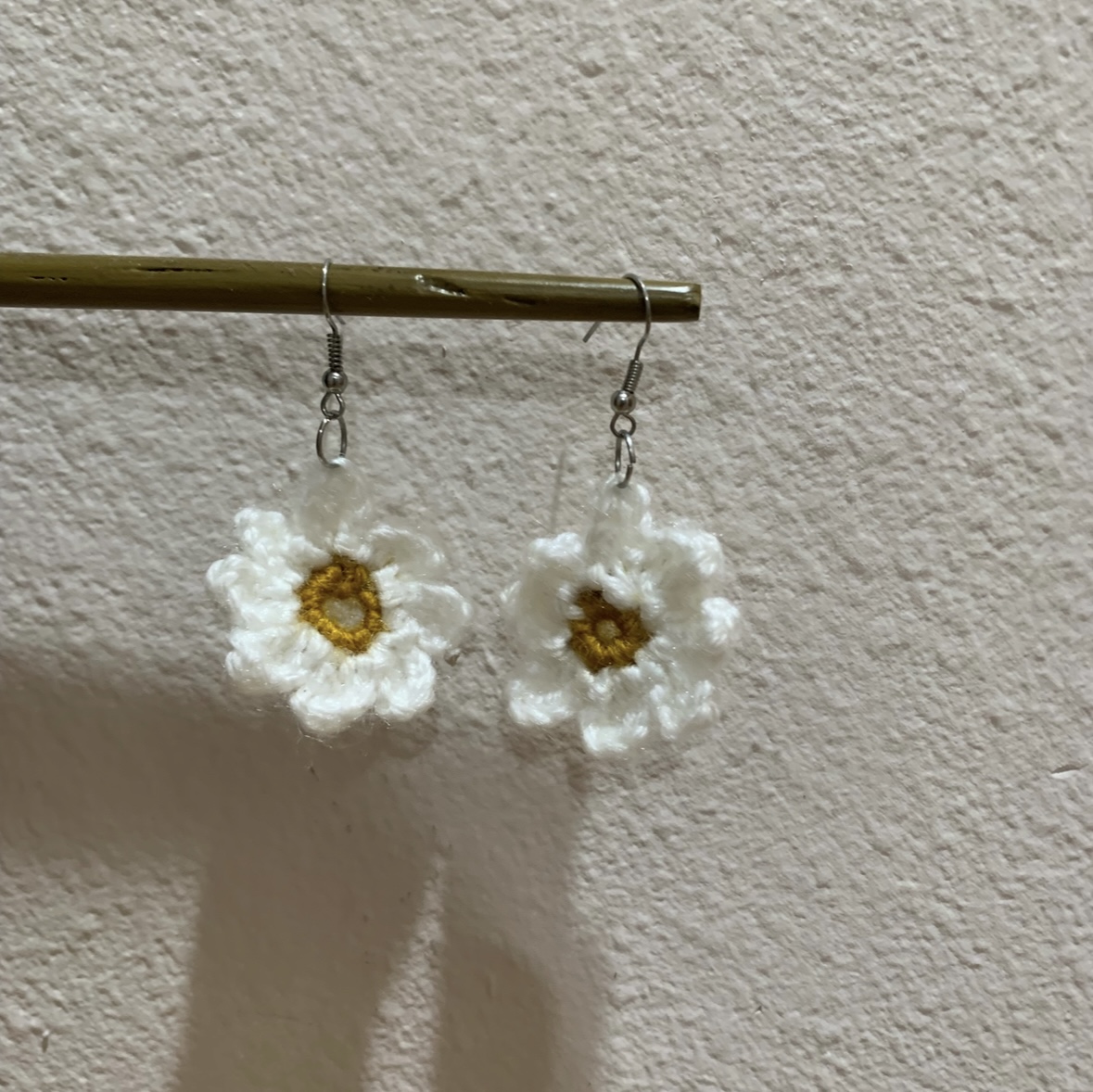
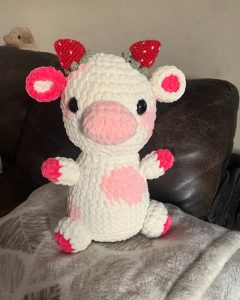
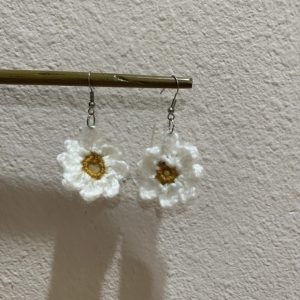
Samantha Feinberg (10) views crochet as a simple and enjoyable hobby that she believes, once one grasps the understanding of crochet patterns, “doesn’t require too much attention to do.” Feinberg’s projects range from strawberry cow plushies and intricate hanging plants to colorful jellyfish toys and dainty daisy earrings, each of which she calmly crafts with movies and shows playing in the background.
“[It’s nice that] I’ll always have something to do with my hands if I’m bored,” Feinberg said.
Crutchfield agrees, but also points out the therapeutic effect of crochet.
“When I first started, it was more of a grounding technique,” Crutchfield said. “If I was super anxious about school, it would force me to take my mind off of my studies because it’s a really hands-on activity. So, instead of being stuck up in your head about whatever’s worrying you, [like] school or personal things, it can help channel that nervous energy into just something to do with [your] hands.”
Putting his full attentiveness into every project, Crutchfield uses crochet as a way to escape the constant clamor of modern life, especially in this digital age.
“I definitely view it as a way to relieve stress because it forces me to put down all the tasks that I have and focus on the different patterns,” Crutchfield said. “It helps me get away from screens because I have to put all my energy into the project.”
Beyond artistic and emotional value, knowing how to crochet is a useful ability that many find to be advantageous in their everyday lives. Haines highlights the skill’s practical benefits.
“Day to day, it’s more of a calming practice, but it’s also a very good utilitarian skill to have,” Haines said. “I needed to modify a skirt that I bought for one of my Halloween costumes, and I didn’t have a waistband to put in it, so I crocheted one, and it was just as elastic as it otherwise would have been. It’s really easy to be able to fit what I don’t have with the skills that I’ve accumulated through crochet.”
For Seiter, crochet even helps her concentration.
“I think it has also helped with my focus because a lot of times I have trouble sitting still, but when I’m crocheting, I can do that for a long time,” Seiter said.
Each piece of yarn threads through time, connecting the crochet imitation lace exports that helped make a living for starving peasants in the Irish Potato Famine to the whimsical scarves made by today’s crocheters. Looking backwards at recent trends, many have noticed a renewal in crochet’s popularity.
“I don’t know if [it’s] just what I’m seeing on my media since I do crochet, but I feel like it has come back a lot,” Seiter said.
This observation is amplified by Roenfeldt’s experiences.
“Due to quarantine, I think a lot of people got into crocheting, and then after quarantine, I think it kind of declined a bit, but more in just the way [where] people weren’t talking about it as much,” Roenfeldt said. “When I was becoming president of this club, I was talking to some of my friends, [and] they were like, ‘Oh my god, I crochet.’ And I was like, ‘Hello? That’s amazing!’ I keep just finding people who know how to crochet everywhere. I think that it’s not talked about that much anymore, because it’s viewed as kind of a grandma-hobby, but I think it’s quite popular, and a lot of people love it.”
Haines believes that, in past decades, crochet has outgrown its reputation of being an old-person activity.
“I think it gained popularity, both crochet and knitting have,” Haines said. “I think for a long time, especially when I was younger, they were considered grandma-hobbies to have, and people would look at you a little bit weird if you did them. But something that I’ve started to see is young people getting into [this] hobby. With more people [crocheting], it’s making it so that it’s not exclusively for one group.”
Looking forward, Haines believes in the value of constantly expanding one’s skillset.
“Something that I just think is really important is to learn as many skills as you can,” Haines said. “Taking crochet forward in my life, it’s something that I can build up as both a pastime and practicing mental plasticity.”
Haines wants to learn more skills in crochet, such as Tunisian crochet or doilies. Others express excitement for possible future projects.
“I would really like to make either a temperature blanket or a bouquet blanket,” Feinberg said.
-
This crochet cow plushie has rosy cheeks and strawberry horns. Samantha Feinberg (10) started crocheting after her parents got her a kit for Christmas. Photo courtesy of Samantha Feinberg.

-
Samantha Feinberg (10) crochets a pink jellyfish with arms curling in spirals. Feinberg’s projects have mostly been animals in the past. Photo courtesy of Samantha Feinberg.
-
These small crochet daisies are earrings, showing how jewelry can be crocheted. Samantha Feinberg (10) enjoyed gifting her crochet projects to friends. Photo courtesy of Samantha Feinberg.
As the once voluminous bundle of yarn reaches its end, the crocheter steps back to survey the piece so far before reaching for the next skein. For many, crochet is a way to spread art, kindness, creativity and passion throughout the community; it is a way to convey generosity by gifting the fruits of one’s labor. Each ball of yarn weaves people closer together, a connection Roenfeldt hopes to expand by introducing more people to crochet.
“I really love teaching people [to crochet] because, again, it’s just about seeing them happy and seeing that they’re creating these things and that it’s having an impact on these people,” Roenfeldt said. “It’s really meaningful to me.”
Frank Carlino • Nov 12, 2025 at 5:55 pm
Great Article!