
Spotting a glistening seashell at the beach, pulling a rare hit from a card pack, receiving antiques from relatives — kick-starting a collection, for many, starts a lifelong treasure hunt.
Collections begin in different ways from person-to-person. For David Wilson (10), a baseball card collector, being heavily involved in the sports community sparked his commitment.
“I’ve been collecting for 3 [or] 4 years, and I started collecting because I watch a ton of baseball,” Wilson said. “I watch almost every Padres game I can, and my dad, a few years ago for my birthday, got me cards. Ever since, I’ve just been collecting … My family’s [a] pretty big sports-family, … but I’m kind of the first to start collecting.”
Card-enjoyers — whether major league sports, Pokémon or Magic: The Gathering fans — open or “rip” packs, and well-known vendors have an increasing social media presence.
For instance, Arthur Chang (11) stopped collecting Pokémon cards after his childhood. However, he recently “saw [Pokémon cards] a lot on social media” and was inspired to start collecting again by an influencer called “Deep Pocket Monster on Instagram … because he did a lot of Pokémon [card] openings.”
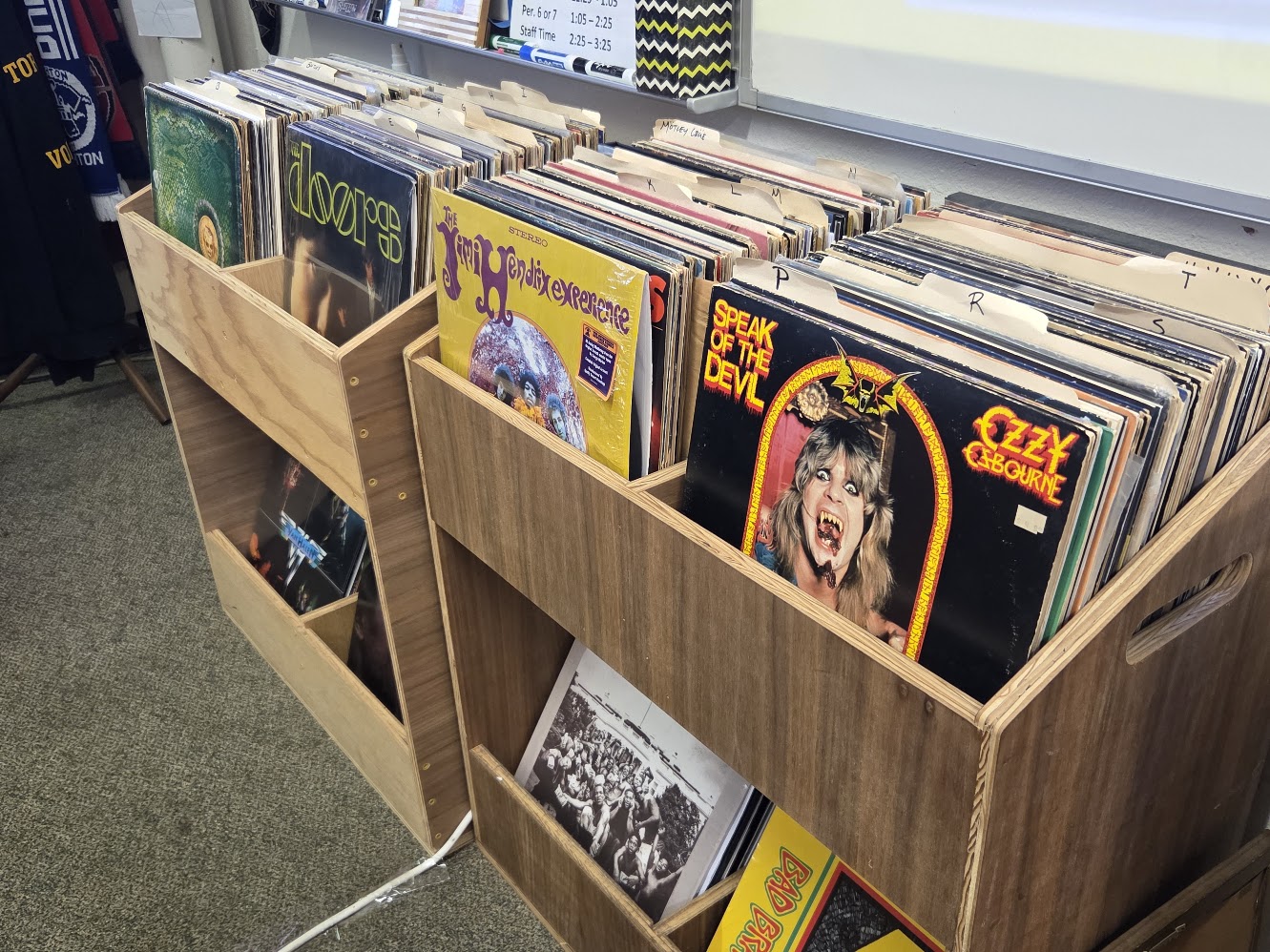
On the other hand, Austin Wade, an Advanced Placement (AP) World History, College Preparatory U.S. History, Social and Political History of Rock and Roll and Surf Physical Education teacher, started collecting music vinyls since childhood.
Wade’s collection started “very, very small … in high school,” and he was “gifted a couple records before [he] even had a record player.” Then, when he was in his “‘20s, [he] had an uncle who moved away and had a huge record collection [he and his sister inherited].”
Wade’s mother played a fundamental role in exposing him to music.
“[My mom] was the first person to really open my ears to music at a young age,” Wade said. “So I remember my birthday, when I was 10, she gave me my first Guns N’ Roses and my first Van Halen cassette tapes. Just from a young age, I was exposed to heavy rock and roll.”
Collections, for many, hold both monetary and sentimental value, along with memories.
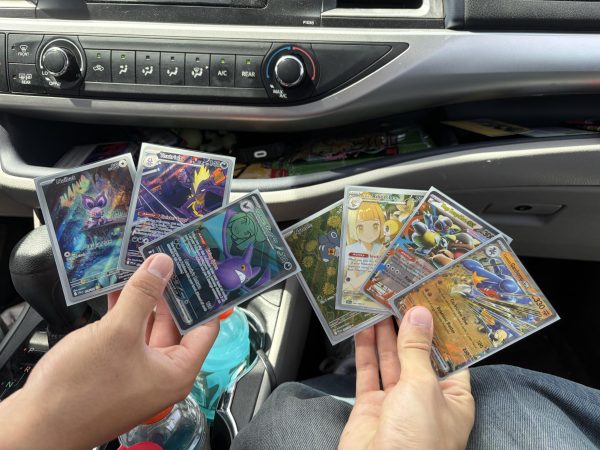
“The more expensive [Pokémon] cards are usually more art-heavy, and I usually like to collect those,” Chang said. “They just make me happy to look at, like, ‘Whoa, it’s mine, right?’ It’s some sort of sentimental value that comes with holding a tangible object that just looks pretty and you know is worth a lot.”
Memories are held through certain items in a collection. Wilson’s favorite card, a Shohei Otani card, was his “first big-time card” that was gifted to him by his family.
“That Ohtani card my grandpa sent me, he’s getting pretty old and [the card is] just a cool memory,” Wilson said. “When he got me that card, he was pretty excited when I sent him a picture of it, explaining what it was.”
Similarly, Wade’s vinyl collection reminds him of both the artist and the emotional value of loved ones.
“I have records from my favorite bands like Motley Crue and Van Halen [that] I love,” Wade said. “But from my dad, he gave me some of his original Beatles records. Some of those are the original prints from the 1960s. Those ones I value just for their … sentimental value.”
Often, people are reminded of these memories through nostalgic moments — reliving them.
“One of my favorite music memories was actually seeing a cover band of one of my favorite bands, and it was at the Belly Up in Solana Beach,” Wade said. “I was seeing a band called the Atomic Punks, which was a Van Halen tribute band. Watching the energy of these younger musicians play the music of artists who are now a lot older, I just remember, even though it wasn’t the real thing, just being blown away.”
While Wade finds joy through looking backward and reliving music of the past, others find happiness in the apprehension of the present moment. For collectors, the simple act of uncovering something rare provides an instant boost in morale.
“I get pretty happy, because sometimes it feels like, ‘Oh, I got this pack.’” Wilson said. “‘There’s going to be nothing good in it.’ Then when you get a hit, it kind of changes your mindset on other things … It makes me a lot more optimistic.”
Alongside personal value, the art of collecting brings people together.
“Ripping packs with people [is] probably my favorite part [of the hobby], … the hype of absolutely tearing through packs with your friends,” Chang said.
Through shared terminology and popular culture events, avid collectors form communities.
“It’s helped me connect with [my friends] a lot, but I’ve also attended card shows and went to card shops,” Chang said. “There’s definitely a Pokémon community that, to a certain point, I’m a part of … It’s just like being with people who know exactly what you’re talking about.”
Similarly, in music, collecting vinyls brings together listeners of differing genres.
“In general, it brings me closer to the people who just enjoy all types of music,” Wade said. “Because my collection is all over the place, everything from hip hop and reggae to … soul, rock, jazz and old school, like Sinatra, [my collection is] like a sampling of everything.”
What started as a personal compilation of eclectic tastes naturally expands into a shared history. Collecting’s never-ending nature is an archive never truly complete.
“I think [collecting vinyls will] be an ongoing forever,” Wade said. “As I share music, I actually have students, especially my rock and roll history students, who’ll donate a record to the class. So every year my collection grows, but now it’s more from students bringing in their favorite artist or [another record] … and I have them sign the back, so it’s like a living yearbook.”