

Approximately 18% of college students in the United States major in science, technology, engineering and mathematics (STEM). Many students pursue biochemistry, a field within STEM that combines biology and chemistry. Currently, over 580 colleges and universities offer this major, resulting in around 10,000 yearly biochemistry graduates.
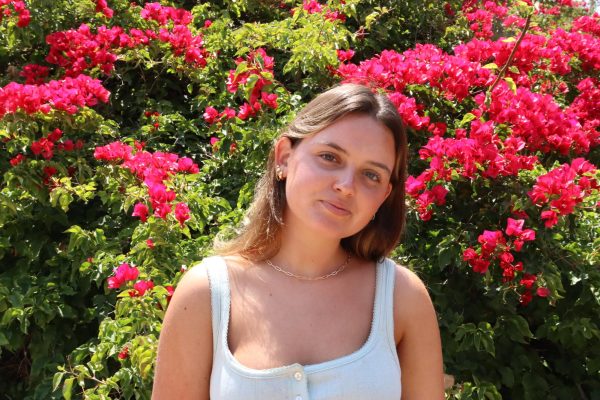
College Preparatory Chemistry and Honors Chemistry teacher Alexandra Anthony was a biochemistry major at the University of San Diego (USD), graduating Magna Cum Laude in 2012. Anthony’s passion for science started through her lifelong love of softball.
“I played softball growing up, and ended up playing it in college,” Anthony said. “I enjoyed learning from a young age about how to take care of your body, human anatomy and kinesiology, so I’ve always been interested in science.”
Initially, Anthony was intimidated by the rigor of STEM, which she experienced in her high school classes.
“I remember chemistry being really hard in high school and I was not super interested in it,” Anthony said. “When it was time for me to graduate, one of my good friends said she was going to major in chemistry in college, and I thought she was crazy because it was so hard.”
Once Anthony started college, her perspective changed.
“When I got to college and started figuring out what I was interested in and narrowing things down, I realized that just because [a biochemistry major] was hard does not mean that it was not cool, or something that I was not interested in,” Anthony said. “I decided just because it was hard … [doesn’t mean] I should shy away from it.”
Anthony lives by the quote, “It’s supposed to be hard. If it wasn’t hard, everyone would do it. The hard is what makes it great.” Tom Hanks, portraying the fictional character of Jimmy Dugan, popularized the quote in “A League of Their Own.”
“I’m a softball player, so … I kind of relate back to that quote, even with just choosing a major,” Anthony said. “If you’re interested in it, go for it. Find something you’re passionate about and want to learn about.”
When choosing among the STEM majors, Anthony decided biochemistry would be most relevant when she was ready to pursue a career post graduation.
“There’s some jobs that look for a biology degree and some jobs that look for a chemistry degree,” Anthony said. “So you are kind of able to qualify for both.”
Anthony’s most beloved professor at USD was Debbie Finocchio, USD Associate Core Director and Department of Chemistry & Biochemistry faculty member. Finocchio was a passionate educator and connected theory to the world outside of the classroom. One of Anthony’s fondest memories with Finocchio was a lesson about how chemistry relates to cooking.
“What we were learning in her class applied to so much more than just in the four walls of the classroom,” Anthony said. “That is something I try to do a lot with my students, connecting what we are learning to the real world.”
Anthony shares that being a biochemistry major requires sacrifice, dedication and discipline.
“I studied a lot more, did a lot more work and attended a lot more hours of labs than a lot of my roommates who chose different majors,” Anthony said. “Living with people who had easier workloads was a challenge. It was a challenge to stay motivated, realize that I was on a different path than others and needed to make different choices.”
Before Anthony began her teaching career, her first job was an internship at the San Diego Police Department, working in the forensic biology and chemistry units. She analyzed crime scene evidence, examined narcotic vaults, reviewed items that were confiscated at different crime scenes and read crime reports.
“After the crime lab, I worked in a pharmaceutical lab where we tested medical devices,” Anthony said. “I also worked in a biotech lab where we synthesized DNA. I enjoyed the science in these jobs, but the day-to-day of performing repetitive experiments allowed for little socialization. This made me realize that it was not something I wanted to do forever.”
Anthony has been a teacher at this school for the past seven years. Someday, she hopes to teach AP Chemistry, which Michael Rall, AP Chemistry and Honors Chemistry teacher, teaches a few classrooms over. Sila Sekergiu (12) is in Rall’s third period AP Chemistry class and plans to major in biochemistry starting next fall.
Sekergiu plans to become a pediatrician and is taking the pre-med route in college. She credits her high school science courses including AP Biology, AP Physics and AP Chemistry for sparking her interest in the major and helping her develop strong study habits.
“A big part is paying attention in class, because I find it difficult to teach yourself things at home before tests,” Sekergiu said. “I also recommend going over all the lessons and trying to understand them to the best of your abilities through repetition and practice.”
Outside of school, Sekergiu volunteers at the University of California San Diego hospital and is an intern at the Sarmal company which focuses on lab work. She advises underclassmen who are interested in pursuing biochemistry to, “make sure they like biology and chemistry because of their difficulty.” She also noted that students “should not force themselves into it and they should actually enjoy the learning process and scientific knowledge.”
Another aspiring biochemistry student, Dylan Van-Winkle (11), credits his interest in STEM to several dedicated teachers, Julianna Newell, Biology Living Earth and AP Biology teacher, and Angela Willden, Honors Chemistry and AP Chemistry teacher. According to Van-Winkle, they offered “fun” biology and chemistry classes that helped to engage him in the sciences. Van-Winkle is also a part of the Biomimicry, Innovation and Entrepreneurship club at the school.
While Sekerguis’s career aspirations lie in the healthcare field, Van-Winkle is exploring engineering fields within biochemistry.
“I am looking into fields where you use science to create new things,” Van-Winke said. “I am also considering furthering my education after university depending on what I decide to pursue a career in.”
Anthony acknowledges the many opportunities a biochemistry degree can bring.
“Just because you major in one science area doesn’t mean that you cannot work in another one,” Anthony said. “I think that learning basic scientific skills, acquiring strong work habits and earning a science degree shows potential companies that you are a hard worker. Showing that you have the skills and ability to learn something hard and push through is very important.”
Biochemistry, and science in general, give individuals opportunities to solve real-world problems.
“Science can take you literally anywhere,” Anthony said. “It is a part of everything and with the future constantly evolving and being so dynamic, I believe that there are going to be a lot more careers available that involve chemistry and science in some way. Science also teaches you how to think critically and perform skills that will help you with whatever you choose to do, even if it does not directly relate to science.”