

Feb. 6: Two weeks before the CCA walkout
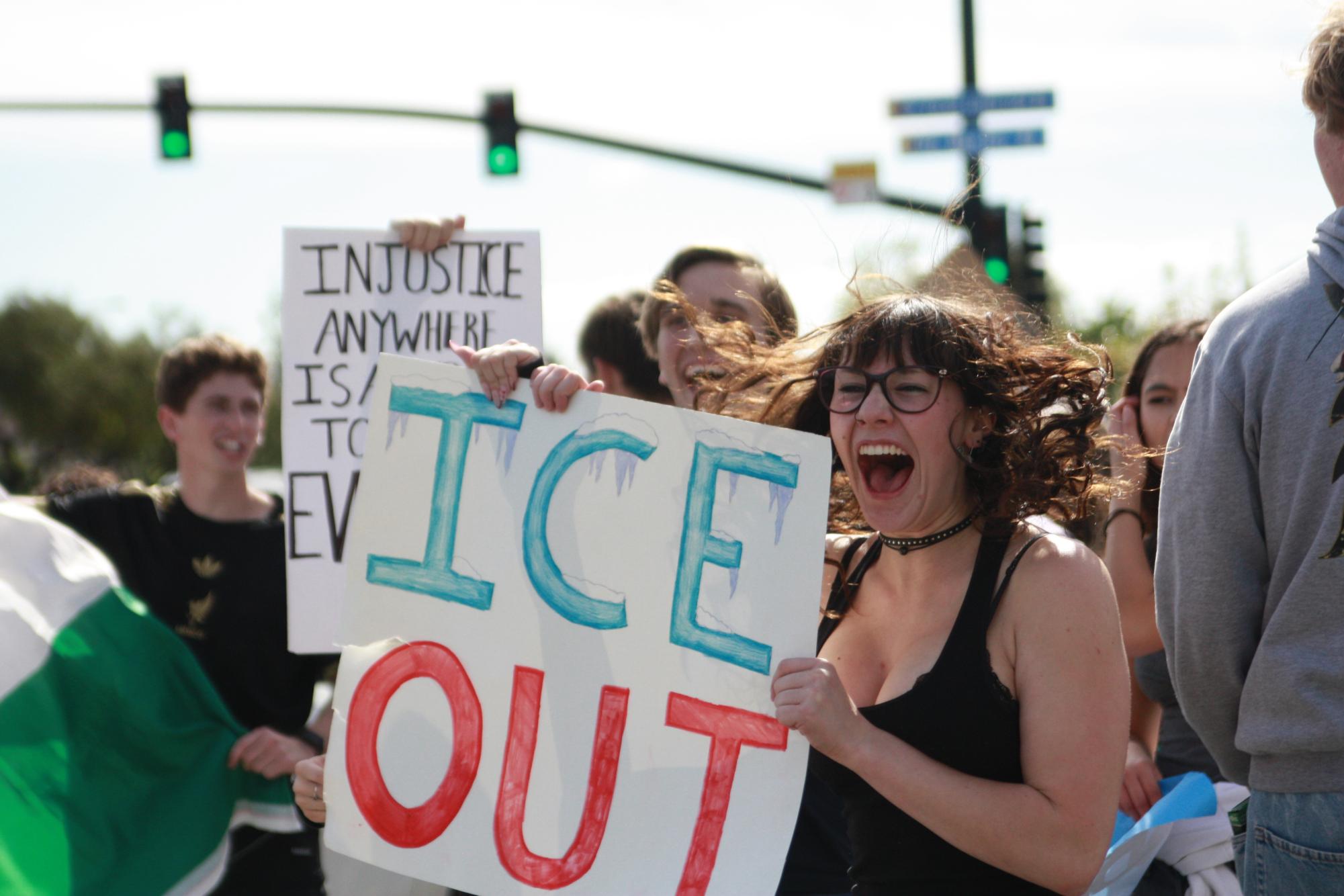
At 12:40 p.m., students at TPHS walked out to protest ICE.
That evening, Turquie, Harron and Rafii were away at dinner in Lake Arrowhead, Utah when they saw the TPHS walkout page.
“I remember seeing it on Instagram,” Turquie said. “I was like, ‘Wow, this is such a great idea,’ and then we took action and made an Instagram account right away at the dinner table.”
Leading up to the walkout, Harron heard some students negatively commenting: “Oh my God. Like, are these guys serious?”
Although Turquie does not believe the CCA walkout will “end ICE,” he still wants “to make a small difference and help out.”
“What’s going on in the world obviously isn’t great,” Turquie said. “So any small difference counts.”
Feb. 19: One day before the CCA walkout
The CCA walkout Instagram posted that the protest would begin at 12:45 p.m. and drew out a route along Village Center and Carmel Valley Road.
Feb. 20: 12:42 p.m.
By 12:42 p.m., staff were stationed at the crosswalk between CCA and Village Center Loop Road. They communicated via walkie-talkie.
Since the planned walkout route was near the highway, staff “[felt] a responsibility to the safety of [the] kids,” according to Assistant Principal Garry Thornton. Earlier in the school year, three Pacific Trails Middle School students were injured in a car accident near the highway. Thorton clarified that the staff supervising the students “wasn’t, in any way, an endorsement.”
Thornton did not receive pushback from community members about the walkout besides a “few emails.”
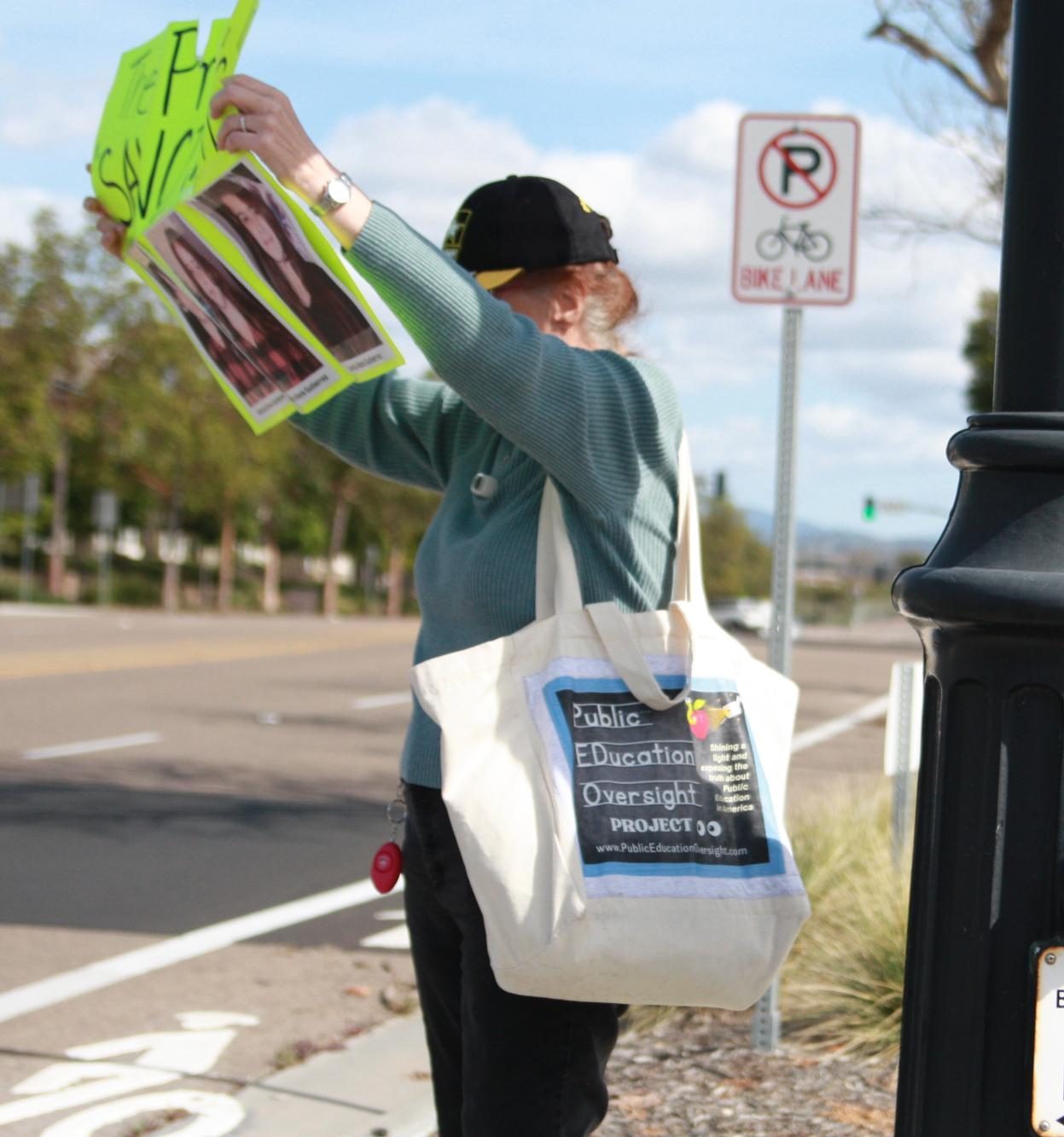
At the intersection of Carmel Valley Road and Edgewood Bend Court, they passed counter-protesters Marci Strange, Chairwoman of the Taxpayers Oversight for Parents and Students (TOPS) of San Dieguito Union High School District, and Mary Davis, a retired Police Dispatch Officer. Both wanted to share an “alternate perspective.”
“I think that a lot of the education that is going on right now is very one-sided,” Davis said.
The counter-protesters raised neon yellow posters reading, “The price of sanctuary.”
“My poster features six dead children, and there are actually seven that I’m aware of,” Davis said. “It’s very hard to track because the news does not always report this immigration status, but [for] the ones I’m able to verify, there are seven dead children in California at the hands of [Senate Bill] (SB) 54 sanctuary policies.”
SB 54 is the California Values Act, which restricts state and local law enforcement agencies from using resources for federal immigration enforcement.
“Illegal aliens are killing some of our youngest people,” Strange said. “Child trafficking is really huge. Nobody talks about that.”
Strange and Davis believe “immigration reform would be a better solution.”
Davis said that, by following the students, supervisors “placed [themselves] under a duty of care … the minute they assigned staff to go follow them.”
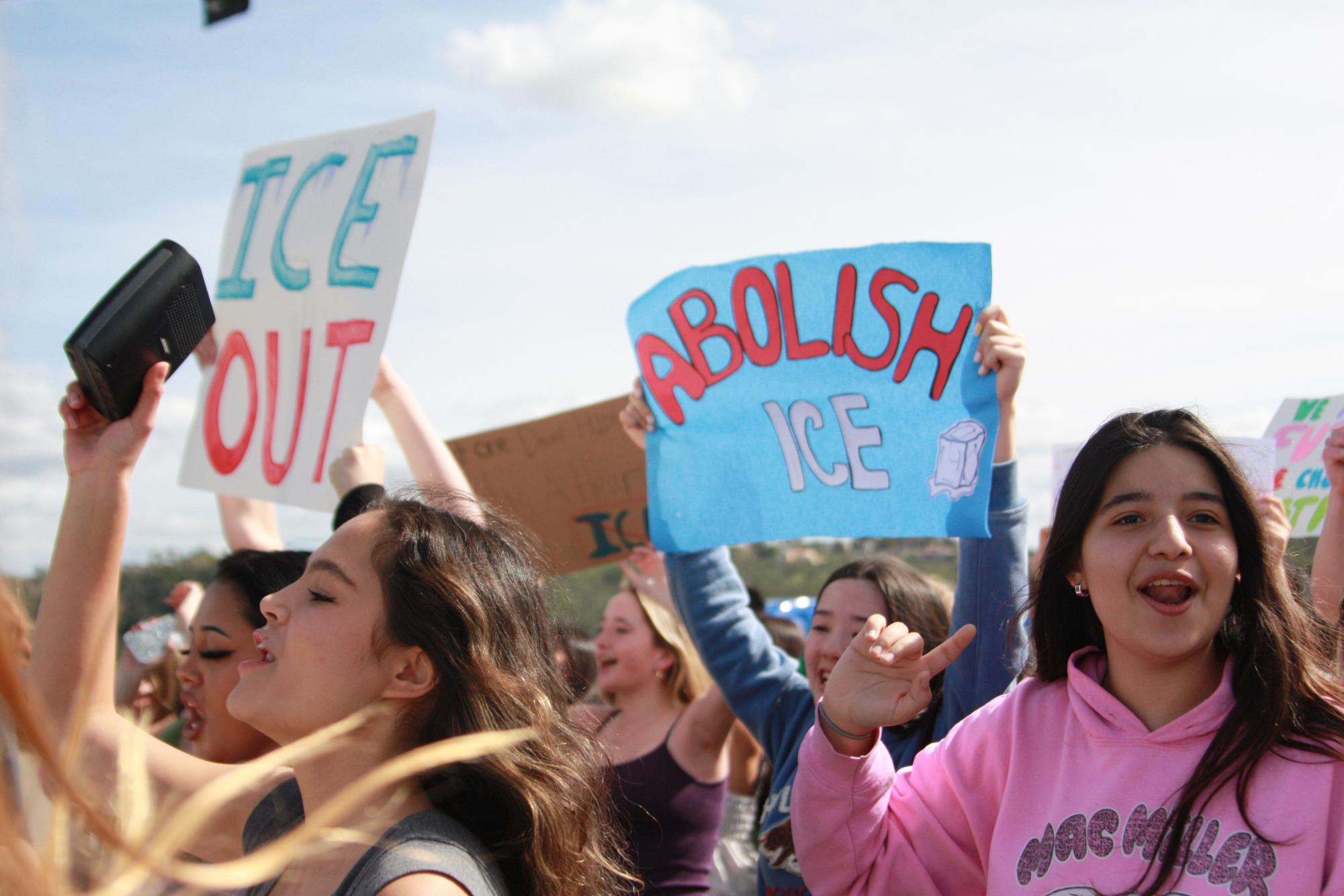
The protesters circled the Carmel Valley Road turnaround next to Ted Williams Highway and stood on both sides of the road for 10 minutes as “Freedom” by Beyoncé rang out.
A police car followed the protest but did not interfere. Assistant Principal Kathryn Freeman and Coordinator of College and State Testing for the district Robert Shockney followed at the tail of the protest.
Feb. 20: 1:40 p.m.
Around 1:40 p.m., the students returned to campus. Roughly eight minutes later, teachers began taking attendance a second time.
Even though students were marked truant, “class is not as important as these causes,” according to student protester Ian Covell (12). He participated in the walkout because he does not “agree with how immigrants are being treated when they’re just trying to build better lives for themselves and their families.”
“Some people need to [seek refuge], and I don’t think that should be a crime, that they’re coming here,” Harron said. “I don’t think that they should incur fines. I don’t think that they can be thrown back. Also, they’re deporting them to countries that aren’t even their country of origin, which is crazy … I think it needs to be taken on a case-by-case basis. But I think in most cases, illegal immigration is done out of necessity, and not out of malice.”
One of Turquie’s close friends came to the United States legally, “but ICE has been threatening his family.” As a Mexican and Peruvian, the walkout is personal to Turquie.
“I wasn’t born in the U.S.,” Turquie said. “I was born in Mexico. … This is directly impacting me, … so, like, I still have that fear. Literally, my parents tell me all the time: ‘Whenever you go out, don’t [be] stupid … because you don’t want to be the one getting in trouble and getting deported.’”
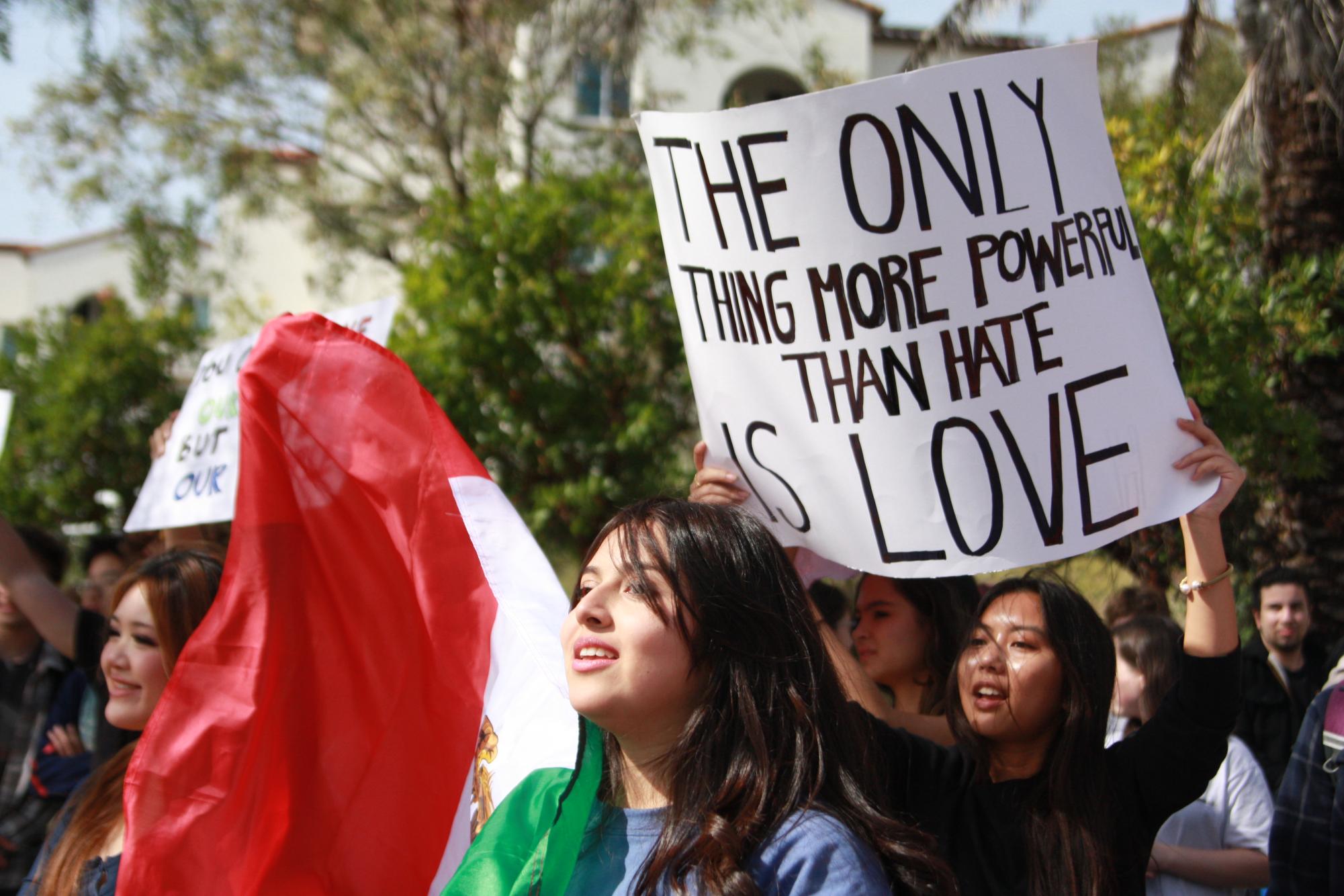
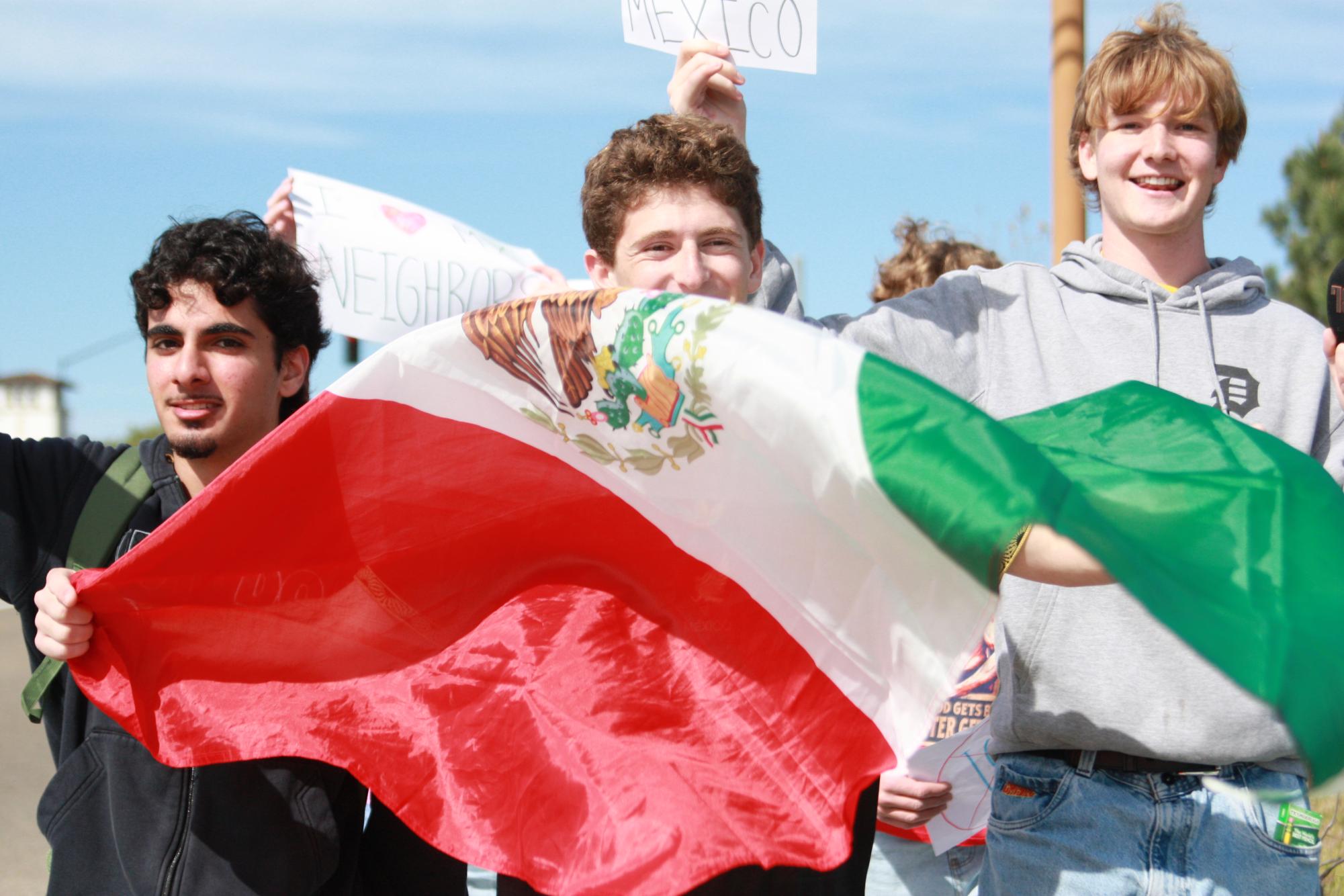
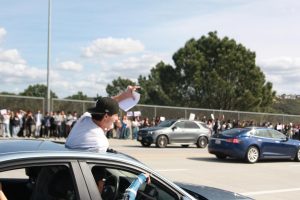
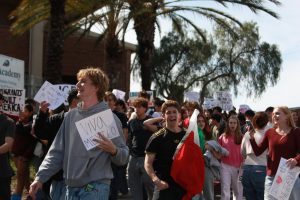
Still, Turquie is “super proud of being Mexican.” At the protest, Turquie draped the Mexican flag over his shoulders and waved as oncoming cars honked in support.
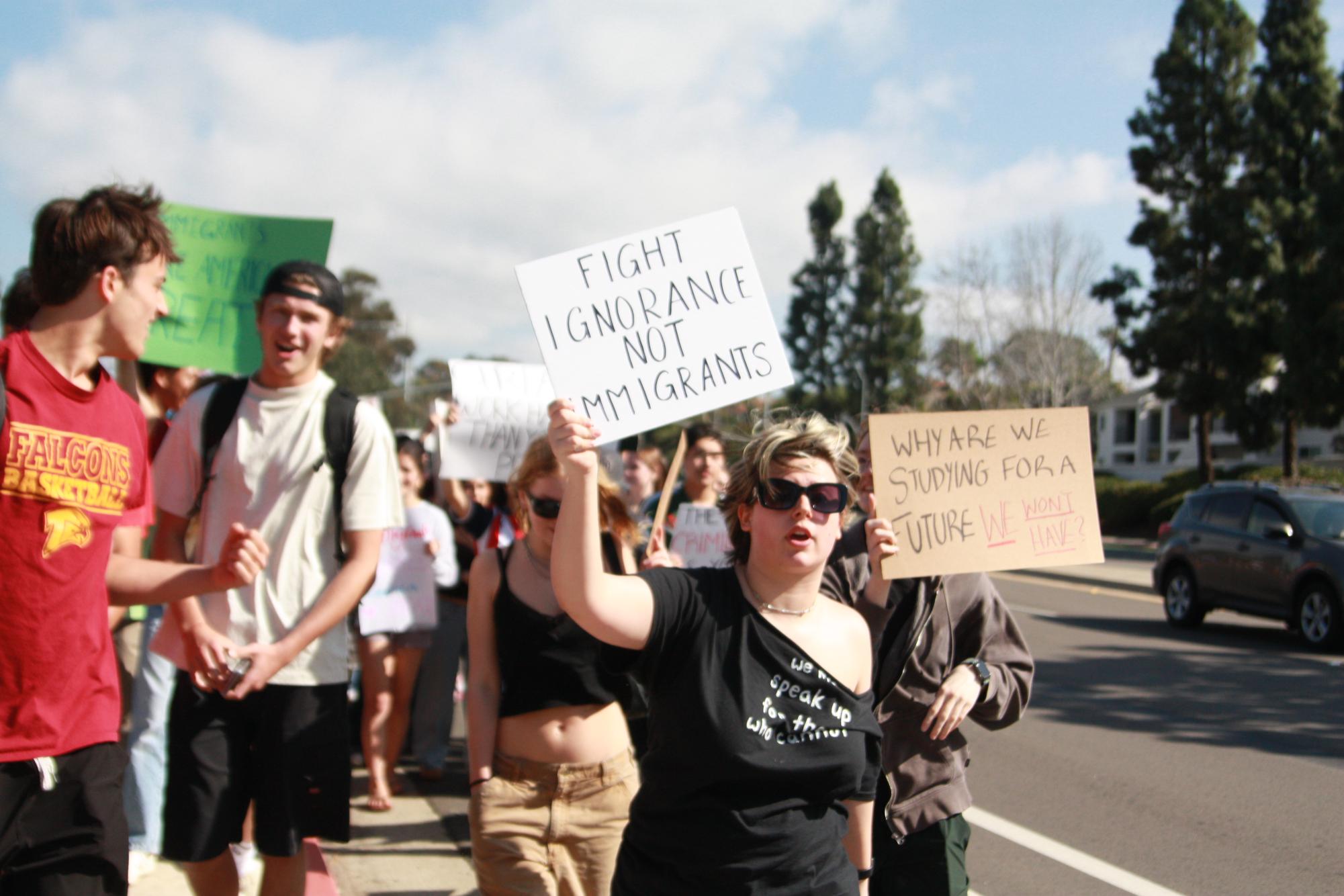
“Even if a walkout doesn’t lead directly to policy changes, it is still important to get your advocacy into real life and not just reposting TikToks,” Riddle said. “The whole point of a walkout is that you are going against what … society is telling you to do. [It is] to show that you’re not okay with what’s happening, and you’re willing to take a risk.”
On the other hand, Benjamin Goldberg (11) decided that there was “no reason [for him] to have an opinion on it.” He attributes his confusion regarding current events to polarizing media from both sides, so “it’d be wrong to walk out of class for something that I don’t know much about.”
An anonymous student also believes that “a lot of our information comes through social media, and it radicalizes people.”
“I think that everyone is sort of aware of what’s going on because of how prevalent it is on social media, even if you’re not directly trying to follow what’s going on,” Riddle said. “You have to know.”
Goldberg believes that “time is limited and there [are] so many pressing issues,” with immigration enforcement as one.
“It’s not things that upset us, it’s our opinion on things that upset us,” Goldberg said. “So, I try not to be too opinionated on things that don’t affect me, because why would I stress about it? … I don’t want to come across as a bad person … because I do care, except I don’t think that my personal opinion will save anyone’s life.”
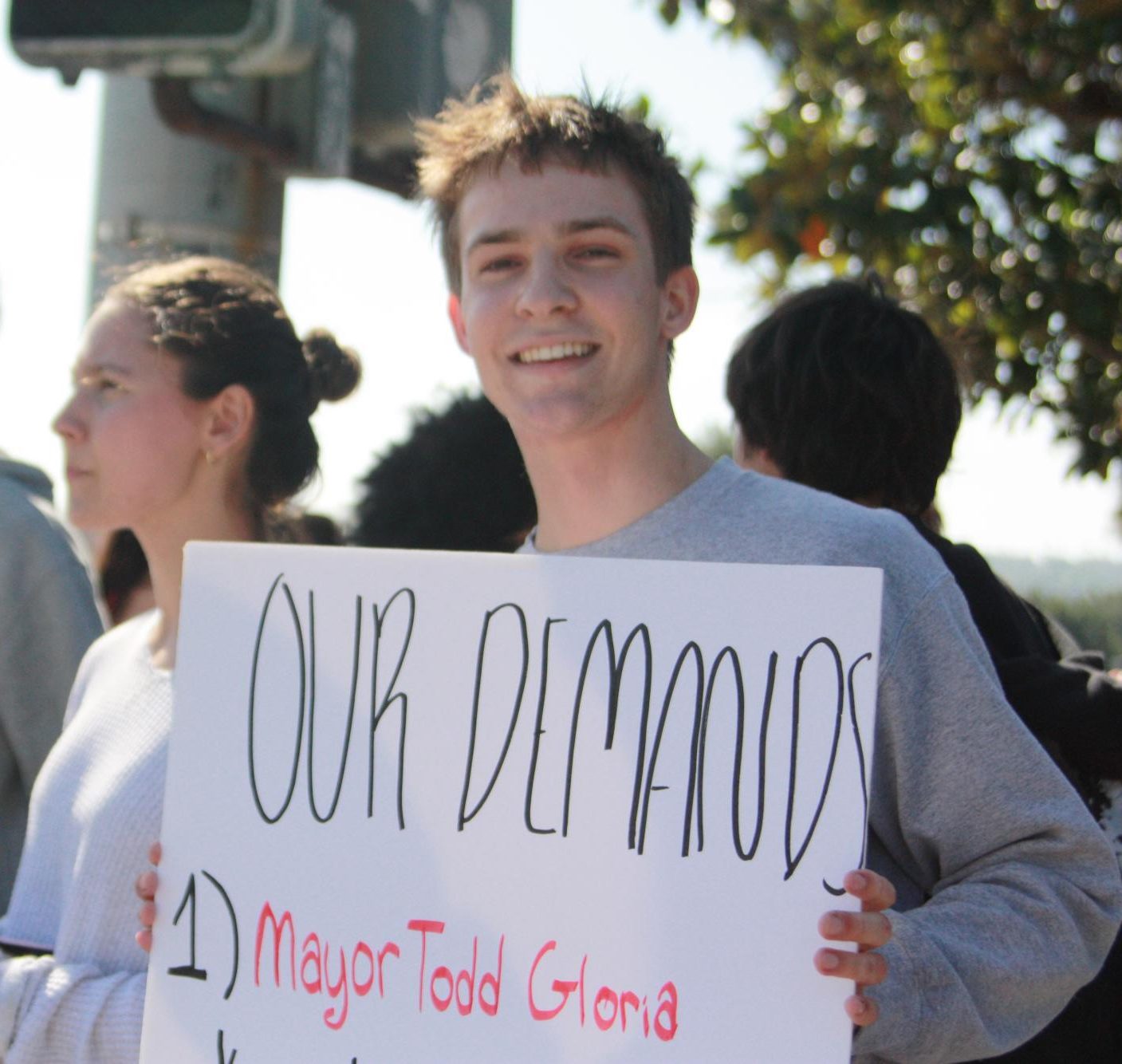
Riddle disputes that claim.
“I think that everyone is involved, whether they think so or not, in the sense that not protesting is being complacent, and being complacent is a signal that you agree with whatever is going on,” Riddle said. “So everyone is involved. It’s just that some people are choosing to be vocal.”
A moment of reflection for Coppo and other administrative members was seeing students “learn the surprise of the [other] students’ faces” when protesters and counterprotesters confronted each other.
“When we talked to some of the students, [they said,] ‘Well, why are they allowed to do that?’,” Coppo said. “Like, well, guys, you were allowed to do this. … I think we’re all struggling with … ‘Why do people think differently than I do and are they allowed to do that?’”
The anonymous student said they “don’t see anything super positive that comes with illegal immigration.”
“But I can understand why some people would be against, at least the methods of the way ICE is going about things, but the way I see it, a lot of the time they’re also dealing with very, like, very dangerous people, and they have to take drastic measures,” the anonymous student said, “Obviously, these shootings were unfortunate and tragic, but even these protests are very extreme.”
8 U.S.C. § 1325 (Improper Entry by Alien) makes it a federal crime for non-citizens to enter or attempt to enter the U.S. at any time or place other than designated, to avoid examination or to use false documents. 8 U.S. Code § 1326 (Reentry of removed aliens) is a federal statute that makes it a criminal offense for any non-citizen to enter, attempt to enter or be found in the United States without authorization after having been previously denied admission, excluded, deported or removed.
“It’s a criminal offense,” the anonymous student said. “They don’t want to treat it like a felony [because it] takes way too much time and effort, so they downgrade it to a misdemeanor, unless [enforcement] catches you twice.”
Another anonymous student, who is an immigrant, did not walk out because they believe “the illegals [who] are undocumented immigrants are the ones who kind of slow the process down for me to get my green card.”
Coppo looks forward to the future of the school, creating “venues … that can create a better culture for bringing people together.”
“You can take pride in yourself, but take pride in each other, too,” Coppo said. “Those are no small terms. [The ‘TP Pledge’ was] chosen on purpose, and hopefully, we can find ways to play that forward so we can break this cycle of just screaming at each other and wondering why we’re not getting along.”
Coppo implemented measures to ensure student safety during the walkout, such as stationing administration near the edge of campus, but staff was not permitted to follow the students beyond campus boundaries.
Riddle hoped that the walkout would ripple to other high schools.
“If we can just give advice or guidance to other schools and sort of pass along the help the SDA gave us, that would be a good way to continue the advocacy,” Riddle said.
On Jan. 27, the MAC Board at SDA began organizing a walkout for Jan. 30 in coordination with the national wave of walkouts and business closures that day.
To ensure safety and possible repercussions, the organizers email SDA administration.
“We wanted to provide [an opportunity] for students whose parents wouldn’t let them skip school, so they could still be in support of the [strikes],” Patuski said.
Although many argue that walkouts do not carry much strength, for Roach, “it’s a really powerful way for students to get involved a lot of the time.”
“We want to make a change,” Roach said. “People think we’re just kids, and we don’t know what we’re talking about, but what a lot of people don’t realize is that many of us [will] vote in the next election.”
Before the walkout on Jan. 30, the MAC leaders had already planned an ICE walkout with around 500 protesters the previous semester on Nov. 6, 2025.
While the first walkout was focused on amplifying the student voice among the SDA student body itself, the purpose of the Jan. 30 walkout was to broadcast their opinions to passing cars and raise awareness through the news.
According to the organizers, community members near SDA and Park Dale Lane Elementary were targeted, stopped and detained by ICE.
“[We want to] let everyone know what’s happening because there’s so much stuff on social media that might not be right,” Patuski said. “So, we’re just trying to get the word out about things that are happening in our community.”
Specifically, organizers wanted to address the way “ICE is handling [immigration].”
“There’s no due process,” Patuski said. “Because, yes, they did come over illegally, but there’s no easy way at all for them to become citizens of America. Their countries are really unsafe, and they just are really making their lives better.”
At 12:40 p.m., over 800 out of 1600 students at SDA walked out of third period.
Reflecting on the outcomes of both walkouts, the organizers felt there was “a lot of diversity in the ages that came out.”
“We were going into the day, [and] we didn’t think that many people were gonna show up,” Patuski said. “[We thought,] ‘maybe we’ll get 100 people,’ and then everyone kept coming. We’re like, ‘Oh my God. Wow, this is crazy.’”
-
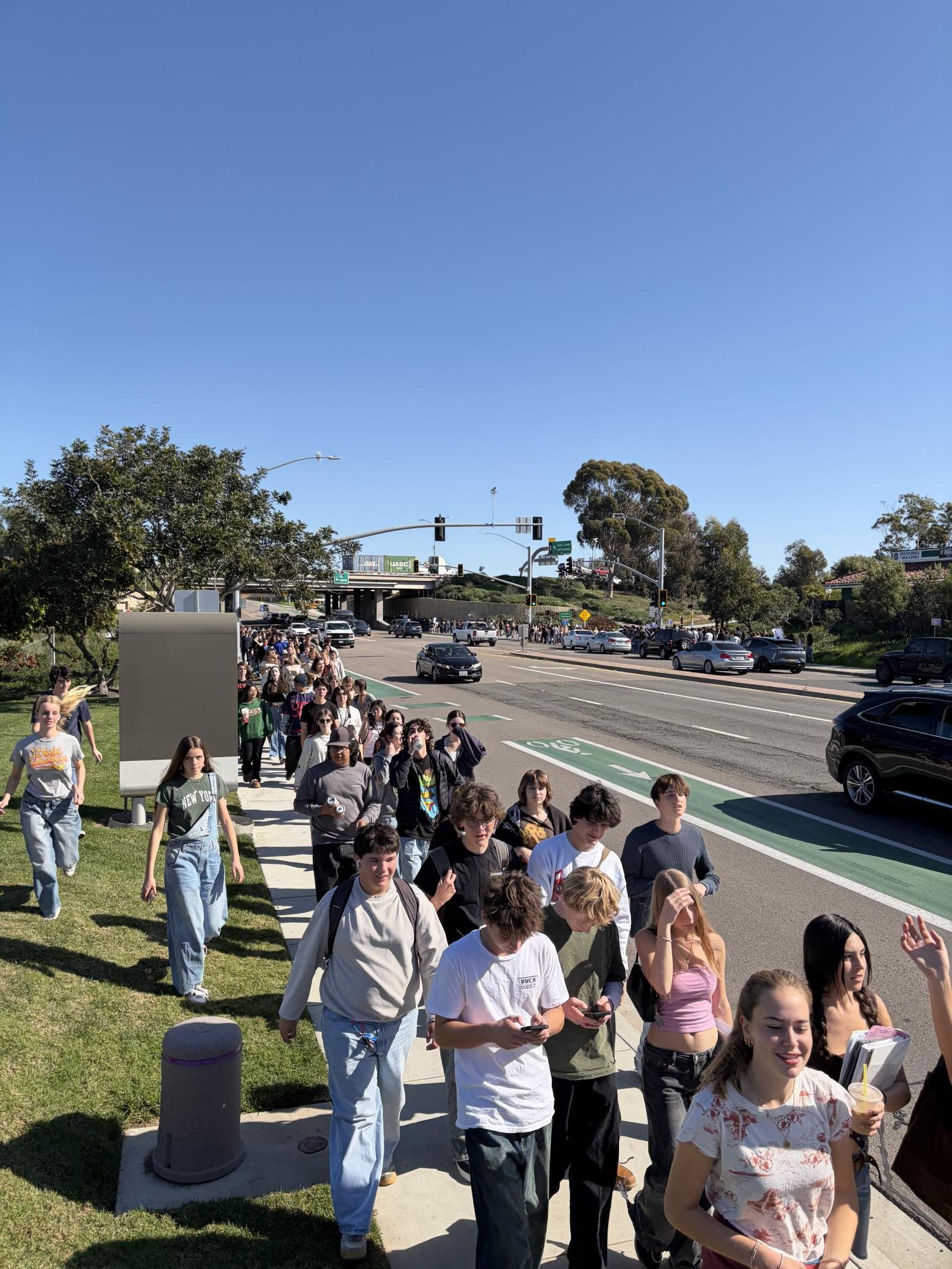
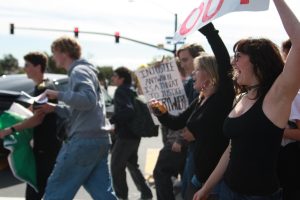
Students at Canyon Crest Academy walk out of class at 12:45 p.m. to protest Immigration Customs and Enforcement activity. The students began at the attendance office and then down Village Center Loop Road before turning to Carmel Valley Road.
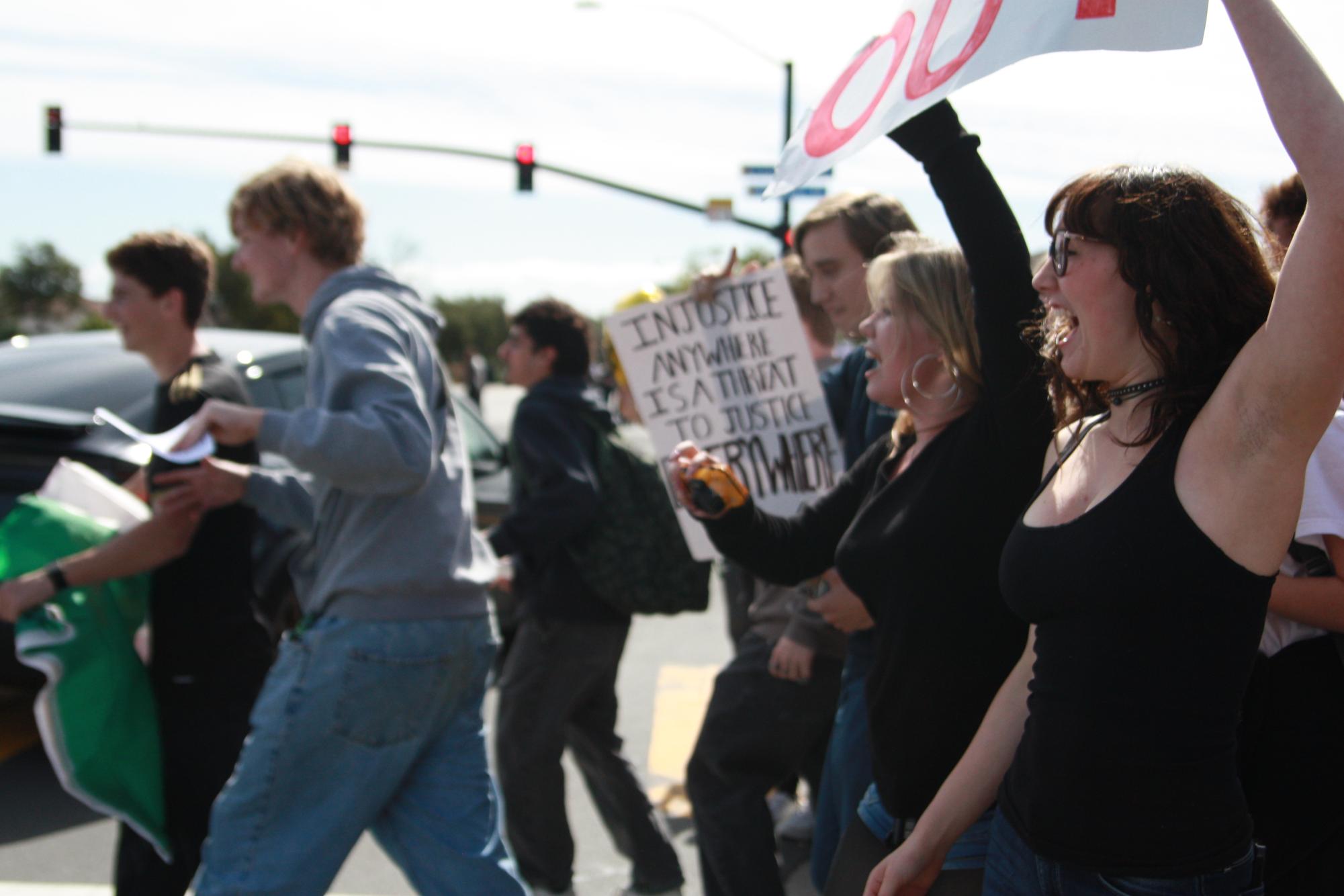
-
A student leans out of the roof of a car in support. As students protested, various cars honked to recognize the activists.
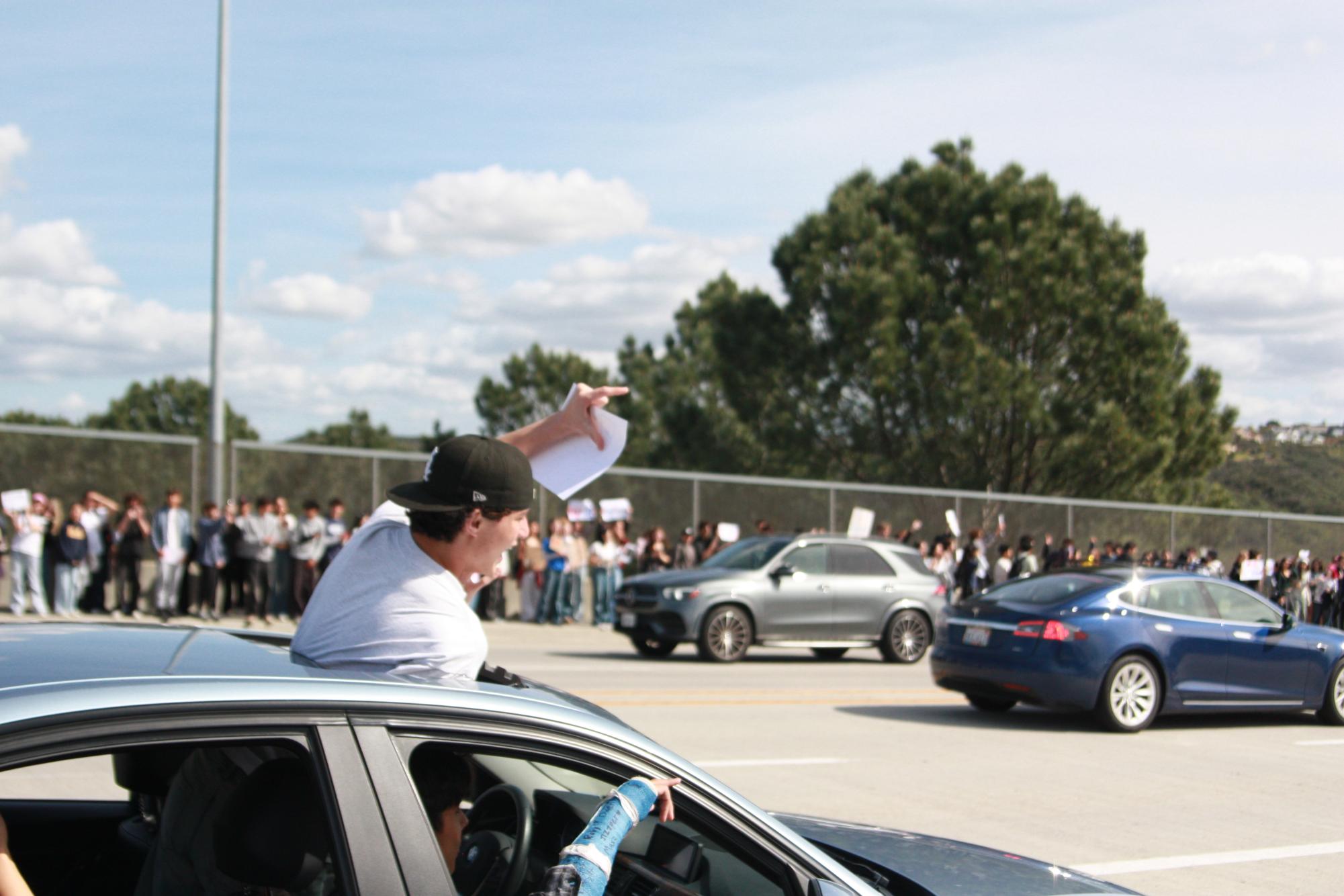
-
Gabriel Turquie (12) and Asher Harron (12) lead students out of school at 12:45 p.m. The organizers were inspired by the past Torrey Pines High School walk out.
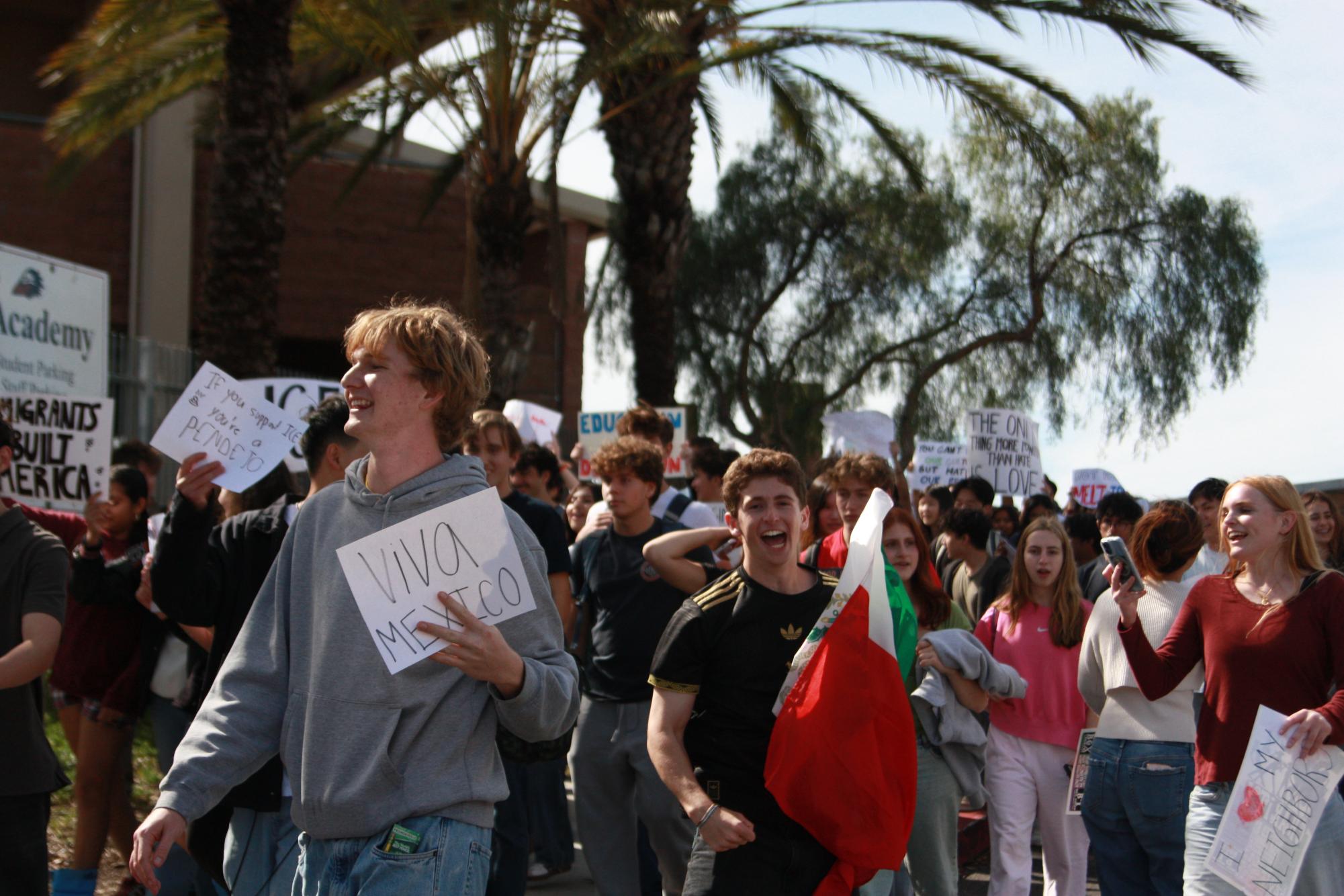
-
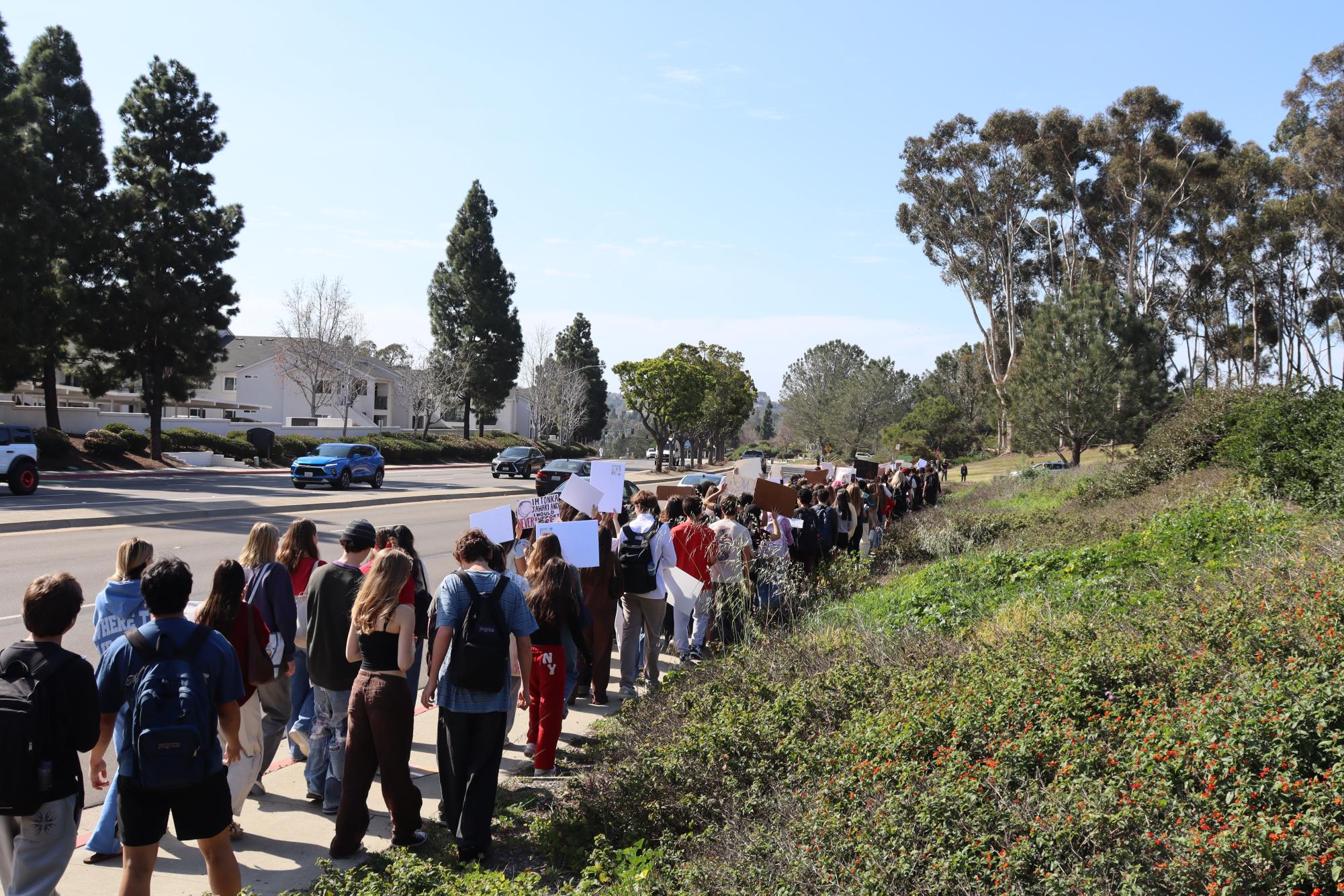
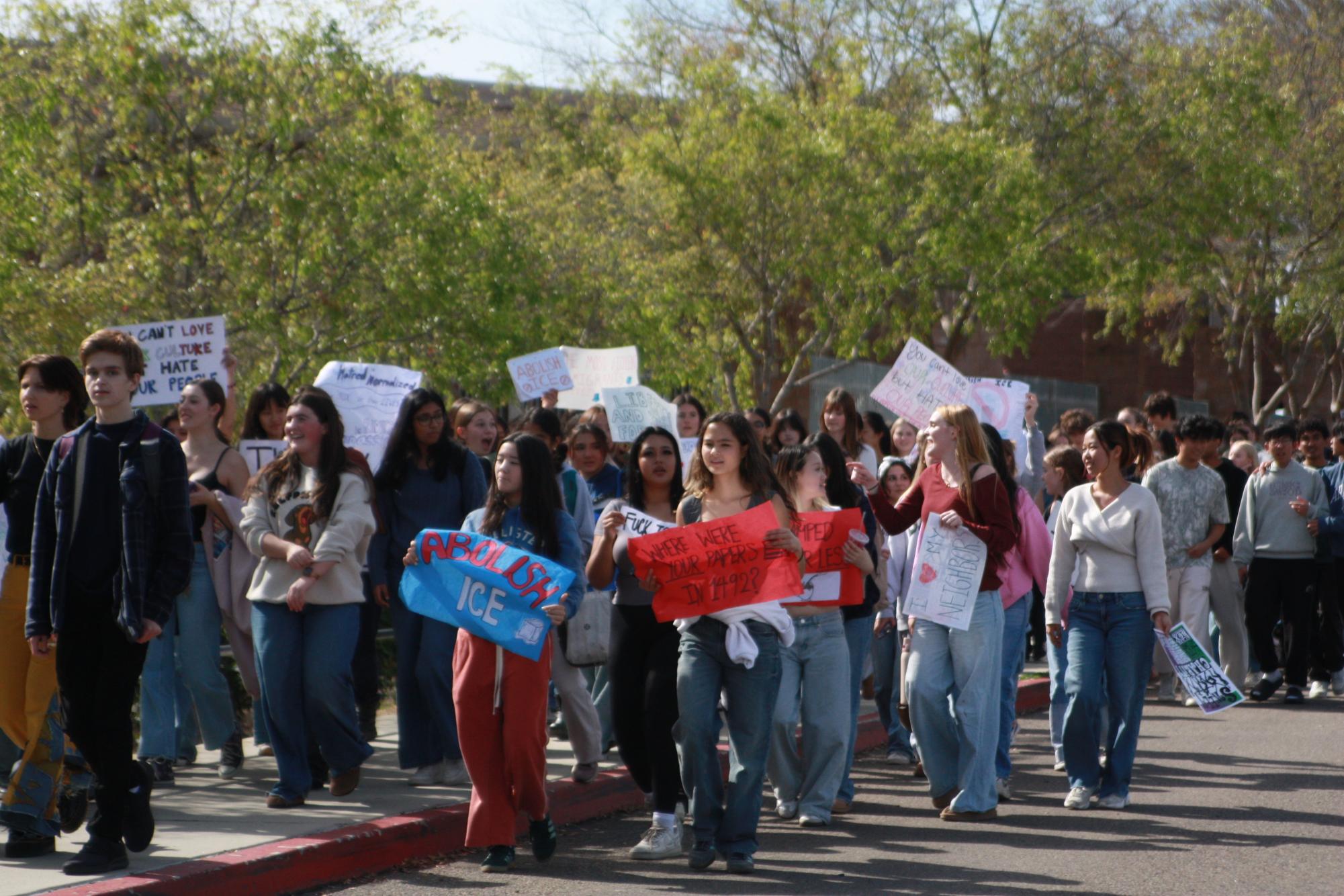
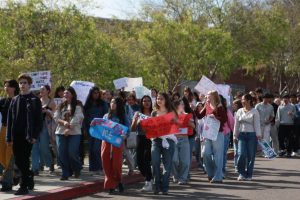
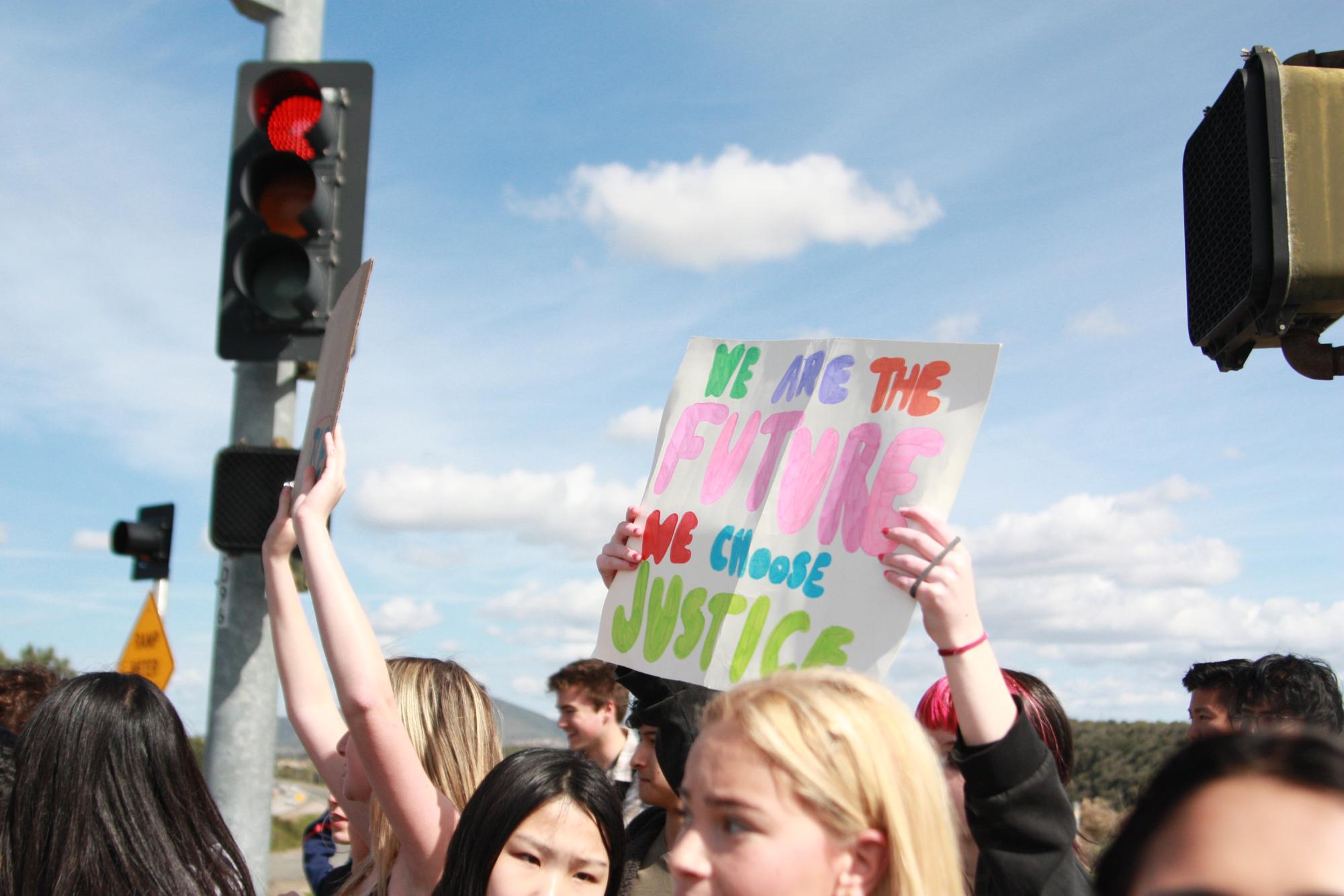
Holding up colorful signs, student protestors walk down the street. Any student who left class was marked truant.
-
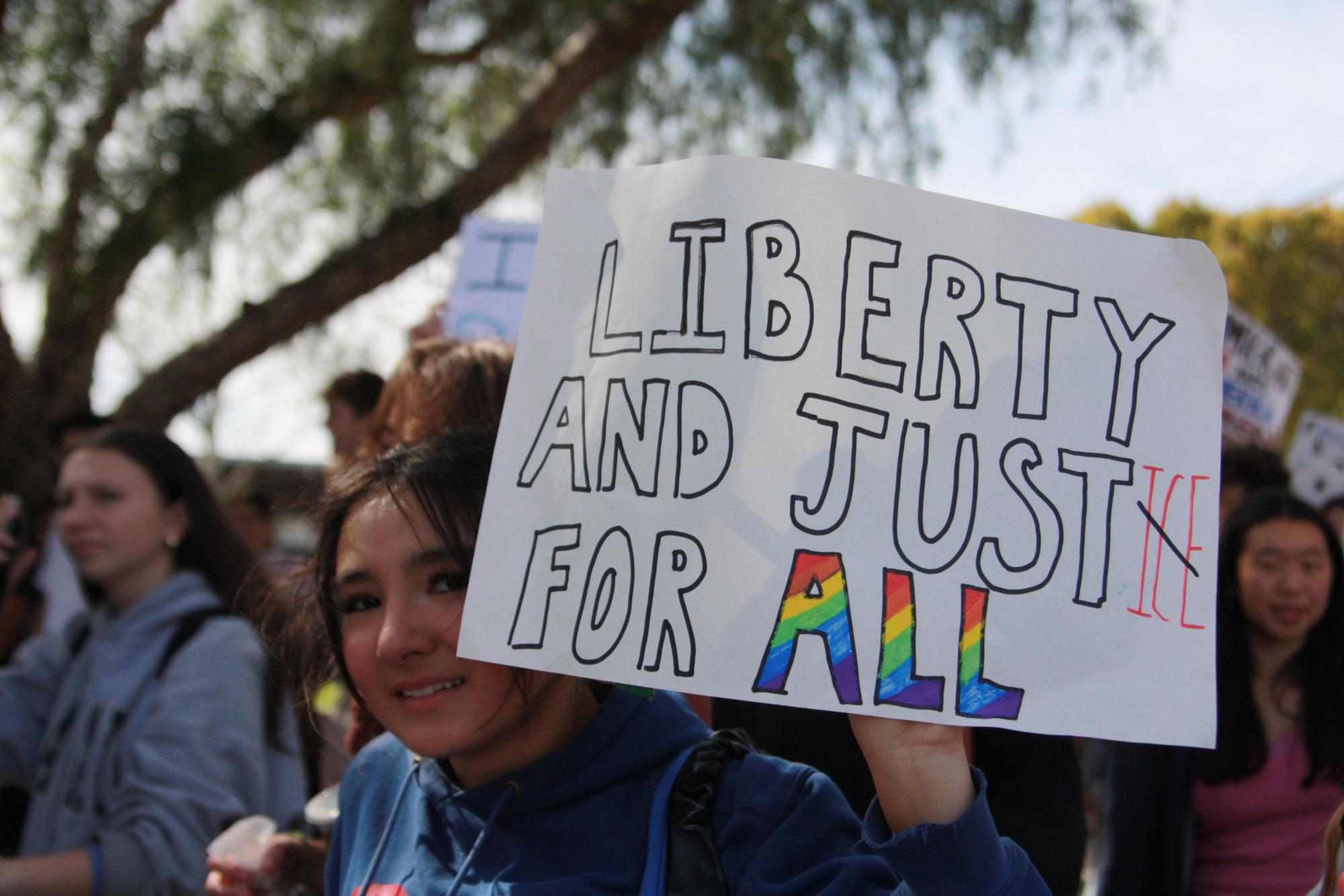
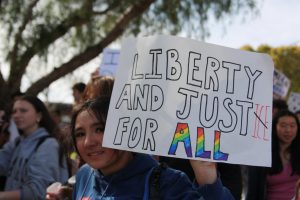
A student colors “all” in their message — “liberty and just(ice) for all.” Protestors chanted repeated phrases as cars passing by honked.
-
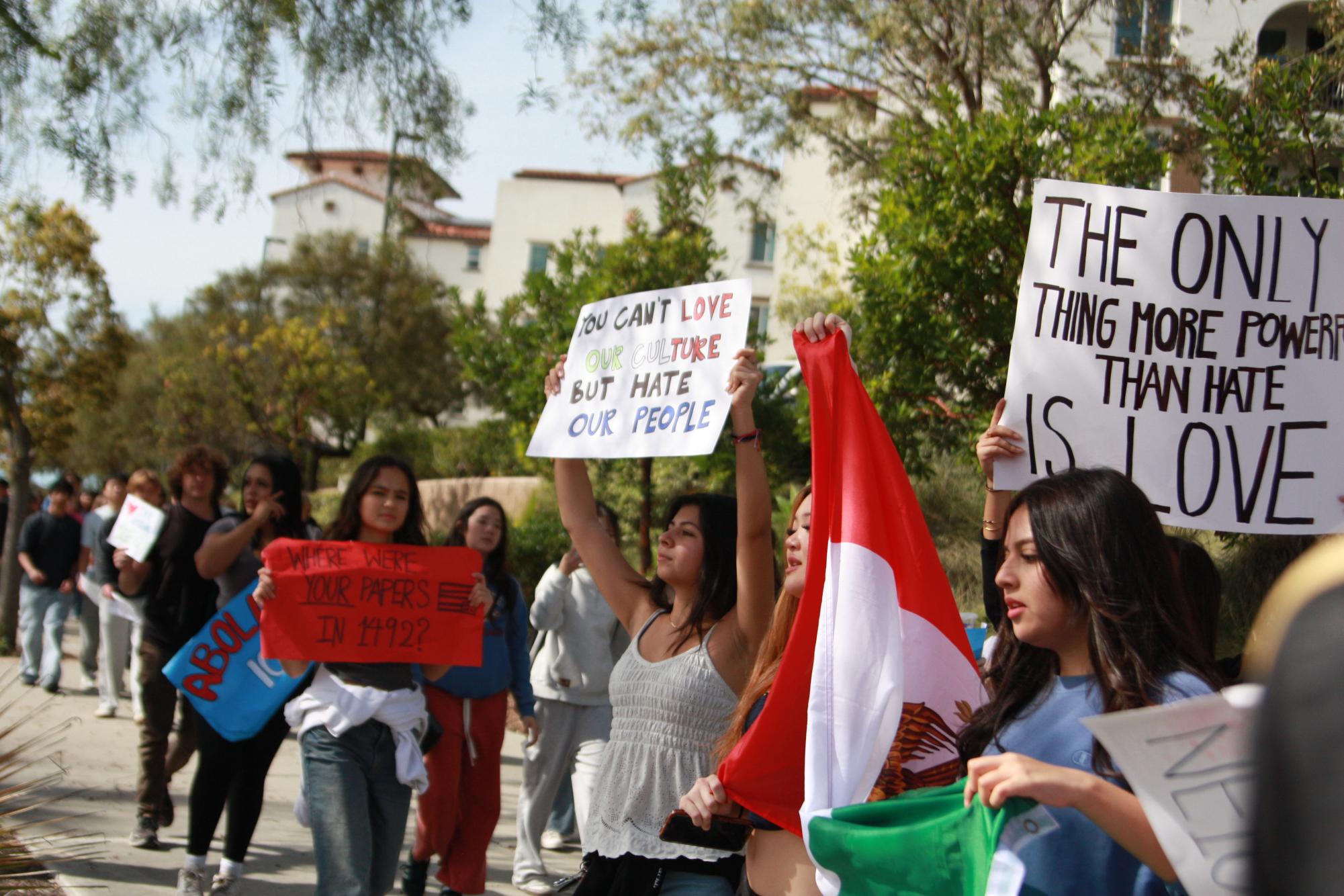
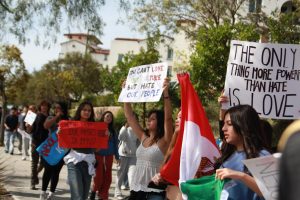
A student activist’s poster reads “you can’t love ourr culture but hate out people.” Many other students brought pre-made signs and flags to the walkout.
-
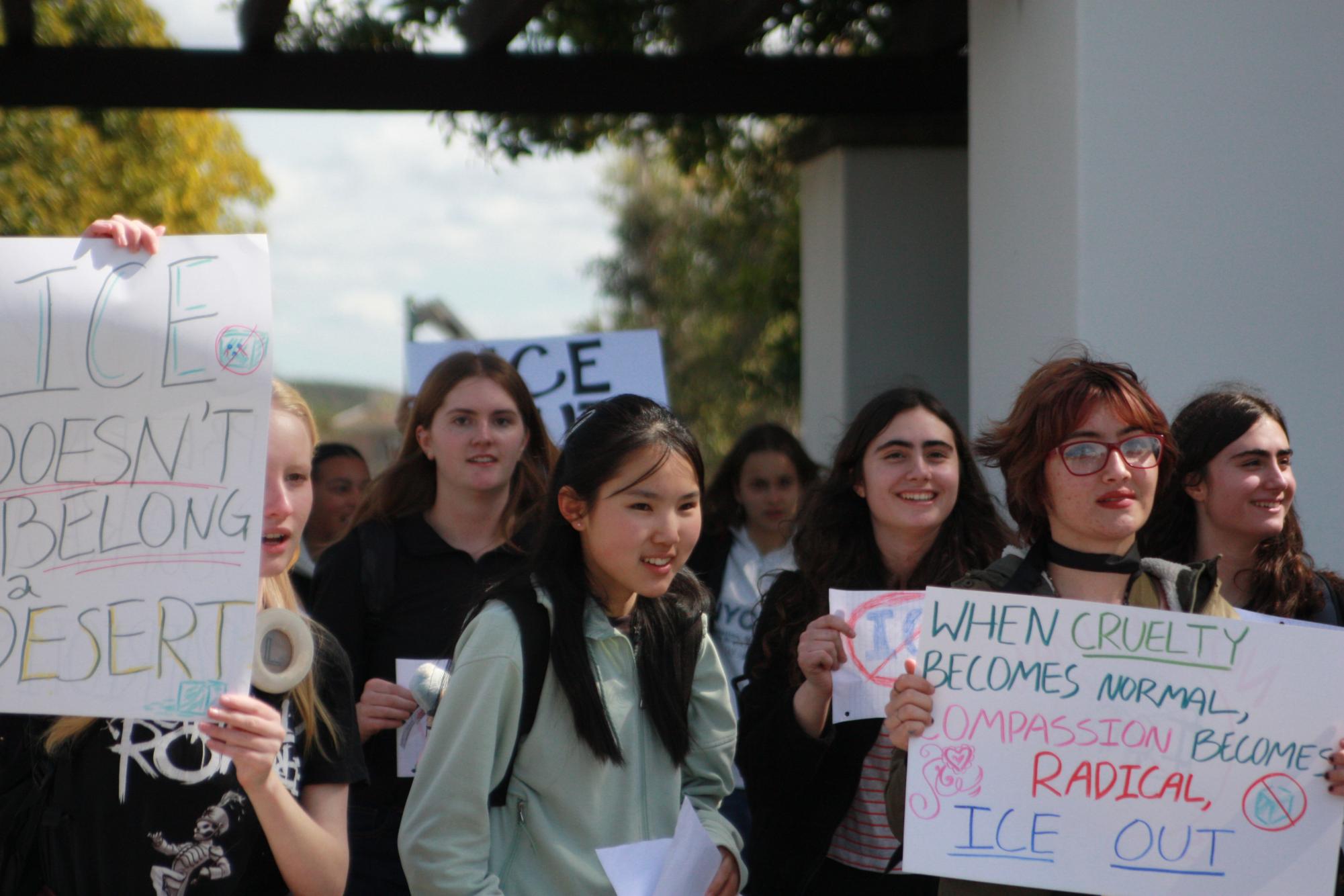
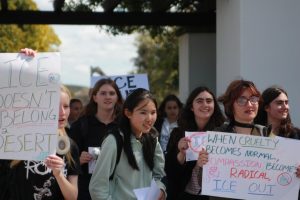
A sign reads: “When cruelty becomes normal compassion becomes radical ICE out.” Students walked out at 12:45 p.m.
Your donation will support the student journalists of Torrey Pines High School. Your contribution will allow us to purchase equipment and cover our annual website hosting costs.