Dress code across cultures
You stand dumbfounded in front of your mirror, staring into an extensive facade of outfits. The ticking clock on your bedroom wall is a slow, torturous countdown to your social demise. You are already running late, but every shirt and pants combo you envision feels wrong. Tossing the clothes into a pile of defeat, you reminisce about the ease of your old uniform, a skin you had to shed once you moved to the United States.
Amy Li (12), who moved to the United States from Beijing in 2021, had a similar experience. She observed a slight cultural shift when it came to the dress code, in both school and daily life, such as how “short tops are rarely worn in [her] country.”
“At … school, I see people wearing shorts in the winter,” Li said. “Although I know San Diego has mild weather, I still find it surprising.”
Back in China, Li went to an international school, but studied in a regular high school class, so the dress code was the same as Chinese standards.
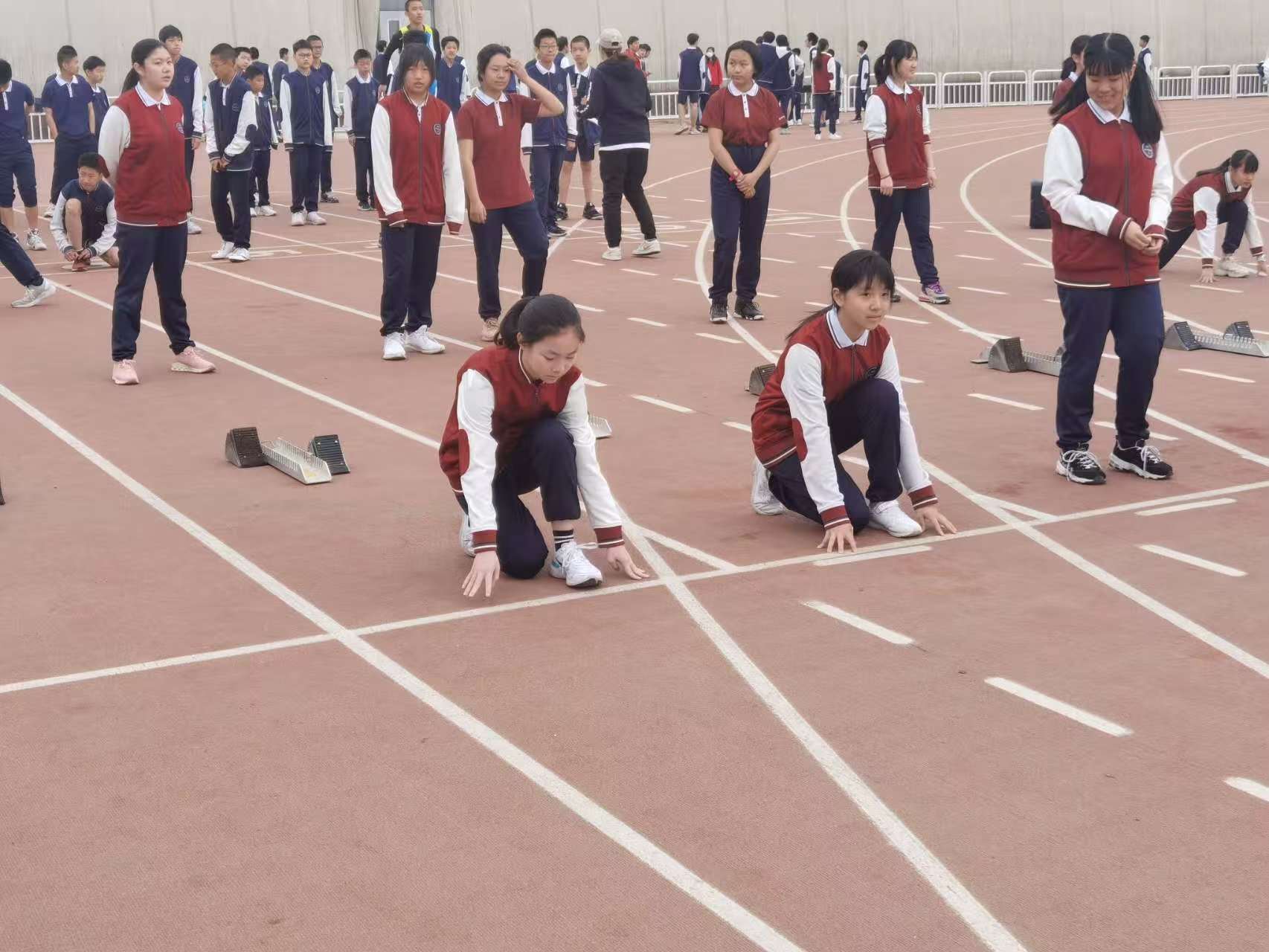
“We have to wear uniforms to school every day, [with] no alterations on the uniform,” Li said. “Boys’ bangs must not go below their eyebrows, [and] girls must tie up their hair and no makeup is allowed in school.”
Many schools in China, including Li’s, had uniforms featuring the school’s emblem and representative colors.
Jo Zhang, AP Chinese Language and Chinese 1, 2, 3 and 4 teacher, attended school back in China. Although many aspects have changed, most schools in China still implement a strict dress code or uniform.
“During my time, the uniform was a tracksuit, like the ones that they wear when practicing sports,” Zhang said. “It had a zipper and came in colors such as blue, white and red that were paired together. The bottoms were joggers.”
When Zhang was still studying, China was recovering from political and economic instability. Schooling systems changed due to more wealth acquisition, such as establishing private institutions for those that aspire for higher education. Dress codes have also changed, such as many schools having stricter implementations. Although many schools still have tracksuits, it is common to see skirts for girls paired with a blazer or vest because “many people find sportswear not as good looking nowadays.”
“During my time, we did not always have a school uniform,” Zhang said. “Sometimes there was one, sometimes there was not because they required parents to buy them. During that time in China, as a whole, the country did not have much money. For some schools, buying a school uniform would be a burden, so some schools it was not a requirement while some schools it was.”
Li enjoys the flexibility of not having a school uniform as it “gives students a lot of freedom to dress according to personal tastes and offers more flexibility in clothing choices.”
“There aren’t many restrictions on clothing in U.S. public schools,” Li said. “I do enjoy wearing my own clothes and not having my hair tied up at school.”
As a parent herself, Zhang emphasizes the importance of allowing kids to express themselves freely through their clothing choices, so “for teachers and parents, [their] opinion is not very important, it is more how kids want to express themselves in the broader society.”
“It seems as if wearing pajamas or other comfortable clothes is very trendy nowadays, my own kids included, and they also wear that to school,” Zhang said. “For parents, they have their own opinion, but for kids it is more of ‘if others wear this, I will also wear this.’ I feel like a large part of people, regardless of country, their clothing are similar other than the minority of people who like to express themselves or their thoughts through their looks and presentation.”
When Zhang first arrived from China, she “never really saw people wear [casual or comfortable clothing], but it slowly appeared [and] this trend in pajamas and sandals has just emerged in the last five years.” Certain dress styles have gained popularity, and “it is hard to say if it is good or bad [because] they are following trends.”
“I feel like [following trends] somewhat reduces comparisons,” Li said. “People aren’t going to compare who’s wearing the most modest clothes and the most expensive shoes because people kind of all wear the same, no matter who you are.”
Some aspects of Chinese student’s uniforms reflect the country’s ideals. For example, select students are spotted with a red scarf, known as a hong ling jin, which can be earned through excellent performance and grades in the class.
“Some kids are admitted as early as first or second grade, while some kids may never be part of it,” Zhang said. “Kids see it as a sign of a good or bad, or outstanding or plain student.”
For adults, the scarf has a deeper political meaning. Students in elementary school who receive the cloth become a young pioneer then a Communist Youth League member in middle and high school. Above that is the Communist party, which they join when they turn 18.
“This cloth is more for political representation, but for kids it is more of a motivating factor,” Zhang said. “If they are doing well and have the clothes then I also want to work hard to get it. If I have the cloth then it means I got approval from the teacher who thinks I am doing excellent.”
Lana Smallwood (10) attended an international school in Tokyo from kindergarten to eighth grade. There, students wore plain uniforms that reflected the country’s standards.
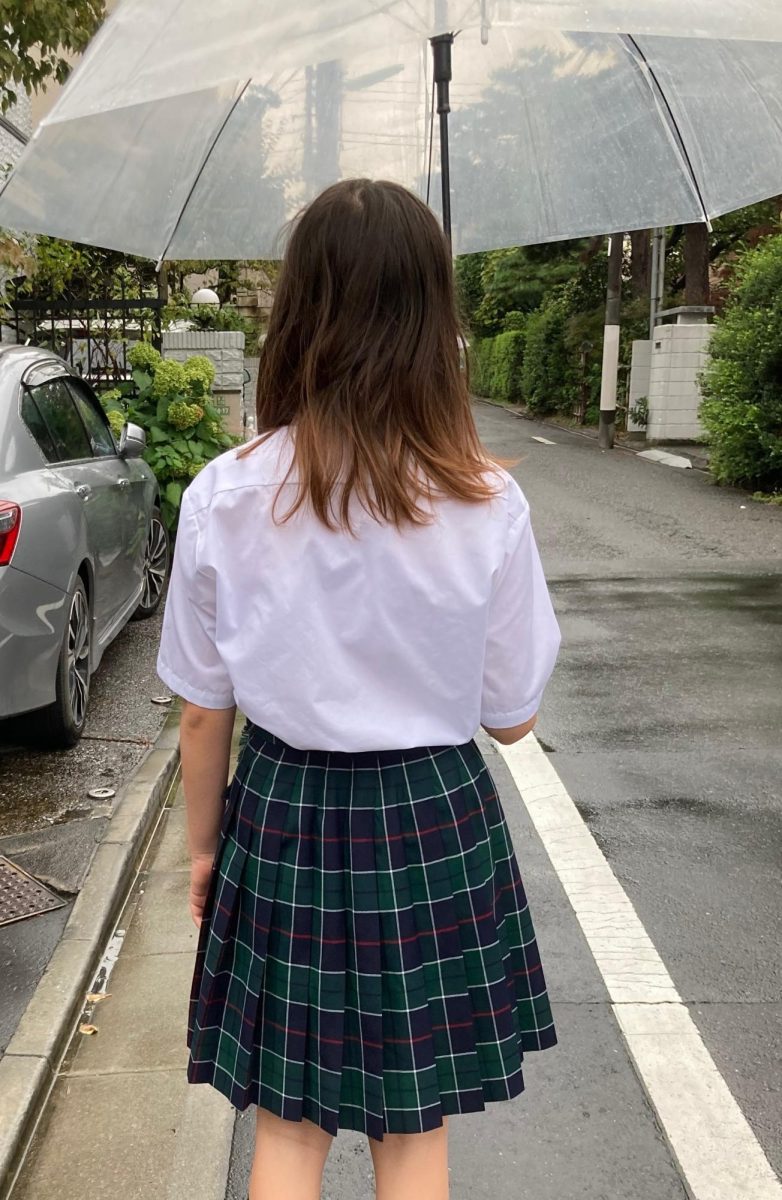
“It used to be a blouse and a skirt [for girls], but as I got older, it became a polo shirt and a skirt, and you had a choice between a sweater or a jacket on top,” Smallwood said.
While the school’s regulations were more lenient in aspects such as hair length, they were far more restrictive with the uniform itself.
“Our dress code was very strict in [the] length of the skirt and how many buttons you had up,” Smallwood said. “The skirt always had to be two centimeters above the knee, nothing more, nothing less.”
Like the uniform, the constraints on accessories loosened as the students aged.
“Accessories in elementary school, stuff like earrings and even necklaces, were somewhat restricted,” Smallwood said. “But as we entered middle school and as the classes got more populated, it was more difficult to restrict and regulate those things.”
Smallwood’s prolonged time in Tokyo conditioned her to the unassuming regularity of school attire, so she was surprised by the freedom in fashion American students indulge in. Crop tops and open-toed shoes, in particular, shocked her the most, as they contradicted her established notions of what academic outfits were.
“When I first moved here, I noticed a lot of people wear Crocs, [and] that really surprised me,” Smallwood said. “Usually, [in Japan], you’d have to wear dress shoes.”
Japanese students often disobeyed such regulations imposed by their schools as a form of retaliation against a system they believed suppressed their self-expression.
“In my area, there were a lot of younger people who really wanted to establish nonconformity, and, in that manner, a lot of people tried dyeing their hair, wearing shorter clothes [and] wearing more colorful accessories,” Smallwood said. “Rather than the schools loosening their restrictions, it was more so the youth attempting to challenge those restrictions and demonstrate how oppressive those restrictions could be.”
Though she became accustomed to such limitations, Smallwood recognizes that they were often unjustly weaponized against students.
“It almost felt as though there was a desire to persecute the students for not conforming to [the school’s] standards,” Smallwood said.
Nonetheless, Smallwood appreciated how the dress code helped her feel like part of a community.
“The modesty that was exemplified in my school… I enjoyed it,” Smallwood said. “It felt familiar and safe.”
Your donation will support the student journalists of Torrey Pines High School. Your contribution will allow us to purchase equipment and cover our annual website hosting costs.