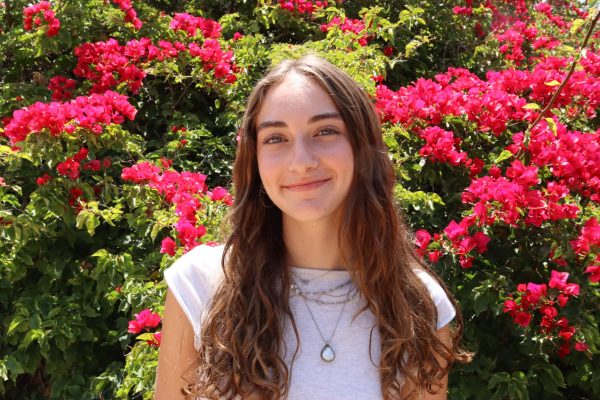

Chronic, debilitating pain consumed much of Adriana Adatiya’s (11) life, soon overshadowing her passions. When Adriana was diagnosed with endometriosis at just 15, her world changed drastically, even though her pain started years prior. Fueled by her struggle and desire to help others, Adriana started Teen Endo Unfiltered, a self-run awareness organization with a podcast and social media presence to help educate others about the unfiltered reality of living with endometriosis as a teen.
Her mission is to support girls like herself by destigmatizing endometriosis and creating a safe space for those struggling by making sure they know they are not alone. Through storytelling and education, Adriana not only reclaims her own narrative but shines light on a condition that affects an estimated 190 million women.
Endometriosis is a chronic condition where tissue similar to the lining of the uterus grows outside of the uterus. This tissue acts the same as the normal uterine lining: thickening, breaking down and bleeding with each menstrual cycle. However, the tissue has no way to exit the body, leading to inflammation, scar tissue and pain. Currently, Endometriosis has no cure, only temporary solutions, and symptoms vary from extreme back pain to nausea. Adriana struggled with both.
“I was literally going to the bathroom to throw up and then going back to class,” Adriana said.
Being an athlete, Adriana dismissed her pain, assuming it would resolve on its own.
“I started having really bad, sharp, intense back pain,” Adriana said. “Playing field hockey 24/7, I thought it was just an injury. I thought it was normal.”
As Adriana’s symptoms worsened, she sought answers, but was met with an impasse.
“Midway through my freshman year, I started developing other symptoms,” Adriana said. “I knew this wasn’t normal. I was constantly being passed around by specialists, constantly being questioned by doctors. I was in the Emergency Room a lot because my pain was so severe, but nobody was really giving us answers. Every single test we did seemed like a dead end.”
After months of testing, Adriana was eventually diagnosed with endometriosis and underwent surgery, finding around 60 lesions while on the operating table.
For Farzana Adatiya, Adriana’s mother, the diagnosis brought a sense of respite from the unknown.
“When we found out after her surgery that she actually had endometriosis, it was a profound relief to [know] what she had so that we could get her through it,” Farzana said.
Along with her mother, Adriana was inspired to start Teen Endo Unfiltered when she saw other people with the same condition sharing their stories online.
“I was seeing so many warriors share their story … all of these girls [came] forward and shared their endo [stories],” Adriana said. “It motivated me to stop struggling silently and start sharing my story with people. I created an Instagram account, a TikTok account, built and published a website, started a podcast (“Health Shouldn’t Hurt”), and I’m about to publish a book. But the bottom line is, I just want to spread awareness, especially for teens.”
Adriana’s desire to show the authentic, raw facet of endometriosis gave her project the name Teen Endo Unfiltered.
“I want to unfilter everything,” Adriana said. “That’s why it’s called Teen Endo Unfiltered. I want to stop normalizing the pain that girls with endometriosis go through.”
No matter how many people Adriana’s message reaches, Adriana’s goal is to advocate for endometriosis.
“My primary goal is to raise awareness,” Adriana said. “When I first [started], my [thought process] was if I only help one person, that’s what I want. I want to help as many people as possible, but if this only reaches one or two people, that would make my day.”
According to her mother, Adriana has always wanted to help others.
“Since she was three years old, walking and seeing an unhoused human, she made me run back to the house and get food to help them,” Farzana said. “She has a very innate quality of wanting to lend a helping hand.”
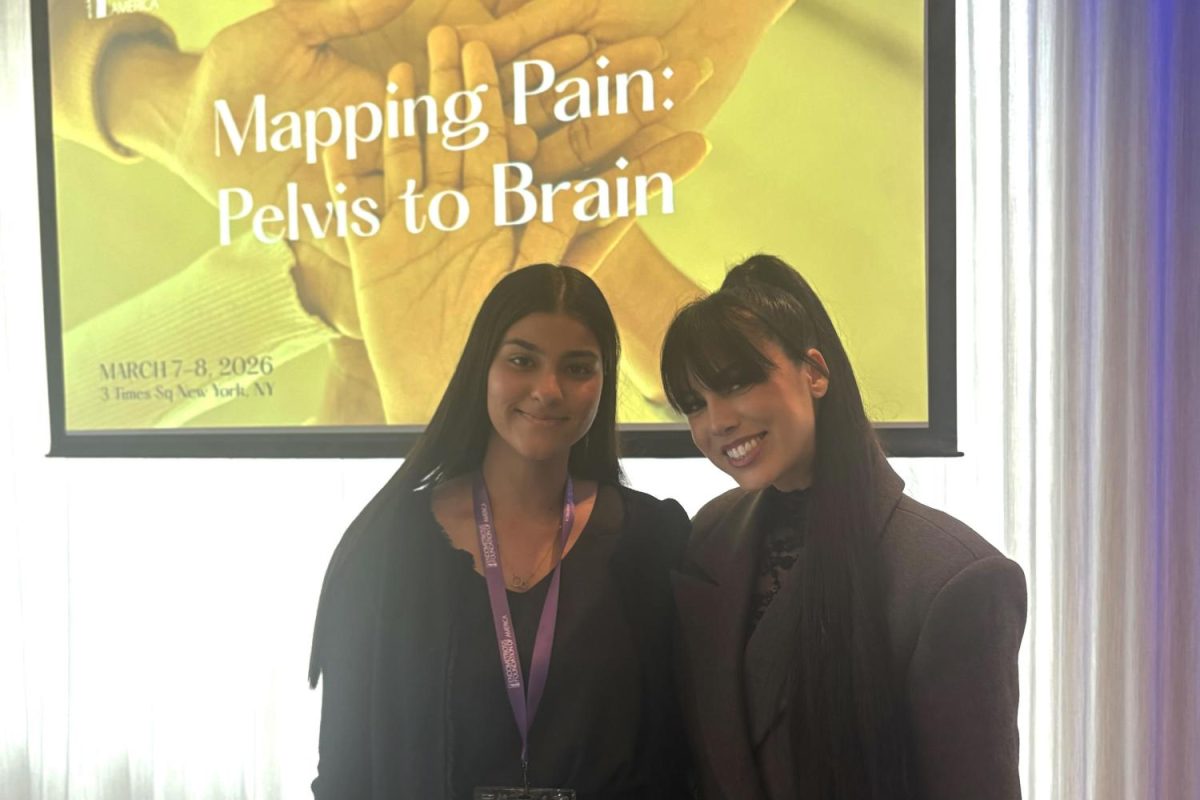
Throughout her advocacy journey, Adriana has attended endometriosis conferences, even bringing her father. For Amin Adatiya, these experiences “opened [his] eyes to how many women suffer from endometriosis.”
Beyond Teen Endo Unfiltered, Adriana is co-president of the school’s Best Buddies club and offers support to anyone she can.
“My daughter has always been this caring person,” Amin said. “She’s got this desire to educate and advocate. She tries to do as much as she possibly can, [helping] the unhoused, anyone sick, [coaching] swim for the Special Olympics.”
As Adriana continues to share her experience, her advocacy has impacted those around her.
Lilia Lajevardi (11), one of Adriana’s friends, reflects on the knowledge and insight she gained surrounding endometriosis.
“From knowing Adriana, I’ve learned that endometriosis is a lot more serious than people think it is,” Lajevardi said. “Before, I honestly didn’t know much about it, but seeing what she goes through made me realize how much it can affect someone’s daily life.”
In the future, Adriana wants to pursue further endometriosis research, primarily to shorten the diagnostic time that patients face today.
“My ultimate dream is for faster diagnosis and more accurate treatment,” Adriana said. “The average diagnosis time of seven to twelve years is insane. These girls are struggling 24/7 for seven to twelve years, putting their whole lives on hold, not being able to go to school, work, do their activities, take care of their kids, whatever it might be … especially for teens, endometriosis isn’t talked about.”
Adriana wants to ensure that people of all ages understand that speaking up about their pain is completely normal by encouraging discussions in schools.
“I think spreading awareness not just at high schools, but also at middle schools and elementary schools is so important,” Adriana said. “Period pain is not normal.”
Instead of letting her frustration with the healthcare system and lack of funding for endometriosis research discourage her, Adriana uses it to fuel her passion for speaking out.
“There’s more funding from the government for male baldness [research] than there is for endometriosis research,” Adriana said. “I think that in itself is wild. In general, we need to make a huge effort in advocating for this disease and advocating for the work being done for this disease. We need research to be done. We need alternative methods for diagnosis. Surgery isn’t enough anymore. We can’t operate on every girl with period pain. That’s unrealistic. People are putting in the work, but there are not enough funds to get there.”
Adriana emphasizes the importance of listening to those who are affected, stressing her wish for greater empathy when it comes to endometriosis.
“I think endometriosis is such a complex disease, but it doesn’t need to be,” Adriana said. “We just need to understand that pain is not normal, and that every girl deserves to be heard in the healthcare system, within their friend group, with their teachers, with their coaches, and, ultimately, by every single doctor they go to. They need to be listened to, and they need to be heard.”
Through a journey filled with discomfort and invalidation, Adriana refuses to let it characterize her life.
“I’m proud that she refused to let her pain define her,” Amin said. “Instead, she used it to try to help other people.”