

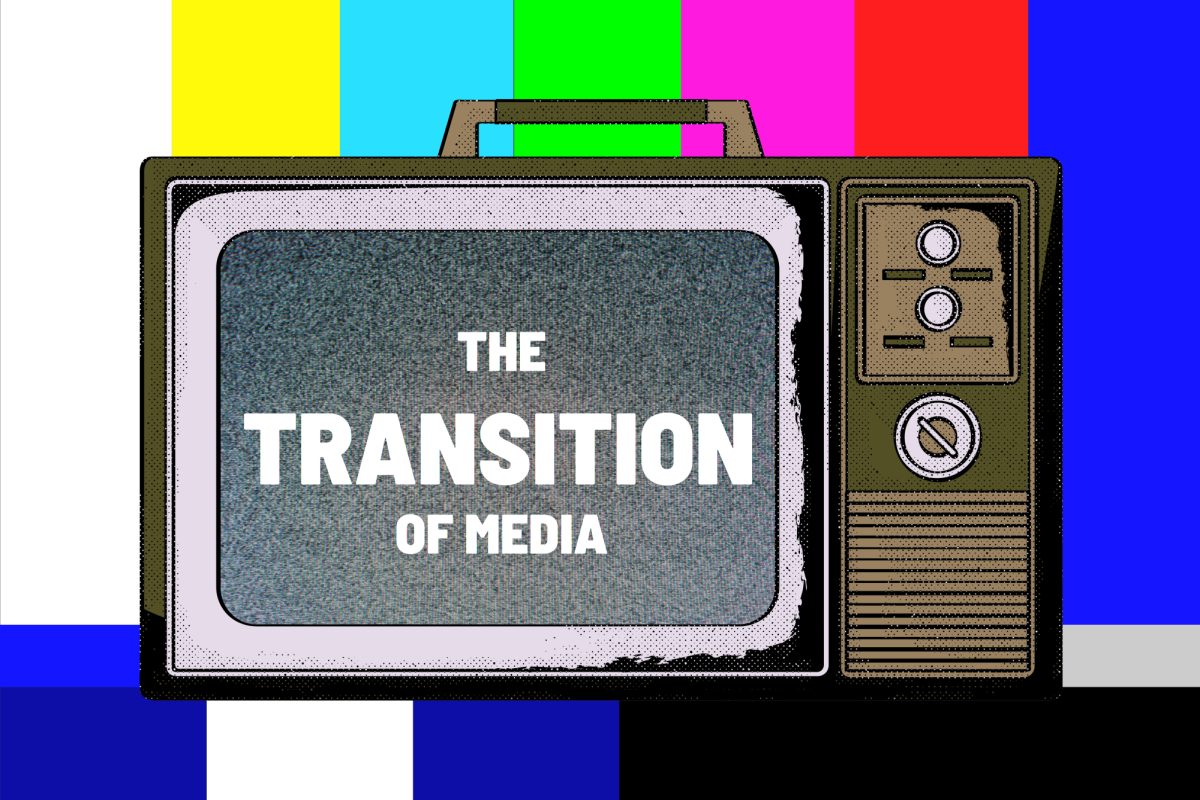
Childhood cable TV shows turn to YouTube videos, fairy-tale books turn to iPads.
The surge of digital media transforms how audiences engage with narratives and art. It democratizes access and media creation, yet also harms attention span, encourages derivative and superficial content and makes it more difficult to find meaning within a shifting media scene. Reliance on nostalgia captures the lasting value of older media, which carries intentionality, emotional resonance and perceived depth that modern media struggles to replicate.
Modern media promotes the democratization of creation and access — allowing anyone to become a creator and publisher; the rise of influencer culture makes many dreams a reality by opening infinite professions and creative outlets. Both individuals and corporations share media, such as artwork and movies, digitally. Not only media itself, but shared opinions are diversified through online functions like commenting, making blog posts and leaving reviews. Moreover, this transition also enables the tailoring of content to individual preferences: from horror to anime to experimental art content, niche fanbases form more easily. Digitalization of both news and social media also allows for real-time global connectivity and instantaneous communication of content.
However, the platforms which democratize and diversify media also give rise to an influx of new issues. In biology, we learn that every ecosystem has a carrying capacity. The digital media world is limited by infrastructures, resources and the human attention span. Online media may be expelled limitlessly insofar as energy and data centers continue to evolve, the environment is not irreversibly exhausted and people continue to search for new entertainment. According to CyberCrime Magazine, Cybersecurity Ventures predicts that the total amount of data stored in the cloud would reach 100 zettabytes by 2025 and that there would be 7.5 billion internet users by 2030 — 90% of the projected population. Since innovation continues and demand grows, the paramount limiters are whether resources replenish fast enough for human consumption and how much pressure the earth can sustain.
These factors, coupled with prospective economic gains, mean the media industry is abundant with quantity and deteriorating in quality. Selecting content to consume is tiring in itself: not only must one choose fulfilling media out of an unfiltered, infinite pool or algorithmically informed suggestions, there is also the question of the artist or company’s views and ethicality of sourcing.
Little media feels novel. It is rare to encounter a piece of content in its original form, from its original creator, especially with uncredited reposting on short-form content platforms. Then follows incessant commercialization, undisclosed sponsorships and nonsensical product placement. While occasionally, ads are creative and parallel art, a general bombardment of brand names and disguised marketing feeds fatigue and overconsumption. As media creators become akin to brands themselves, particularly in the music industry, fans encourage streaming wars and manipulate numbers to boost artists to the tops of charts, regardless of the music’s quality or intention. These practices, which reduce art to a popularity contest, often come with calculated and ironic tips like manipulating algorithms or playing the song on low volume instead of mute to continue adding streams. The most infamous pain point of modern media is generative artificial intelligence, which floods most popular platforms and requires hassling measures to block, if filtering is possible at all. Often labelled under the umbrella of “AI slop,” such content encroaches the internet in all directions: visual art, music, short videos and even films.
These foundational issues create a media landscape that is simultaneously oversaturated and deficient.
In response to this oversaturated and often disorienting media landscape, nostalgia emerges as a coping mechanism and cultural filter. Some audiences turn towards older media — or media that emulates an older style — in search of authenticity. Older media is often perceived as more intentional, with limitations in technology, distribution and production in the past meant that fewer works were being curated. As a result, older films, television and music are remembered as having a stronger narrative. Whether this perception is entirely accurate or an assumption, older media is associated with further depth and permanence.
For example, “Top Gun: Maverick” revives a 1986 classic not only through returning characters, but through its commitment to practical effects and theatrical spectacle. The film emphasizes real aerial stunts over digital effects, appealing to audiences’ nostalgia for a time when blockbuster filmmaking felt more tangible and immersive. Moreover, movies like “The Super Mario Bros. Movie” and “Barbie” draw on decades of existing franchise recognition, relying on familiar characters, music and visuals to successfully invoke nostalgia using audiences’ dependency on cultural memory.
Despite some tailoring in media towards older-style films, older methods of acquiring media and content are dropping; according to Statista, Box Office ticket sales have dropped by 46% from 2000 to 2025. This unbounded access in subscription services and piracy to both older and newer media leaves prevalence in the content itself but shy away from DVDs, Box Office rentals and physical movie tickets.
Ultimately, the prominence of nostalgia reveals the strain between contemporary and traditional media: these differences lie in abundance, meaning and method of consummation. While digital platforms offer unprecedented access, they also erode the conditions that allow media to feel lasting and significant. Nostalgia signals a collective desire to reclaim those conditions by seeking forms of media that resist the disposability of the present.