
If art is to comfort the disturbed, then now, more than ever, the world needs art like Banksy’s. If art is to disturb the comfortable, then now, more than ever, San Diego needs Banksy’s art. As global conflicts proliferate, overconsumption runs rampant and war continuously ravages countries, much of San Diego sits comfortably within a bubble.
Banksy is the pseudonymous British street artist who emerged in the 1990s, most known for stenciled graffiti murals, such as the “Girl with Balloon.” Through his art, he criticizes global inequities, capitalism, authoritarianism, war and more. “The Art of Banksy: Without Limits” toured multiple countries and arrived in San Diego at the Del Mar Fairgrounds until April 19.
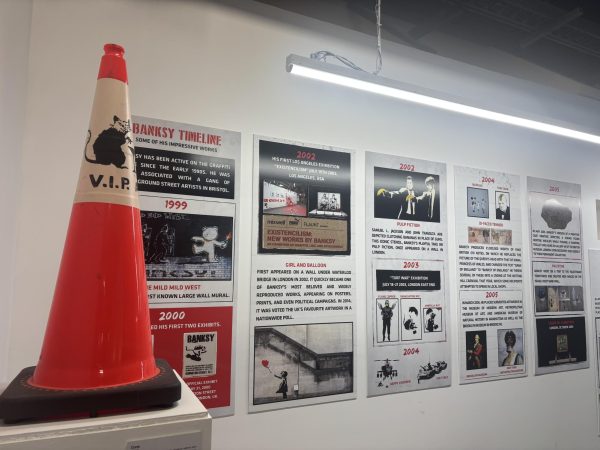
Upon entering the building, the first room is lined with panels of information introducing Banksy and his work over the years. For visitors who are unfamiliar with the artist, this is an excellent briefing of Banksy’s art and activism. A small theater presents the information in video format too.
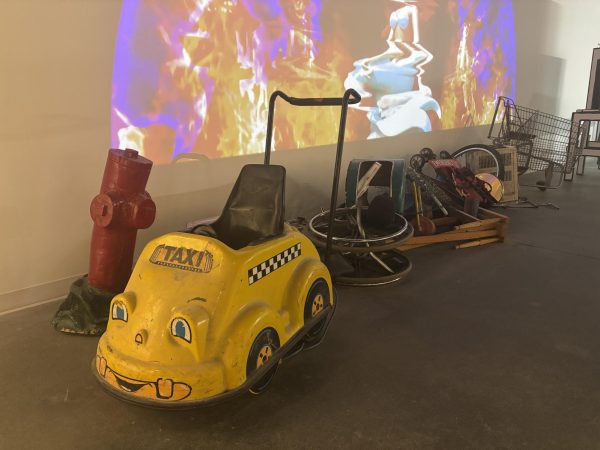
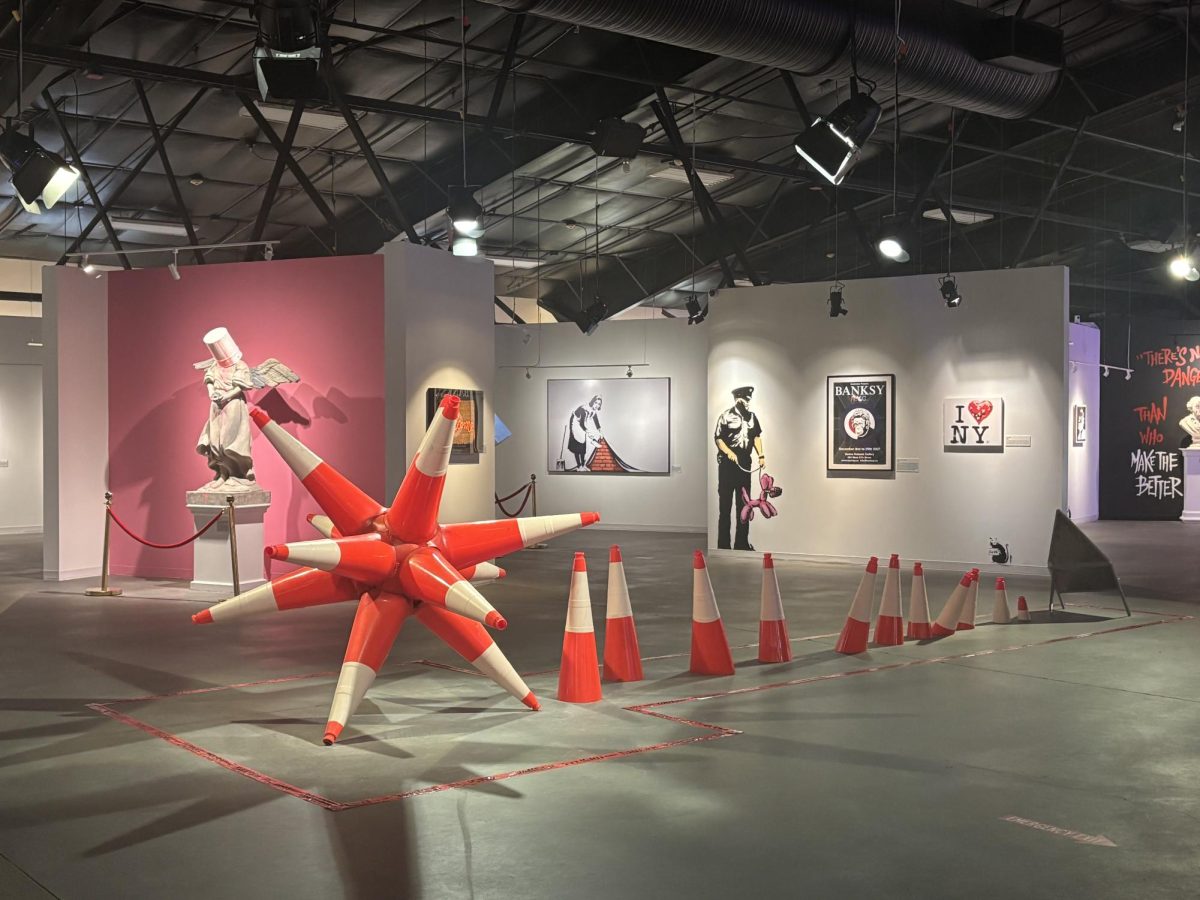
Further inside, the exhibit organizes Banksy’s diverse work into sections. Of these sections include Dismaland, a disco room for Banksy’s fake Paris Hilton CDs, a bathroom painted with his iconic rat stencils, a Great Britain themed area, a room for his classical art “vandalism” and several spaces dedicated to Banksy’s art and anti-war advocacy. Different music plays in each section to fit the theme, from chaotic noises in Dismaland to haunting chimpanzee hoots for Banksy’s “Devolved Parliament” painting.
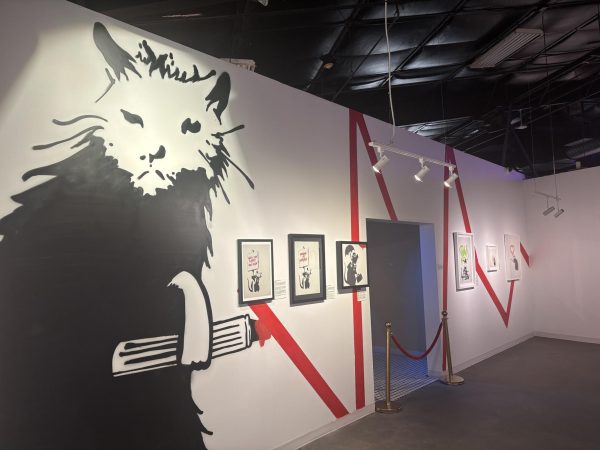
Some parts are a bit plain, with nothing more than framed paintings on a white wall. After all, Banksy’s art is meant to be seen in its original state: painted on city streets, sprayed across subway walls or snuck into famous museums. Other parts, however, attempt to replicate the scenes of Banksy’s art, such as a wall plastered with concrete fragments and colorful lights to show Banksy’s art in Ukraine.
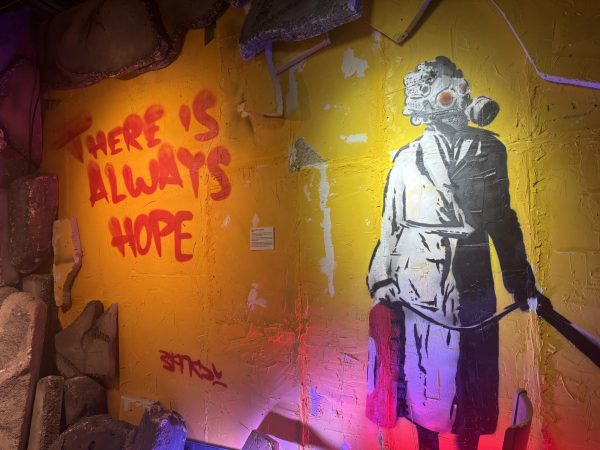
The details throughout the exhibit also helped engage viewers. From small, stenciled rats at the walls’ bases to Flying Coppers hanging from the ceiling, these additional features are not only classic Banksy symbols, but they also allowed the rooms to feel more full and added to the exhibit’s overall visual appeal. The extended labels for each piece were sometimes helpful, but visitors should focus on the artwork to formulate their own interpretations first. Some passages were confusingly worded, did not contain the information I was looking for or lacked clarity.
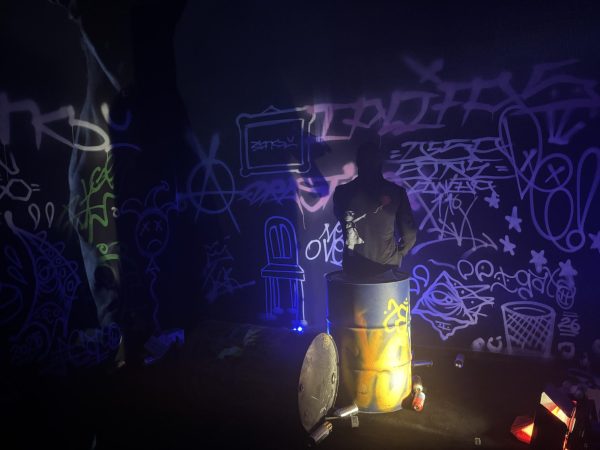
An infinity room and a room with two overlapping screens covering an entire wall also add to the immersiveness. The infinity room was especially captivating, as the walls seemed to envelop viewers in Banksy’s art: images flashed by and spun, voices echoed and the mirrors illuminated each piece a hundred times over.
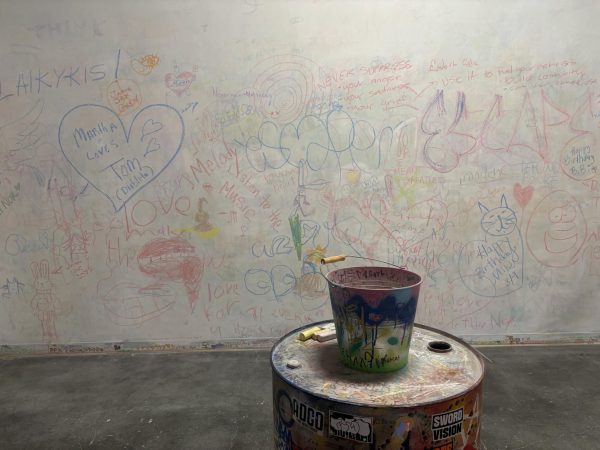
Fittingly, the exhibit ended with a bucket of chalk and a corner filled with visitors’ graffiti. After displaying more than 200 artworks by Banksy on topics from authoritarianism to capitalism and immigration to consumerism, the exhibit invites viewers to take up their own tools and leave their own mark on the world.
Though Banksy himself often criticized the commodification of art, such as with his piece “Morons,” the experience leans on the expensive side. The original price of the exhibit, $20 for students, is reasonable, but the Del Mar Fairgrounds charges another $20 for parking.
Nonetheless, “The Art of Banksy: Without Limits” is a worthwhile experience. Through each artwork, Banksy exudes undaunted rebelliousness and an unwavering anger towards injustices of the world. For those who live comfortably within the bubble of San Diego, Banksy’s art just might disturb them enough to spur action.
Rating: 4/5