

-
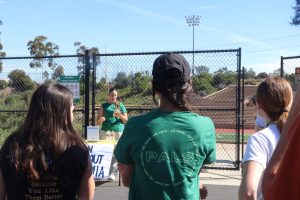
Participating students gather around a table as PALs leaders educate them on anorexia. They shared important statistics and information to spread awareness of this common eating disorder.
-
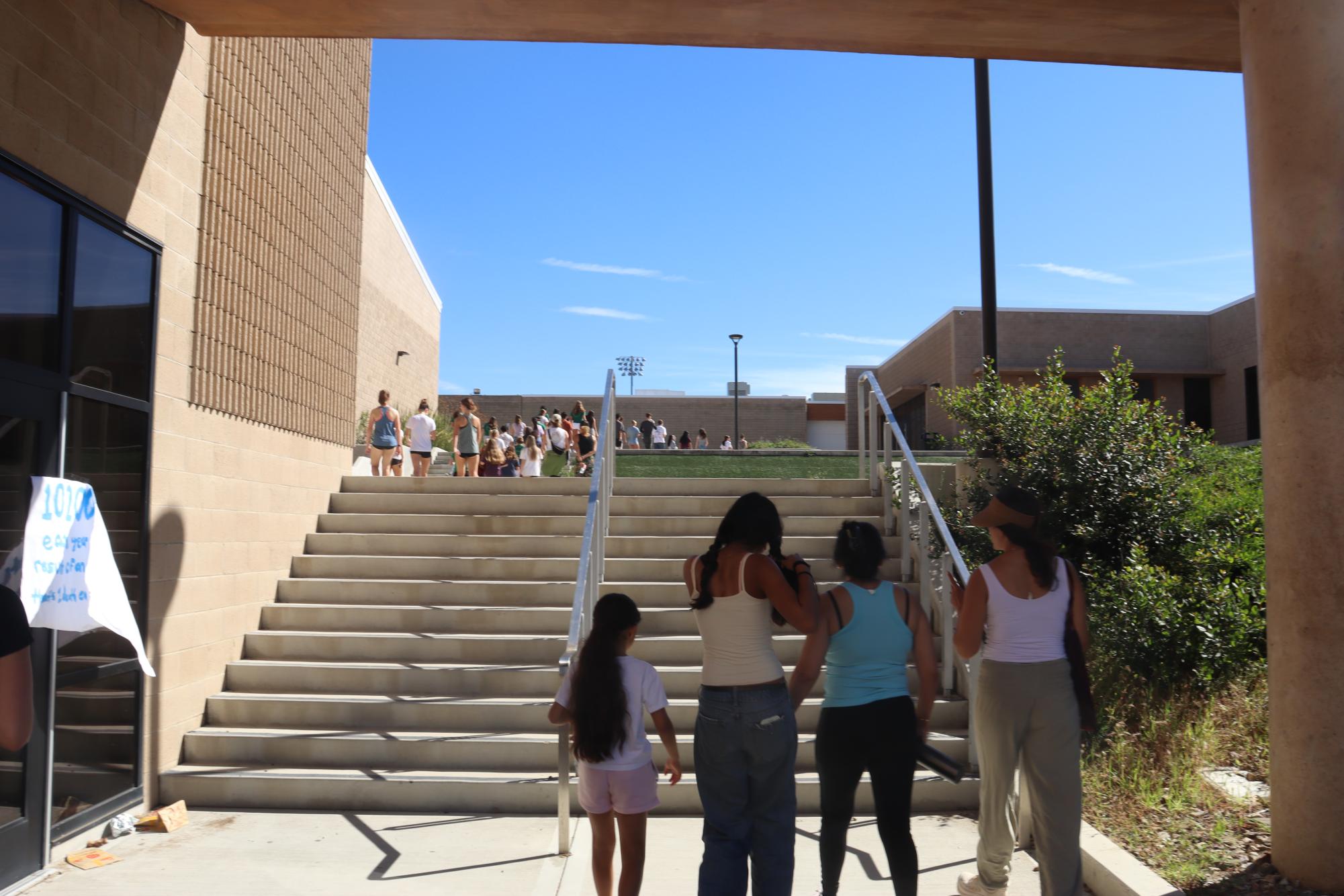
A family walks up the steps by the PAC during the walk. Alongside many others, they turned a mundane action like walking into a proactive form of activism.
-
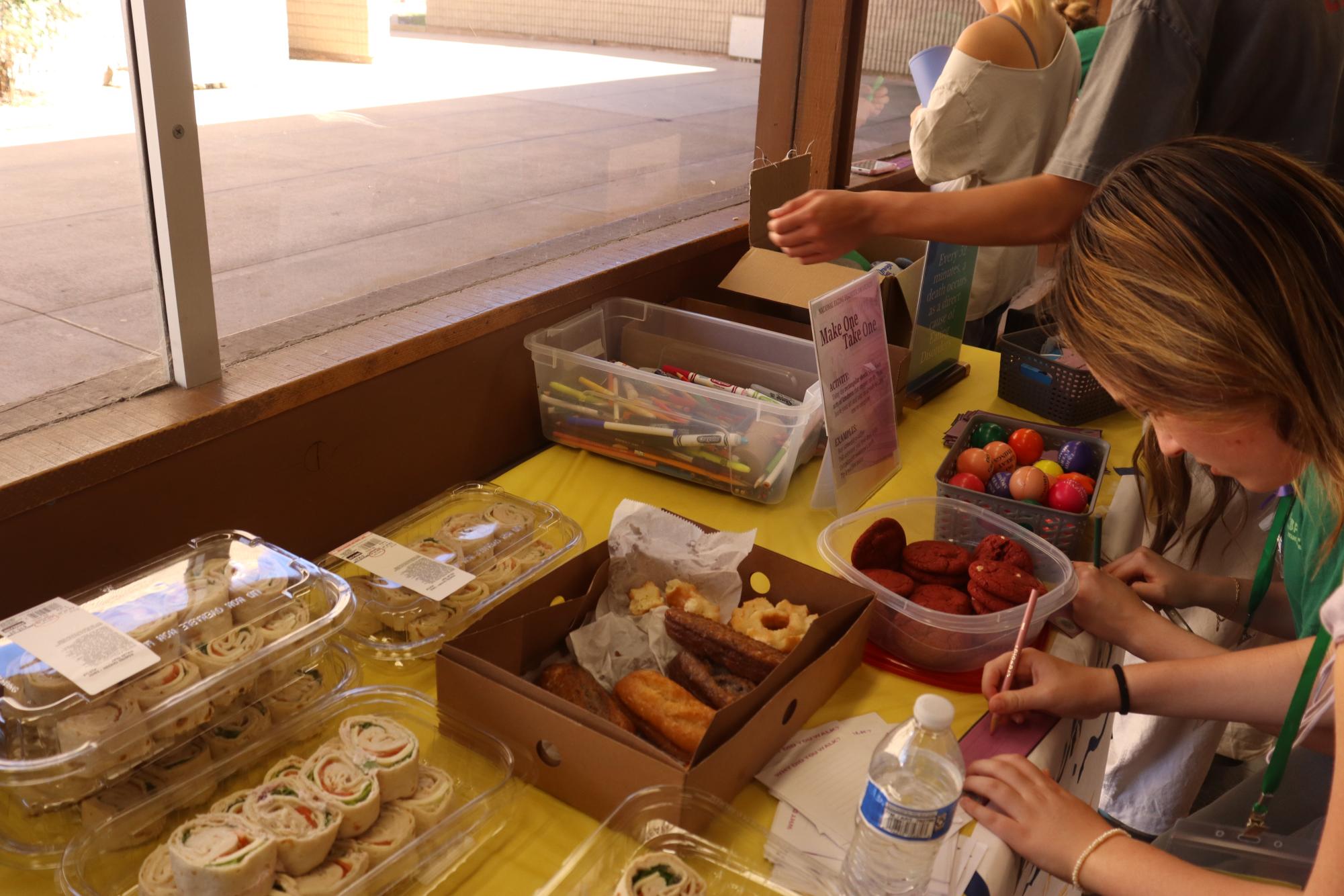
A Falcon writes a good deed for another Falcon to complete. Students participated in the “make one, take one” activity to encourage positive interactions and body-neutrality.
-
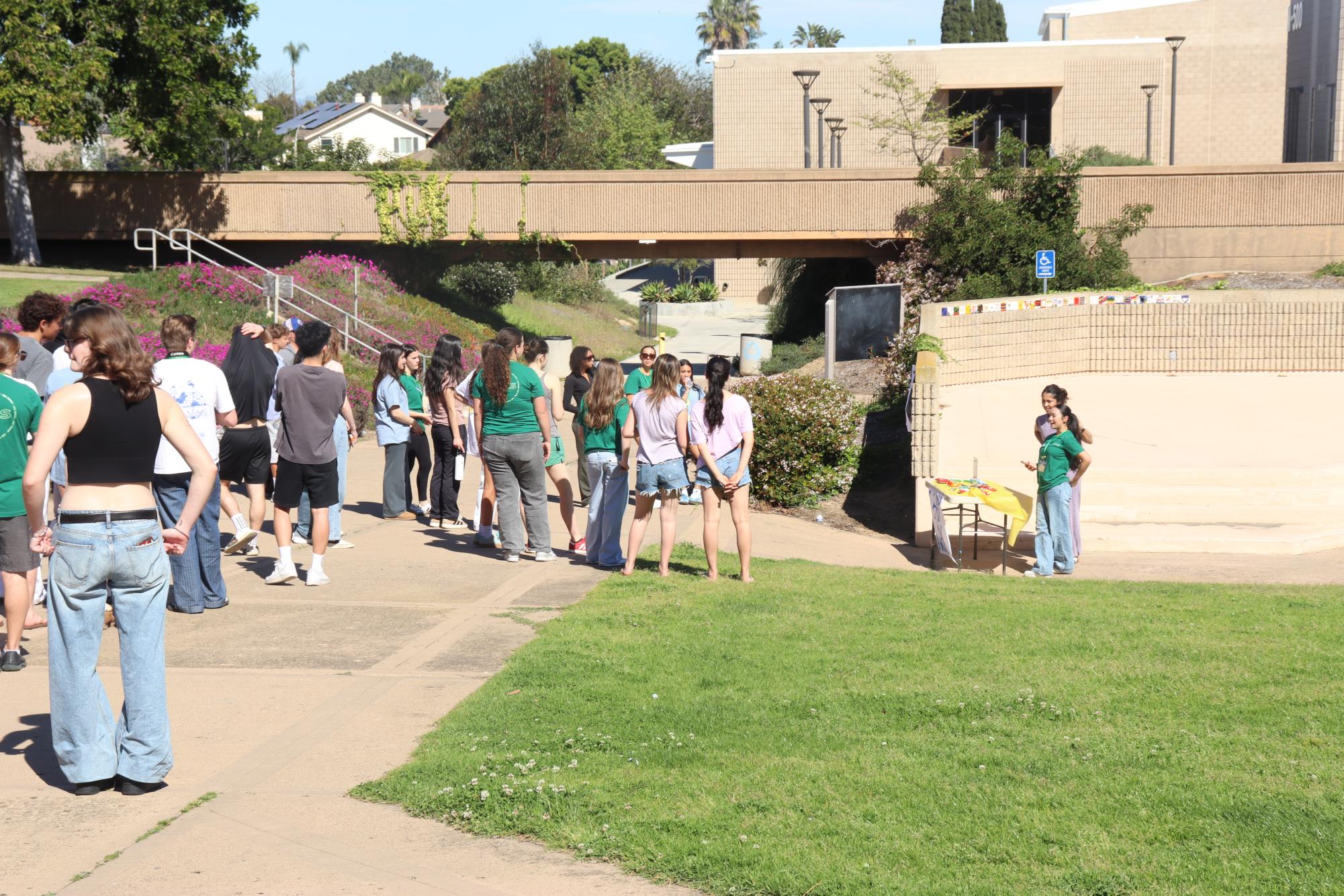
Falcons exit campus in the final stretch of the walk. The walk trailed along the perimeter of the school, stopping when they reached tables where PALs informed them about different types of eating disorders.

-
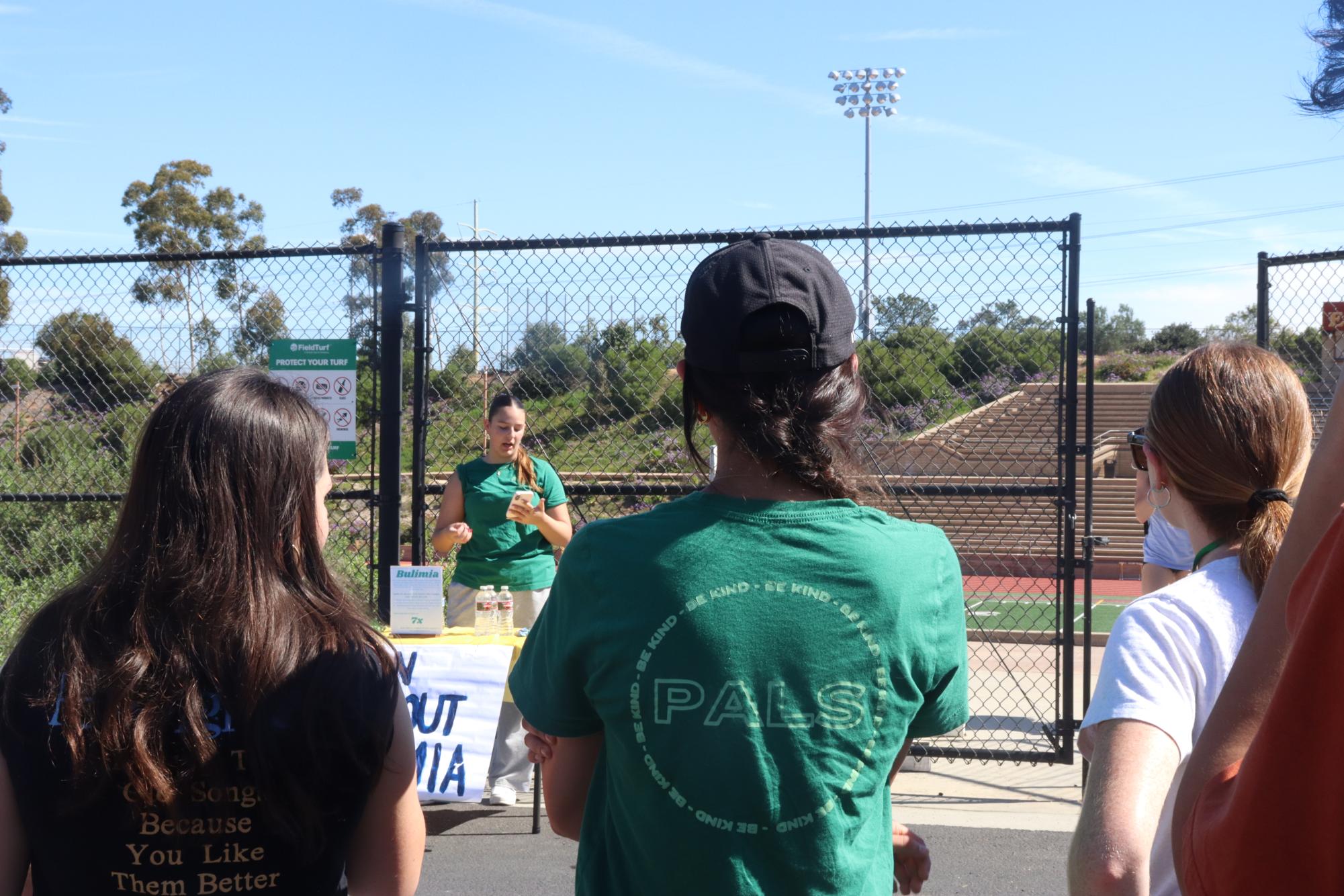
PALs Vice President Caitlyn Van Hoose (12) shares data about bulimia, a common eating disorder. Van Hoose and other PALs worked to end the stigma surrounding ailments like these by teaching fellow students about them.
-
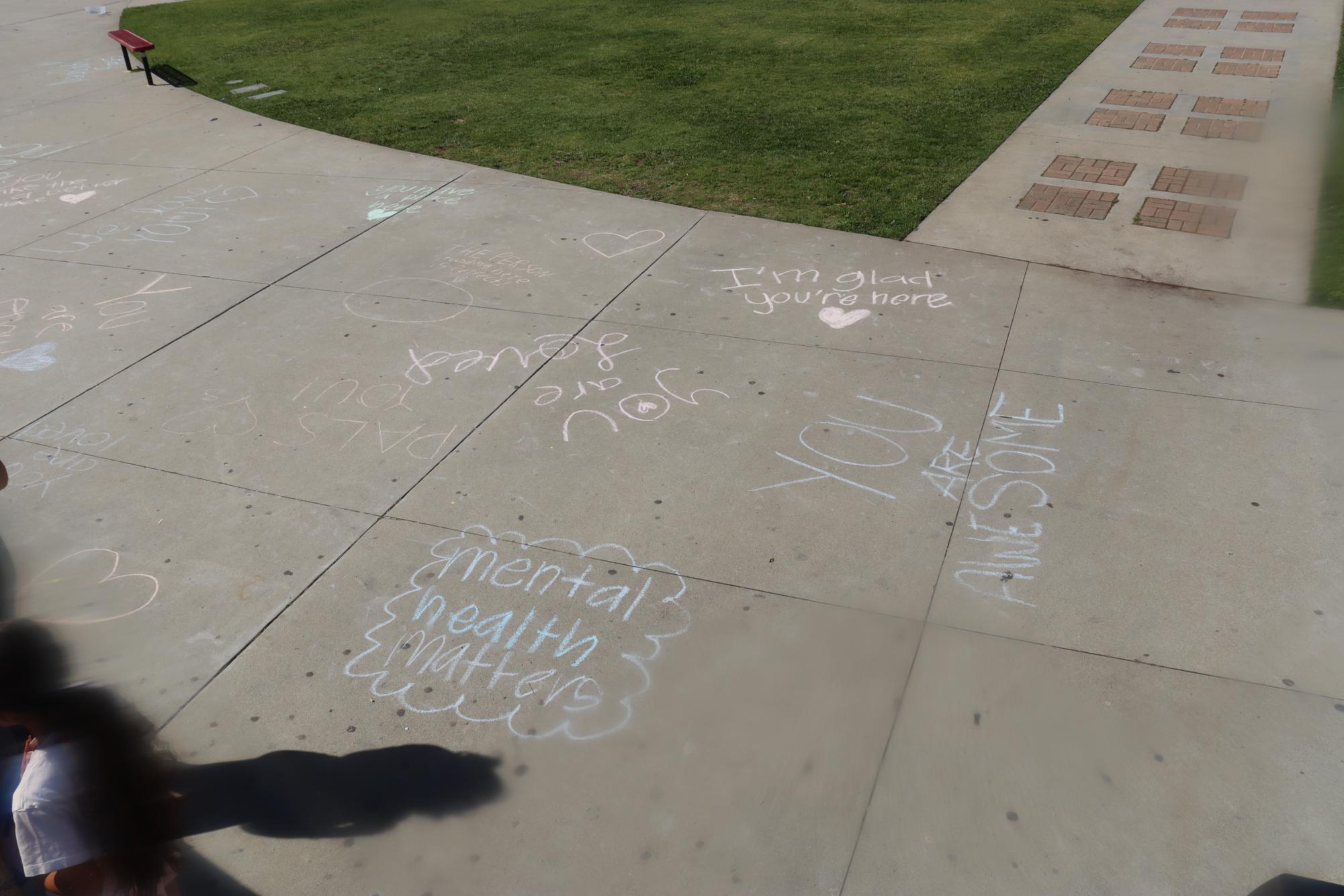
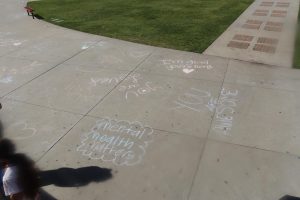
Various positive messages adorn the asphalt of the West Quad. Before starting the walk, participants used chalk to write these thoughtful notes and words of encouragement.


The third annual National Eating Disorder Awareness (NEDA) walk took place on Saturday morning from 10:00 a.m. to 11:00 a.m. on campus. Organized by Peer Assistant Leaders (PALs), the event aimed to raise awareness of and educate people on eating disorders and their symptoms.
Gabriella Earne (10) is part of the PALs Digital Committee, which made flyers, presentations and social media posts for the event.
“Overall, all PALs worked really hard on this event, and we have been working on it for a couple of months, bringing back what we have done in previous years but also doing some new things,” Earne said.
Walking up to the event, participants saw booths with information and food lining the West Quad, spikeball, PALs members, students, parents, therapy dogs and words of affirmation drawn in chalk. Angela Willden, PALS advisor and Honors and Advanced Placement Chemistry teacher and , and Kaitlyn Chmelka (12), head of the Physical Committee, gave speeches about their personal experiences surrounding eating disorders. Willden brought to light the fact that those who struggle have to confront the problem five or six times a day at every mealtime, something that makes these disorders inescapable.
“I am saying this as someone who has had an eating disorder impact their family: I hope we start to change everybody’s mind about how we talk about health and food and exercise and stop putting everyone in the same category,” Willden said. “Stop judging what people are choosing to do for their own health and instead, support people who are struggling and give them space to talk.”
The speeches ended, and the walk commenced. PALs led the group around the perimeter of the school to different stations where they spoke about a disorder at each stop, including anorexia nervosa, bulimia and binge eating disorder. Emma Beckwith (11), secretary of PALs, gave a segment on anorexia nervosa.
“As secretary, I made an itinerary of the day as well as who we needed to reach out to,” Beckwith said. “For my speech, I did a lot of research and wanted people to learn the warning signs so they could more easily identify them in themselves and others. It’s important to know how to start a conversation about these heavy topics.”
The student leaders addressed misconceptions about eating disorders, such as the thought that the number of one’s weight is what constitutes having a disorder rather than the behaviors or that one’s struggles are too minor to seek support or hold validity. They also gave warning signs like excessive and obsessive exercise and advice on how to help yourself or someone struggling. Willden shared their sentiments and hopes that the event will help shift the conversations about eating disorders.
“[It is important to] acknowledge that it is not a girl problem,” Willden said. “There are men that struggle in quiet. It is also a prevalent athlete problem in all different types of sports. I would love to see coaches do their research, understand it better and stop doing things that contribute to teen eating disorders.”
After the final stop, the procession made its way back to the final activity: creating cards with words of affirmation and acts of kindness for the receivers to complete. People could make a card and take a card while enjoying sandwiches and donuts provided by the PALs.
“I want to thank this group of PALs because they have embraced this wholly and they are not afraid to talk about not just eating disorders but all mental health challenges, “Willden said. “It’s a passion for them. I think by them stepping up and leading the way, it is giving everyone else permission to talk.”