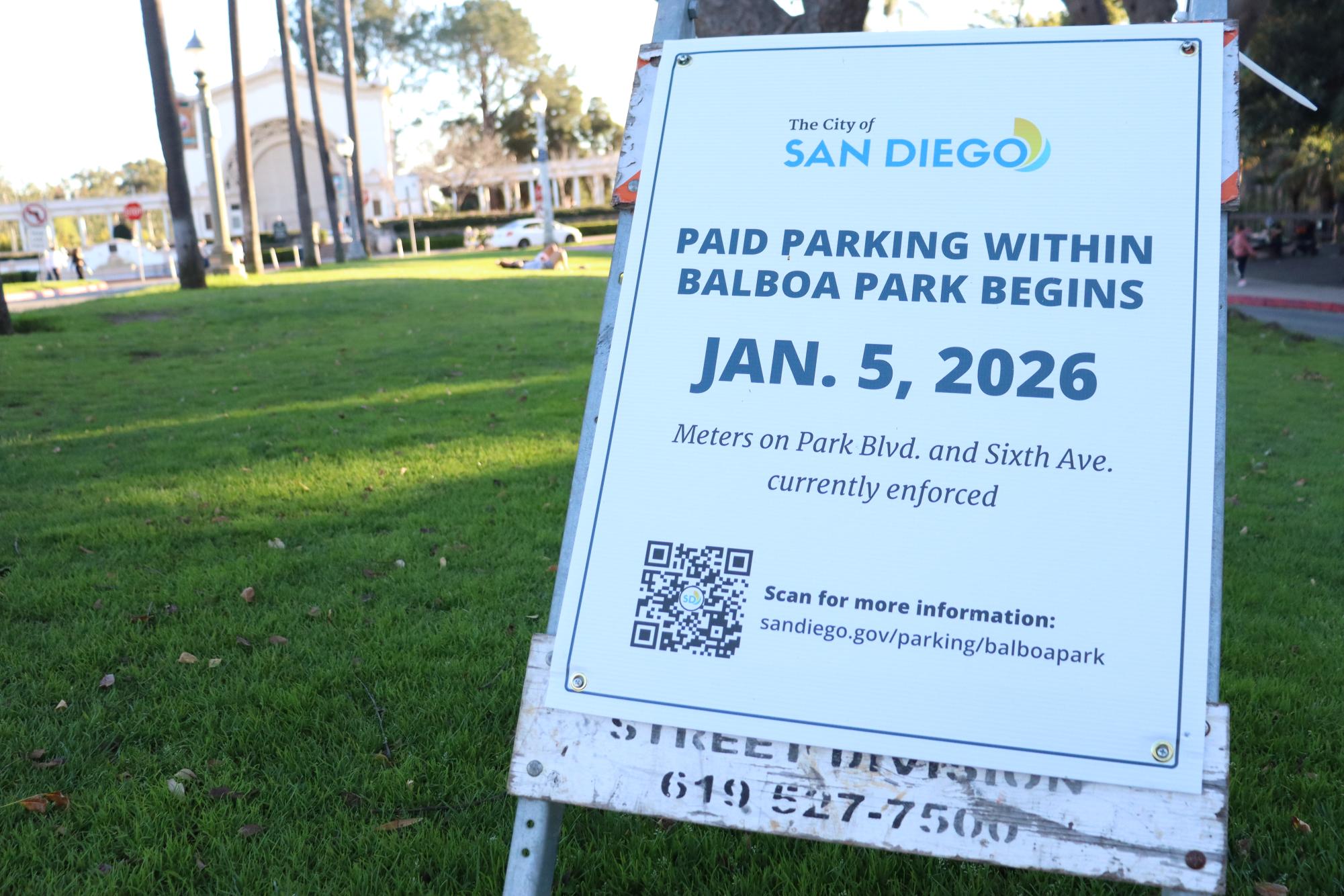



The paid parking system at Balboa Park faces pushback from staff, volunteers and visitors, cutting museum attendance nearly three weeks after the city implemented the policy on Jan. 5.
Options include three levels of parking lots and two types of street parking, enforced from 8 a.m. to 8 p.m. City of San Diego residents are eligible for lot and parking pass discounts. Registration via an online portal requires a one-time $5 fee, license plate number and form of residence verification, and approval may take “up to two business days.” The same portal is also used for purchasing monthly, quarterly or yearly parking passes. Parking is not enforced on New Year’s Day, Martin Luther King Jr. ‘s Day, Presidents’ Day, Memorial Day, Independence Day, Labor Day, Veterans Day, Thanksgiving Day and Christmas Day.
From the policy’s implementation to Jan. 11, there were 1,228 visitors at the Model Railroad Museum. Last year, from Jan. 5 to Jan. 11 in 2025, the museum had 2,882 visitors.
“It sounds like people are really upset, and they’re planning on boycotting the park regardless,” the museum’s gift shop manager, Charise Cunningham, said. “Residents don’t want to pay anything, and they know that this was supposed to be a free place, a public park, where everyone comes to enjoy, and even if they can afford it, I believe that they’re going to choose not to, just to show the city and the council members and the mayor and everyone that they don’t approve.”
She also noticed that “the parking lots are no longer full,” whereas she would usually “circle and look for parking” at 10:30 a.m.
“Balboa Park was a gift to the people,” Cunningham said. “We do a lot for the community. We have a lot of education programs here at our museum. I know most of them do. … I see the same kids every day. I have a feeling I’m not going to be able to see those same kids every day.”
According to Mayor Todd Gloria, in a memorandum to Council President Pro Tem Kent Lee and Councilmember Sean Elo-Rivera on Jan. 7, the paid parking program was “shaped, amended, and approved by the City Council through a series of noticed public hearings and subsequent votes in 2025.”
As of last Thursday, parking pass revenue reached $215,000 with 2,605 total approved permits, as well as $250,000 in revenue from parking meters.
State law requires that Balboa Park revenue remain in the park. For the fiscal year of 2026, the mayor’s office will use general funds for the park as they begin to build Balboa Park’s newly created fund. Right now, the general fund contributes around $15 million to the park.
In the future, park operations, maintenance and improvements will come from Balboa Park’s dedicated source of funding rather than general funds, which they cite as especially important during the city’s budget deficits of $318 million from the last fiscal year and $100 million more from this one. Originally, the City Council budgeted around the assumption that the parking fee would generate $12.5 million, which the parking revenue is now not projected to reach.
“Balboa Park is one of San Diego’s greatest civic treasures, and protecting it for future generations requires stable, reliable funding — not uncertainty,” David Rolland, the mayor’s Deputy Director of Communications said. “… Many of the institutions raising concerns operate in City-owned buildings and do not pay rent. That reality makes it even more important that we maintain a sustainable funding source dedicated specifically to the care and preservation of the park they call home.”
The parking discount for San Diego City residents excludes areas of San Diego County, such as Chula Vista, where Michelle Bannasch, a lifetime member of the San Diego Model Railroad Museum, resides.
“So that’s very narrow,” Bannasch said. “… I mean, it wasn’t a huge discount, but … I consider myself a San Diegan, you know, [and] I would not be eligible for the discount.”
Additionally, Cunningham reported anecdotes of the discount failing to work.
“A couple of people told me that they ended up paying the full price because whatever they did to be able to, I guess, prove that you’re a resident, whatever it is, is not working so the people actually aren’t even getting their discount,” Cunningham said.
The Natural History Museum, which released statements on Nov. 11, 2025 and Nov. 17, 2025, alongside the Model Railroad Museum, publicly opposed the policy. Museums expressed concern over declining attendance.
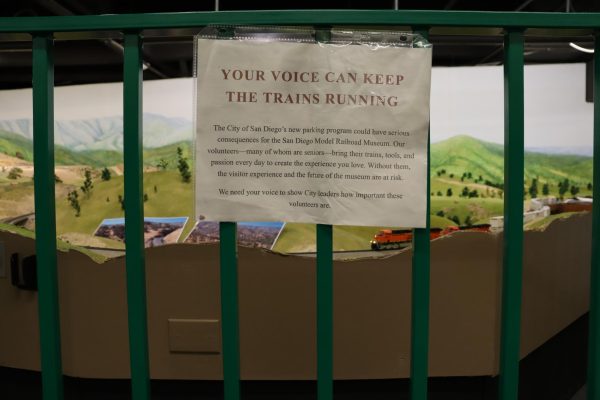
According to Cunningham, the city did not “ask what [their] views were” in advance of implementing the program.
“My predecessor, the director of the museum, attended a lot of meetings, city council meetings, park meetings, and everyone voted against it, but they implemented it anyway,” Cunningham said.
Balboa Park staff or volunteers have access to free parking in any Level 2 or Level 3 lots. Museum volunteer Paul Voss parks at Pepper Grove or Inspiration Point. From there, he would walk or take the tram, which is “sometimes … not available.”
“[The tram] doesn’t let us off [at the museum], so we still have to walk,” Voss said. “Now, a lot of the [staff] bring their trains with them and carry cases. So that’s a hassle if we have to carry those things distances or put them on the tram … it’s much nicer if we can just, you know, drop them off here.”
Prior to charging parking, the city increased tram service to begin an hour earlier, starting at 8 a.m. The mayor’s office also implemented an on-call shuttle from 7 a.m. to 9 a.m. and from 6 p.m. to 11 p.m.
Chula Vista resident Edith Garcia takes her two children to the museum every weekend for the train museum. She prefers that her children are “learning, interacting, seeing museums” rather than “watching TV.” To commute, she chooses public transportation because of the previous, crowded “parking situation, and now that … they’re charging for parking, that’s like a ‘no.’”
“Especially with toddlers, [public transportation] is really hard because it takes forever, like an hour, or something like an hour,” Garcia said.
Cunningham noted that there were “a lot of elderly people who can’t walk very far,” so the museum may lose volunteers.
“Most of the museums will probably have to cut staff because of low attendance,” Cunningham said. “Hopefully no one will have to close. The federal government already took most of our funding prior to any of this happening, so we were already kind of in a bind.”
At the House of Pacific Relations International Cottages, House of Norway volunteer Robert Fox worries the parking fee is “going to destroy the community in Balboa Park.”
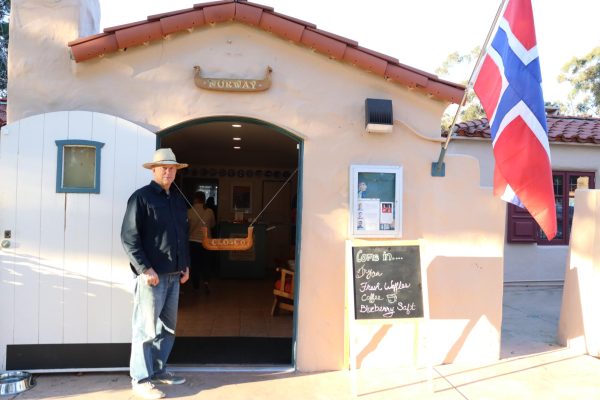
“When you charge … parking, fewer people are going to come to the park, and all these volunteer organizations live from people visiting, and by charging parking, … no local people will come anymore,” Fox said.
He also mentioned that volunteer organizations such as the House of Norway rely on locals to recruit new members.
According to communication from the House of Sweden, the city does not provide every volunteer vehicle with a pass “given the enormity of over 2,000 registrants for the House of Pacific relations.” The house provided an example of the city’s rationale: “If a House registers 50 individuals, there’s no regulation of knowing how many of these are actually using a pass for ‘volunteer’ purposes.”
“People won’t visit as much and people may not volunteer as often,” Jenny Ryu (12), a volunteer at the House of Sweden, said. “If they’re having to commit their time at the house as a numerical fee, that might be a factor that deters them away from volunteering and visiting more. For public events especially it might be a problem because then people can’t visit as freely as before.”
In the six-month trial period following, the city will provide 5 passes for volunteers, and an additional 5 passes for lawn programs. Ryu said that while each volunteer shift only has 2 to 3 people, lawn programs usually involve the whole cultural house.
Kevin Gu (11), a clarinetist for the San Diego Youth Symphony, which practices at Balboa Park, noticed that the traffic on Village Place was worse since Jan. 5 because more people were commuting to the park via drop off.
The symphony has a nearly 80-year history at Balboa Park, so they “will not change location,” despite parking issues. According to Gu, parking and traffic were already issues.
“Especially for my mom, I feel like she shouldn’t have to pay money just to wait for me to get out of rehearsal,” Gu said.
Karinne Nevarez, a monthly visitor at Balboa Park, believes the parking fee “is definitely going to deter people from coming.”
“I know it’ll deter me,” Nevarez said. “… I’ll just try to park further. I know my friends kind of live in a neighborhood nearby, so maybe I’ll park in front of their house and walk over.”
Still others plan to continue visiting Balboa Park by parking in the San Diego Zoo, which is under a 10-minute walk from the park.
“With [San Diego Zoo] membership, you get free parking, [so] if I’m going to pay money anyway, I might as well pay for the zoo so we can have that option and free parking,” Bannasch said. “There may be days where we’re not going to go to the zoo, but I’ll still use zoo parking.”
As the mayor’s office continues to work with Balboa Park’s museums and institutions, according to Rolland, “the City will continue to monitor performance closely, make adjustments where appropriate, and work collaboratively with park stakeholders.”