

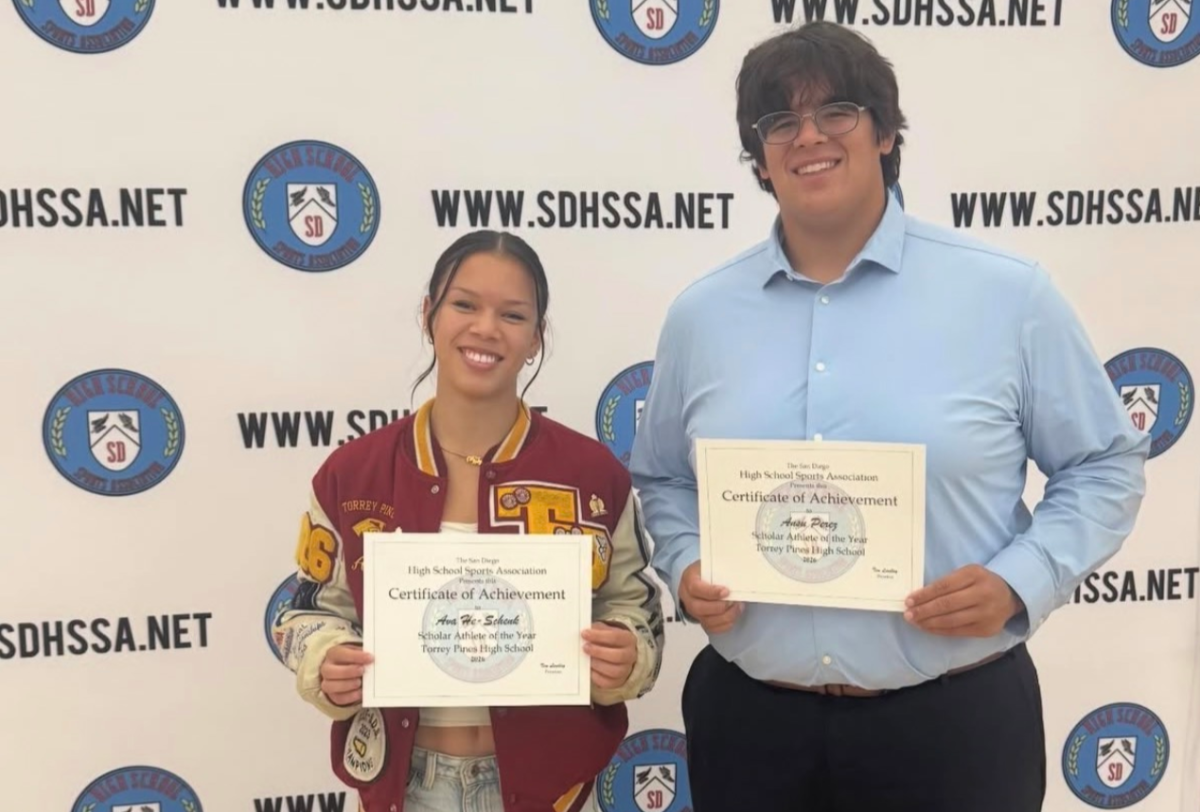
The school honored Ava He-Schenk (12) and Ansu Perez (12) for the scholar-athlete award, which is given to two student-athletes from each school in the district holding a grade point average (GPA) of at least 3.5 while participating in various sports.
Perez plays varsity football, wrestling and track and field for shot put and discus, while He-Schenk is a captain of varsity stunt cheer, competition cheer and part of varsity sideline cheer and track and field.
He-Schenk is committed to California Polytechnic Institute San Luis Obispo for the Division I stunt team cheerleading while majoring in materials engineering. Perez is committed to the Massachusetts Institute of Technology for Division III football, majoring in computer science and engineering.
Ava He-Schenk
-
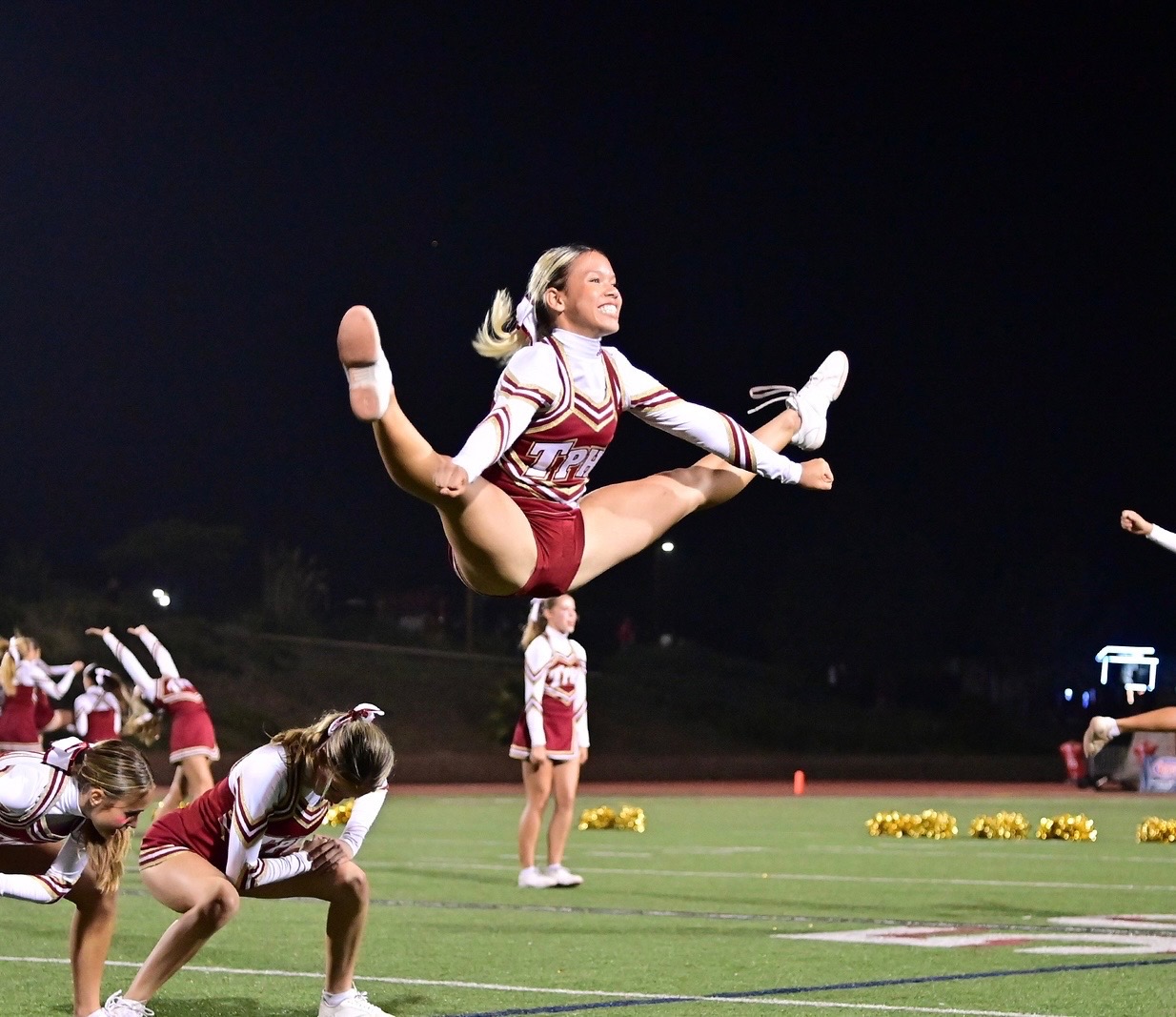
Ava He-Schenk (12) hits a pike jump during a game. He-Schenk began cheer in fifth grade. Photo courtesy of Ava He-Schenk.
-
Ava He-Schenk (12) does a back handspring. He-Schenk was on the school’s varsity stunt and competition cheer team for three years. Photo courtesy of Ava He-Schenk.

-
Ava He-Schenk (12) does a hurdler. Outside of the school’s varsity cheer team, she was a part of her club’s cheer team, Pacific Beach Allstars San Diego. Photo courtesy of Ava He-Schenk.

-
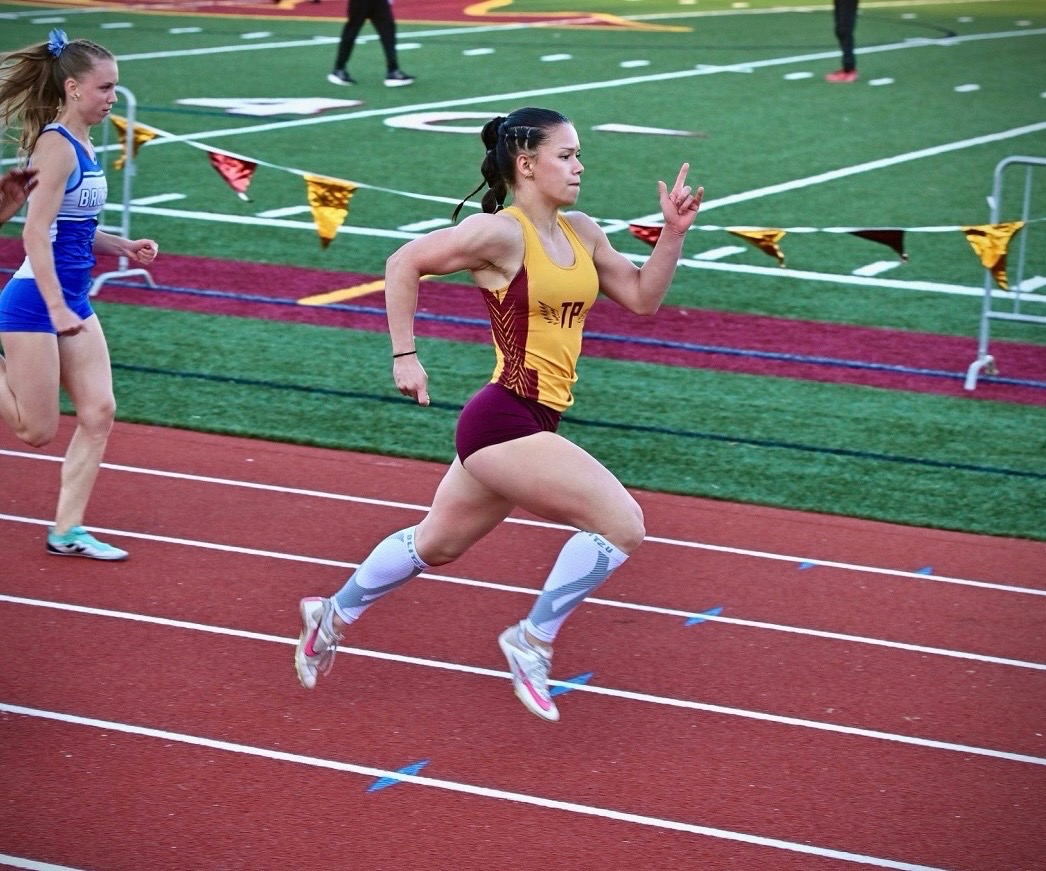
Ava He-Schenk (12) runs the 100 meter dash. He-Schenk was on varsity track and field all 4 years of high school. Photo courtesy of Ava He-Schenk.
-
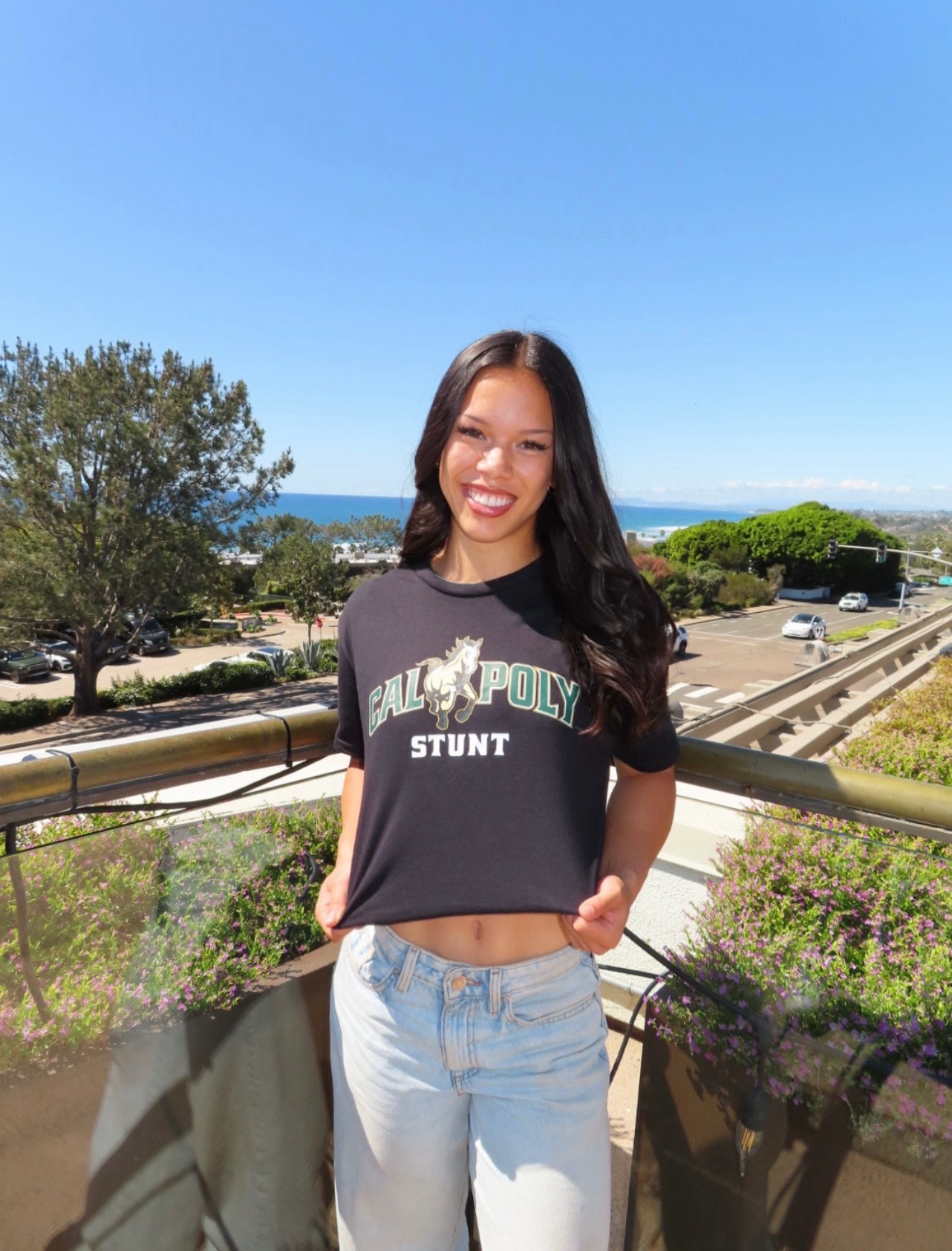
Ava He-Schenk (12) announces her Division I commitment. He-Schenk committed to California Polytechnic Institute San Luis Obispo for the stunt team.
-
Ava He-Schenk (12) receives a baton from her teammate during the 100 meter relay. He-Schenk ran both the 100 meter relay and 100 meter dash for track and field. Photo courtesy of Ava He-Schenk.



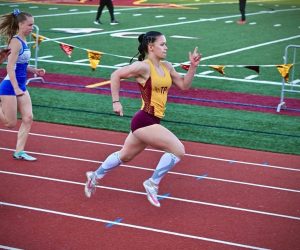
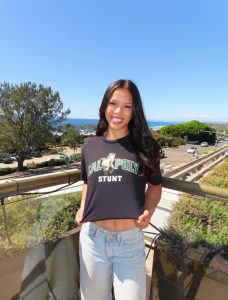

He-Schenk came to the school as a sophomore, after attending Twinsburg High School in Twinsburg, Ohio, where she was on the varsity track team, where she ran the 100 meter dash and 100 meter relay her freshman year. After transferring, she continued three years of track and field in the same events for the Falcons. During this time, she was also a part of varsity stunt and competition cheer for 3 years and sideline cheer for 2 years.
What does the scholar-athlete award mean to you?
“[Ansu and I] are both multi-sport athletes … and then, you also have to maintain a high GPA, like a rigorous academic schedule. It was pretty important to me because it’s only two people from every school out of San Diego.”
What did a typical day look like for you during the school year?
“I would wake up at 5 a.m. [for stunt], I’d get to practice by 6:30 a.m., and we would practice until 8. During fall or winter, I might [have] a football game or a basketball game that following night, and then in the spring I would go to track practice after school … Spring is when our stunt games actually started, so I would have to miss track practices for my stunt games or the other way around. Spring was my busiest … so it was never a break. I did end up breaking my leg because of that, like a stress fracture. It was too much, but I had to sacrifice a bit, overlap my schedules and leave early.”
Outside of school, what practices do you do?
“I practice a lot on my own. Every Saturday, I go to a cheer gym and stunt. I tumble on the field in my free time, and I sprint. I weight train almost every day too, so I’m always training.”
How do you balance school and four sports? “I utilized my mornings a lot, so if I didn’t have stunt practice, I would still be up at the same time the following day to do my homework or study, and I would have to eat while doing homework after my games. I’d do my homework during lunch, my free class periods where I’ve already finished my work, so it’s like all the small increments of time.”
How did you react after getting injured in your junior year?
“Because sports are such a big part of my life, it felt so draining not having it, and not being able to get that dopamine reaction anymore, and having to sit out and watch my teammates. I was happy for them to be able to get their stuff done, and it gave me more [of an] opportunity to help coach them, but I wasn’t committed to my [Division 1] stunt team way back then, so I was worried if I would be able to compete in college. I think it made me stronger mentally, knowing that I can bounce back and do something like that.”
How do you fuel for competitions?
“I carb load every night before track meets or stunt games, so I eat a lot of pasta, rice and in the morning I’ll make sure I have protein and fruits, and I hydrate all throughout the day.”
Do you have any superstitions before competitions?
“I do this hand swipe on the ground. I think it started because as an athlete, you get sweaty, so I just wipe my hands on the ground. Then when you’re getting the baton [in track], you don’t want to drop it because you’re sweaty. [In stunt], it just became a routine every single time I do something before I put up a stunt, hands on the ground.”
How did you start each sport?
“I started cheer in fifth grade. I cheered fifth and sixth grade, quit middle school, rejoined freshman year at my old school in Ohio, and that’s where I got all my tumbling skills. We didn’t stunt at all there. I actually learned how to stunt sophomore year here at Torrey. I started [track] in eighth grade. It’s just kind of something you step into, being totally new, and [you] just gotta take the jump.”
What are your future plans?
“I’m considering doing track [in college], but I’m also going into engineering, so I won’t really have time … We train [stunt] for six days a week, so I don’t really have time for track.”
What has sports taught you?
“It’s totally okay to fail. I think if you didn’t have sports to hold yourself to, obviously, I still hold myself to a high standard, but especially with stunting, you never get a skill the first time, and in both stunting and tumbling, you have to keep failing over and over again until you can land it or stick it. [With] track, I know that it’s progression, and every time now when I start something new, I think I know what I have to do to get there, and I know I’m capable, and that’s basically my mantra. Every day I wake up, ‘I know I’m capable. I can do this.’”
“My sports also taught me to be a good leader and be the first one to step up and say something and lead the group. If coach wasn’t there, I’d be like ‘Ok guys, let’s warm up together.’”
Ansu Perez
-
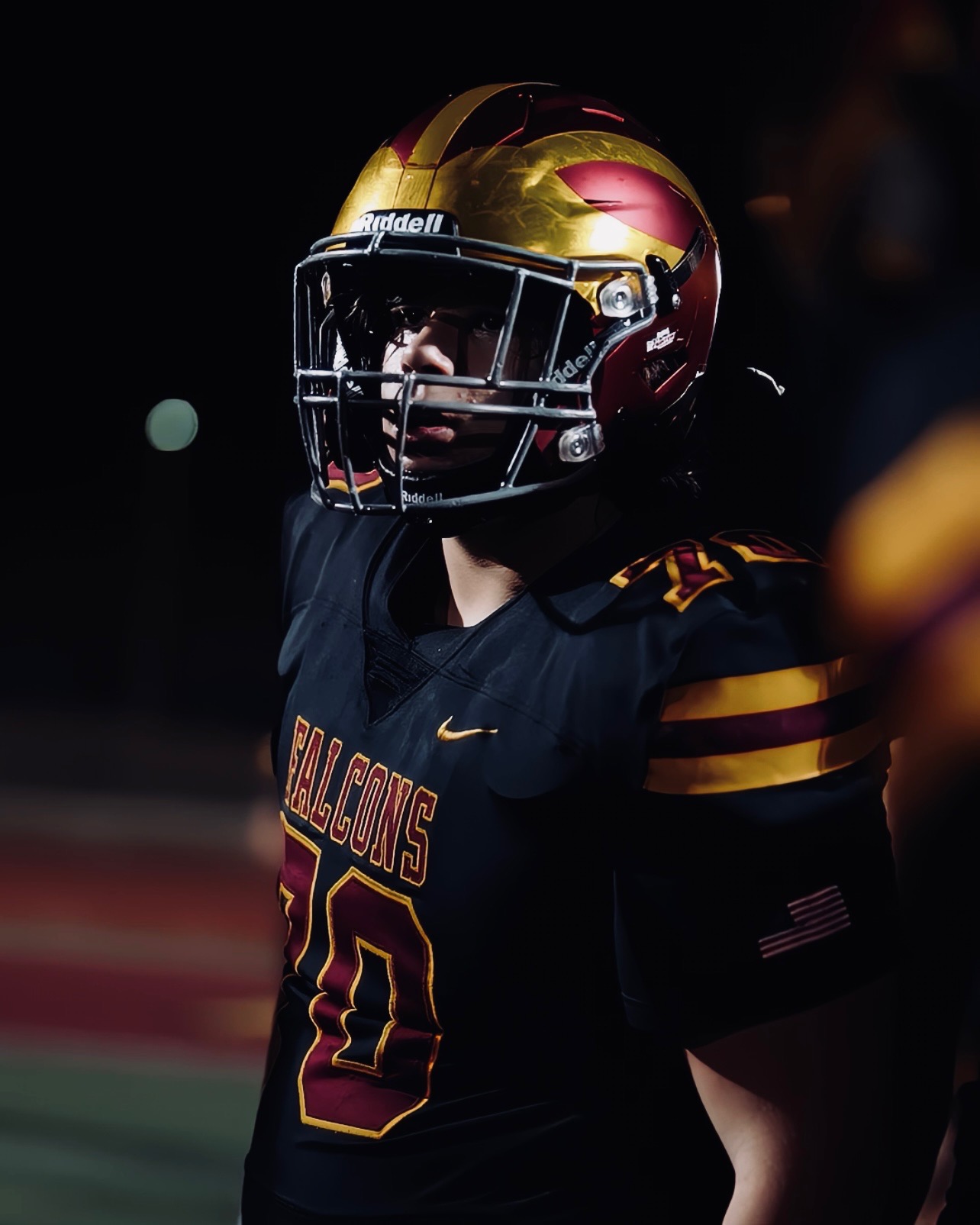
Ansu Perez (12) was part of the school’s varsity football, track and field and wrestling team. Perez led a “very athletic childhood.” Photo courtesy of Ansu Perez.
-
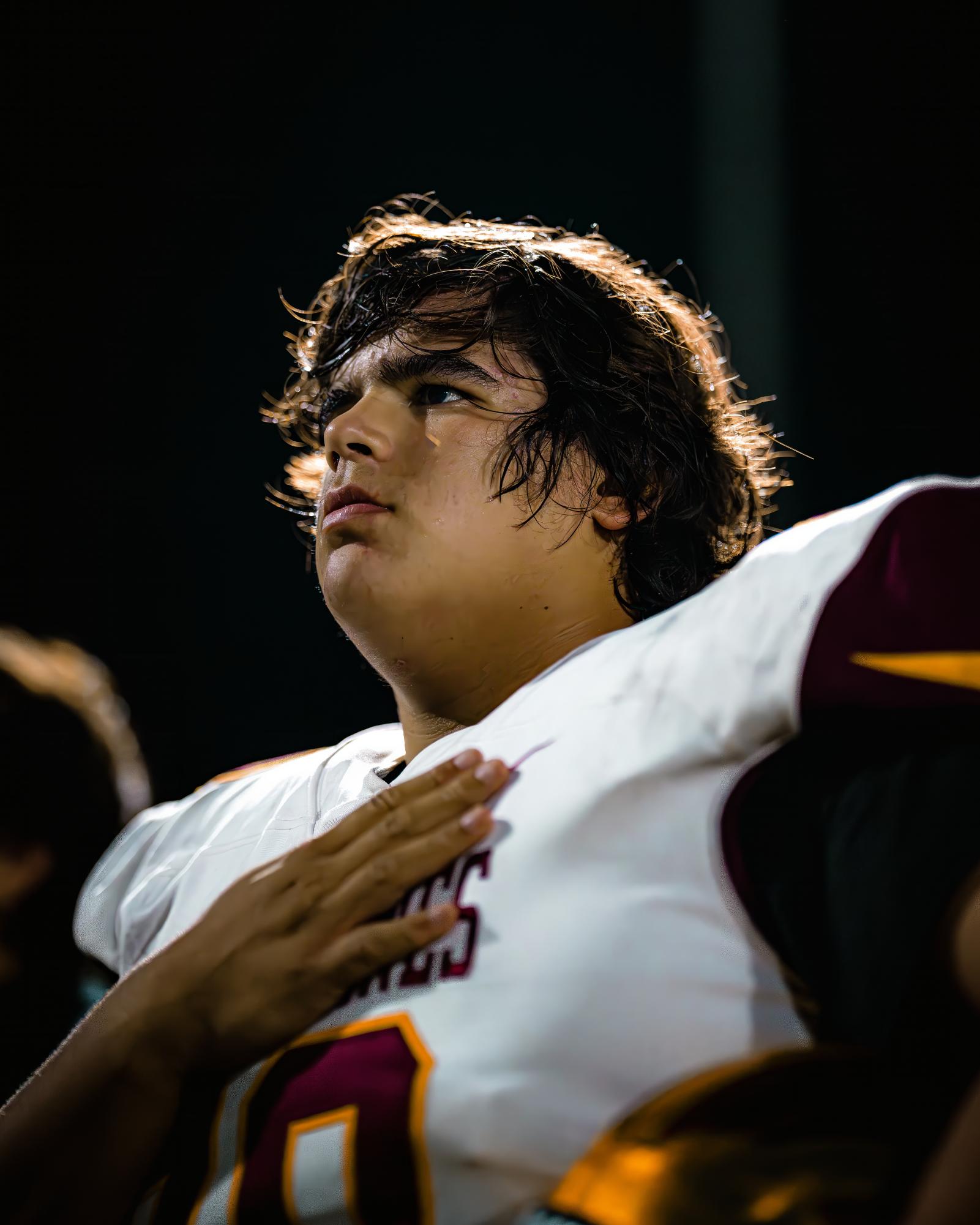
Ansu Perez (12) places his hand across his heart. Perez was part of the school’s varsity football team. Photo courtesy of Ansu Perez.
-
Ansu Perez (12) smiles with a medal around his neck. Perez was part of the school’s varsity wrestling team. Photo courtesy of Ansu Perez.


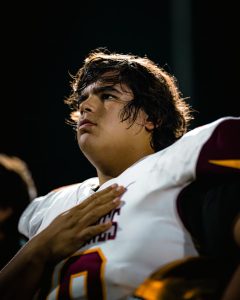
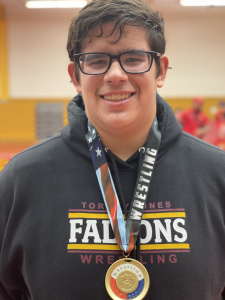
Growing up in Alabama, fellow scholar-athlete awardee Perez led “a very athletic childhood.” Between six and eight years old, he played “every sport at [his] local recreation center.” When he came to high school in San Diego, Perez continued wrestling and football. Later, in his freshman year, he began shot put and discus after watching Matthew Staycer (‘23) train for these events on the school’s track and field team. Looking back on his time as a student-athlete, he credits his parents for introducing him to athletics and pushing him to accomplish goals in both sectors.
What does the scholar-athlete award mean to you?
“It really means a lot. It recognized a lot of the work I’ve done for my three varsity sports and how, over the course of four years, I’ve made a lot of progress. I’ve been on varsity for two of my sports for three years [and] one of my sports for four … It recognized the work I … put in [during] the off-season and over the summer for seven years for football and wrestling and four for track.”
How did you receive this award?
“I was nominated by, I believe, our athletic director and my football coach.”
Could you talk about a lot of the work you put in during the off-season and in the summer?
“I did football and wrestling [during] the off-season. [For football and wrestling], you have off-season lifts throughout the year … and then, you have summer workouts four days a week during the summer. We get a two week dead period where the coaches cannot contact us … That’s mandated. But beyond that, we are there almost every day either for a real practice or for conditioning and workout.”
What work did you put in for wrestling?
“Wrestling … conflicts with football … I was in both at the same time. I would show up to practice as much as I was able to. Sophomore [and] junior year, I did a lot more off-season training than I did before senior year … I sometimes go straight from football practice to wrestling practice over the summer, and then I just do tournaments on Saturdays and drive up for [tournaments] and wrestle all day Saturday pretty much.”
What did a day in your life look like?
“I’d usually wake up around 6 a.m. [to] 6.30 a.m.-ish. I would always make sure to have, before I’d go to football, … a small meal, whether it be a banana or a protein bar, and then I would show up, and we’d probably start off with a lift … Depending on which day we were on, I’d [train] upper body or lower body. We’d spend 45 minutes [to] an hour [lifting], and then we’d have 30 minutes of conditioning practice, which was on the field or on the upper or lower field. If we were doing special conditioning, we would have real practice either later in the afternoon or right after where we would be going over plays and practicing; for lineman specifically, we’d have steps. After that, I’d usually get 30 minutes to an hour and a half to go get something to eat at either the Highlands or [eat] a prepared meal I’d already have, and then I’d go straight to wrestling practice. [At wrestling practice], we’d start off with another warm-up. And then, we’d do some light drilling again with a practice partner, and then we’d have a live session where we’d wrestle against each other.”
What does a day in season look like for you?