
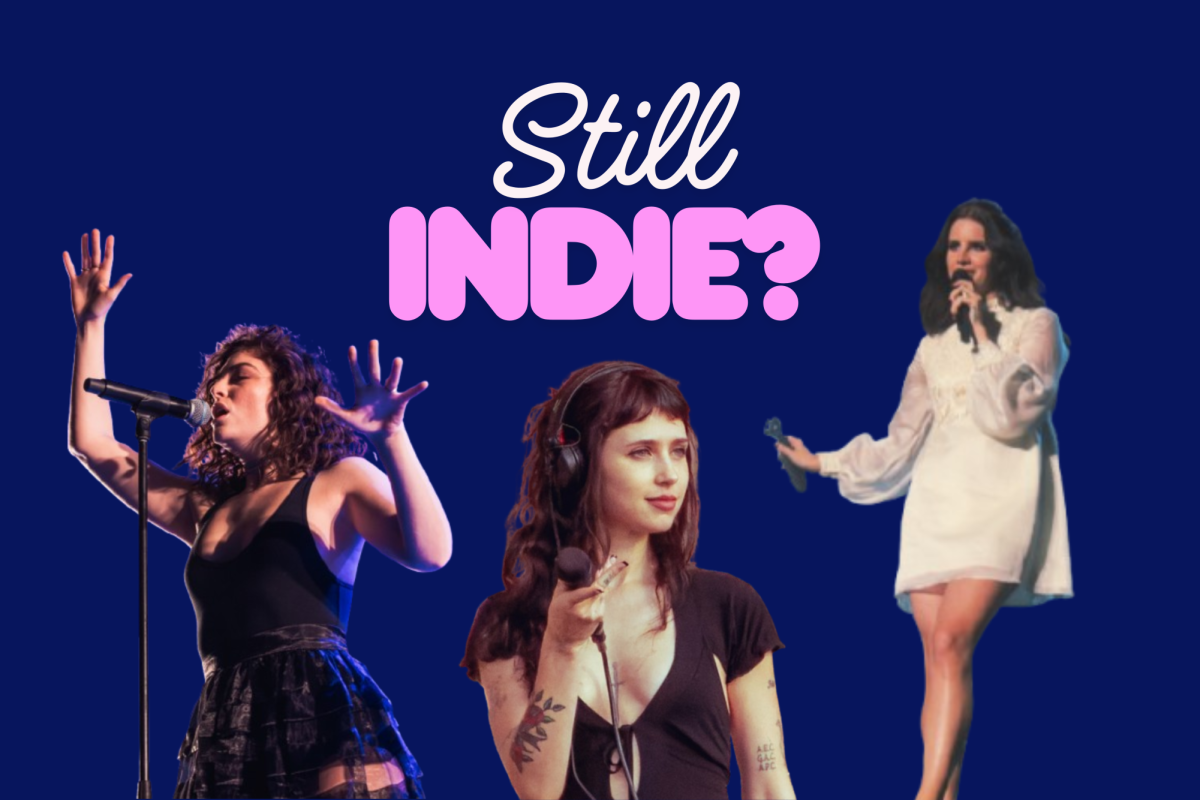
As side B of “Punisher” spins on a Victrola record player, the melodic and nostalgic singing of Phoebe Bridgers fills the room, the lyrics creating a haunting echo. Every year, it seems that “indie” music dominates many young individuals yearly wrap-ups, the works of artists such as Phoebe Bridgers, BoyGenius, Wallows, Big Thief, Adrianne Lenker, Clairo and Blood Orange with an occasional appearance from The Backseat Lovers making frequent appearances on their screens.
Still, indie music retains its complexity as a coalition of subgeneres rather than one simple large label. There is indie pop, indie rock, indie folk and a newer arrival to the genre that is popular amongst adolescents: “bedroom pop.” This complexity, however, has lent itself to unintentional blending, making the genre even harder to put a finger on. Artists who were once considered the faces of indie, such as The 1975 and Clairo, do not fit the modern mold of the genre, while the influence of artists such as Elliot Smith have largely remained within party lines. Buzzwords such as “dreamy” and “soft” are frequently applied to songs to market them as belonging in the indie category, even when the music lacks the raw and journalistic entry-like quality that many listeners search for.
The indie genre itself, once defined by artists simply being independently signed from the major record labels, has now become a genre more concentrated on appealing to a mass audience. The authenticity that once made indie music feel underground has been replaced by a desire to make it more relatable “bedroom pop,” discrediting the uniqueness once found amongst indie artists. Now, indie music revolves around following a blueprint of what sounds good to the masses, not true emotional depth. The idea that indie music has to be experimental and accompanied by intimate interactions between the listener’s ear and the singer’s voice no longer works for true commercial success, and artists are instead pressured to produce music that’s more “digestable.”
While the diversification of indie music gives artists a chance to break through to mainstream media, it also dilutes the genre as a whole. When discerning the various types of indie music becomes too complex, oversaturation and simplicity chip away the sense of originality that initially defined the genre. Indie music fails to elicit the same nostalgic experience many grew up with. To many teenagers, Bridgers seemed to encapsulate the emotional turmoil that came with youth, and her music became the soundtrack to many individuals’ younger years. This is what allowed artists like Bridgers to connect to their adolescent audience on a fundamental and profound level.
The very idea of Indie music being unoriginal and unmoving diametrically opposes the intended characteristics of the genre in the first place and only encourages the growth of pretentious and bland music that is frequently heard. Artists such as Bridgers (a shining example once again) have carved out a place in the genre because they are able to craft music that feels like talking to a best friend about life, yet still remain incredibly nuanced and poetic in its lyricism. In Lenker’s album “Songs,” which is often accompanied by the album “Instrumentals,” narrative is built through intricate and delicate song descriptions and lush instrumentals, giving the works a whimsical quality that is considered the heart of true indie music. If both Lenker and Conan Gray, whose lyrics are much less poetic than Lenker’s, can both be considered “indie” artists by modern standards, is the soul of the genre the same anymore?
Indie music has also been solely morphing into a social identity separate from the music itself. The collecting of rare vinyls, the vintage yet somehow trendy clothing and the idea of listening to “undiscovered” artists became the key to entering some sort of social grouping, rather than an opportunity to truly connect with a complex genre. Even thrifting seems to now be associated with those who listen to the genre, an activity that does not actually relate to the substance of the music itself. There is truly something special about going to a concert with less than 100 people, yet intimate interactions with up-and-coming artists that do not blow up within a week like these have become less and less common.
As the indie genre itself becomes more mainstream, it seems to move further away from its roots for the sake of appealing to a wider audience. The music loses the unpolished quality that made it magical for many, instead giving into trends of conformity. Indie music is certainly changing to match this modern mindset, likely not for the better.