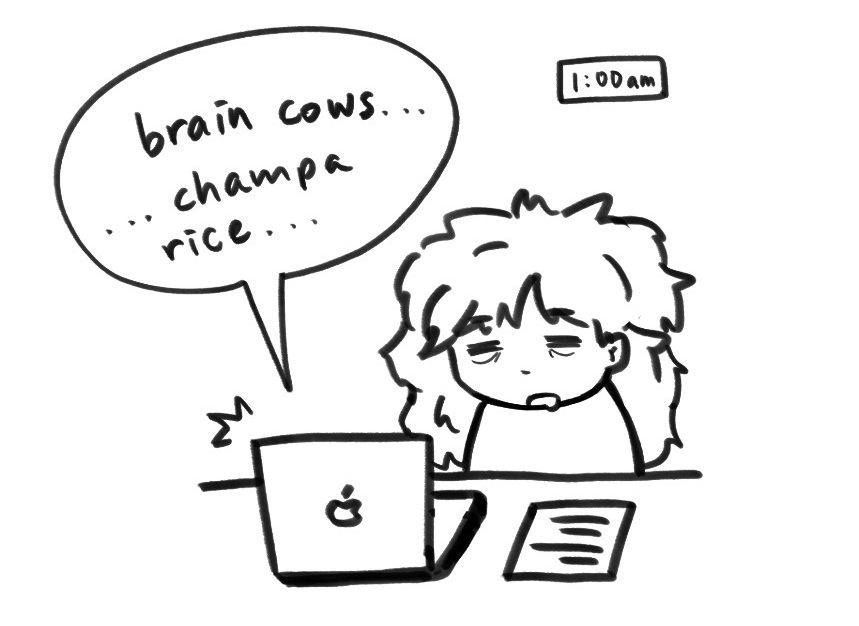


We have all been there: it is the night before a reading quiz and you realize that you forgot to read the two assigned chapters. The last thing you want to do on top of your other homework assignments and sport practices is crack open a book that might read you to sleep.
So, besides SparkNotes, what options do you have when it is midnight and you are in a time crunch? SparkNotes, the beloved site full of chapter summaries, study guides and answers to aid you with your last-minute crises.
Cut to the next morning and you are in your English class. After reading over the SparkNote summary and analyzing it a hundred times, you are prepared to ace the five-question quiz.
But then the worst happens. The paper that lies on your desk has 10 questions, and the first five ask you to connect quotes to their speaker. The last five ask you the context in which the speaker said the quote. By the way, none of this is featured on SparkNotes. You are done.
To prevent this from happening next time, you should, maybe, read the chapters. But right now, the most logical choice for you is to accept fate. You are either going to fail or miraculously know what is going on. So, here is the ultimate guide to the SparkNote-ability of the books you have or will read across all English classes. The biggest key to detect how SparkNote-Able a book is, is through how literal or figurative the book is.
“Of Mice and Men” by John Steinbeck
A fan (least) favorite, “Of Mice and Men,” tells the tale of two men trying to achieve the American Dream during The Great Depression. While the short book explores historical themes and develops the character of protagonists George and Lennie, it is an absolute snoozefest.
The complicated, old English mixed with dramatic play writing makes the book a figurative mess where no one knows what is going on; it certainly does not help that the plot moves roughly two steps throughout the novel, before everything rapidly escalates at the very end.
On top of that, every worksheet you get will be about how the rabbits connect to innocence. How are we supposed to know that?
With SparkNotes, you might get some of the plot, but you will not be able to answer those quiz questions.
SparkNote Score: 1/5
“Catcher in the Rye” by J.D. Salinger The infamous book that practically everyone in America has read and maybe grown to hate. Your parents read it, your teacher read it, your siblings read it and everyone is bound to read this “relatable” book that supposedly captures the teenage experience. The novel follows protagonist Holden Caulfield, who is going through a “tough time” and runs away to New York City, alone, to cope with his depression. On his journey in the big city, he smokes a little too much, insults a lot of people and finds himself in a few fights. Yeah … totally relatable.
While the novel may be a drag at times, it explores the complex internal feelings that adolescents often experience..
What is interesting about this book is that it is very literal and straightforward.. Here, there will be no work assigned to decipher literary devices and the plot diverges from confusion. That makes this book an absolute pleasure to use SparkNotes for, as every detail you find in the book is somewhere on Sparknotes.
SparkNote Score: 5/5
“The Great Gatsby” by F. Scott Fitzgerald
As the ultimate party anthem book, it knows how to throw and make a handful of juniors miserable. As the book was proclaimed for its time, it is not a fan favorite for some students to read.
Many find the protagonist Nick Carraway pretentious and the overall plot to be shallow. The amount of papers about the symbolism of The Green Light and the American Dream is endless, and again, it is not something thoroughly featured on SparkNotes.
So, from SparkNotes, you might understand the plot, but not how the yellow car is a symbol for death.
SparkNote Score: 2/5
“The Handmaid’s Tale” by Margaret Atwood
In the final stretch, seniors leave high school with the haunting dystopian world of “The Handmaid’ s Tale.” The book explores the dangers of absolute power and control, especially with the oppression of women.
The book’s detailing drives the intense plot, but makes the story even more complicated to understand. There are just about a million symbols within the book to relate to the reality of the plot, which Sparknotes will not include for your efficiency.
Yet again, do not trust SparkNotes for this one.
SparkNote Score: 0/5
As much as it is hard for students to juggle their busy schedule with classes, sports and homework, it is understandable why reading over 70 pages of a book at night is something to avoid or simply can not make time for. But it may just be that necessary evil to get a perfect test score, and you might even learn something.
But the biggest lesson here is not to trust SparkNotes: you will most definitely end up learning next to nothing, other than not to use SparkNotes.
Reading quiz
There was an error. Please try again.
4 Total Questions