
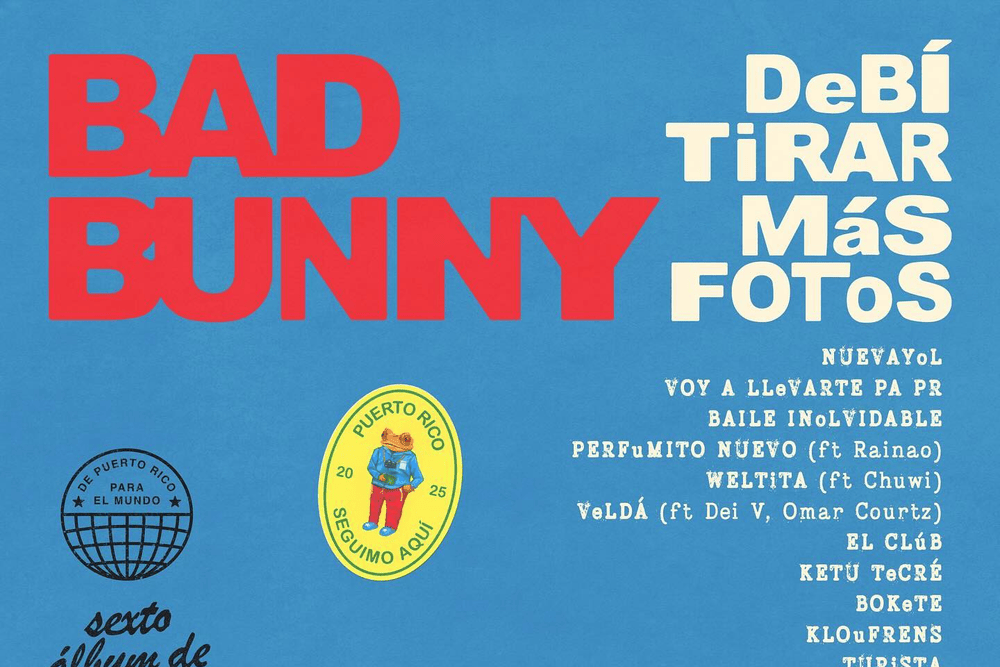
As the Super Bowl reached its halftime mark, viewers’ minds were no longer preoccupied by thoughts of the Patriots’ inevitable loss. Anxiety began to shift toward a much more pressing matter: Puerto Rican singer Benito Antonio Martínez Ocasio’s halftime performance, an artist most famously known as Bad Bunny.
The announcement of the performance sparked a great controversy, prompting avid critiques from conservative politicians, such as President Donald Trump.
Bad Bunny’s use of Spanish in his songs was the main source of complaints, with critics viewing it as unpatriotic to have a performer who was not from the United States and singing in a language that was not English. They believed such a foreign performance contradicted the patriotic undercurrent of the event. Unbeknownst to said upset fans, Puerto Rico is an American territory in which people receive US citizenship at birth — which Bad Bunny possesses — contradicting their argument. This ignorance divulges a more malicious, xenophobic intent behind their words.
Right-wing nonprofit Turning Point USA set forth an alternative “All American Halftime Show,” headlined by country musician Kid Rock. This performance was starkly underwhelming, especially in contrast with Bad Bunny’s. It was livestreamed on YouTube to an audience of around 6.1 million people. On the other hand, the official Super Bowl Halftime Show “averaged 128.2 million viewers from 8:15 to 8:30 p.m. ET,” according to NBC.
Despite certain beliefs, Bad Bunny’s performance was nothing if not American.
The performance began in a replica of a sugarcane field, a central part of boricua culture and a remnant of the country’s colonial past. As Bad Bunny traversed through the agricultural maze, singing the first song from his set, “Tití Me Preguntó,” he interacted with different aspects of Puerto Rican life, such as a piragua vendor.
A traditional Puerto Rican house stood in the background of another set, with Bad Bunny falling through its roof and into the living room of a shocked family. He kicks the front door open to join the famous Latin celebrities dancing on the house’s porch. Among them were Pedro Pascal, Jessica Alba, Cardi B and Young Miko. All of these artists not only represent their homelands, but also the diversity of America. Their work weaves unique perspectives into the lives of Americans, further livening the tapestry of the country.
Lady Gaga also appeared as a guest performer, singing a salsa rendition of her hit song “Die With a Smile.” This performance felt rather arbitrary, especially in comparison with the show’s predominant theme of Latin culture. The remix was enjoyable, nonetheless, and the confusion evoked by Gaga’s appearance was soon overshadowed by Ricky Martin singing “LO QUE LE PASÓ A HAWAii,” much to the excitement of spectating Latin mothers (mine included).
This thrilling immersion into Latin and Latin-American culture concluded with the bittersweet chanting of the lyrics from the song “DtMF.”
This performance reminded us that belonging comes from a shared experience and cannot be defined in the cynically political manner of Bad Bunny’s critics. Our diversity, while marking us as individuals, is also the defining characteristic of humanity. By being different, we are the same. This is a fundamentally American philosophy, as we are a country founded by foreigners.
America is more than a passport: it is the people.