
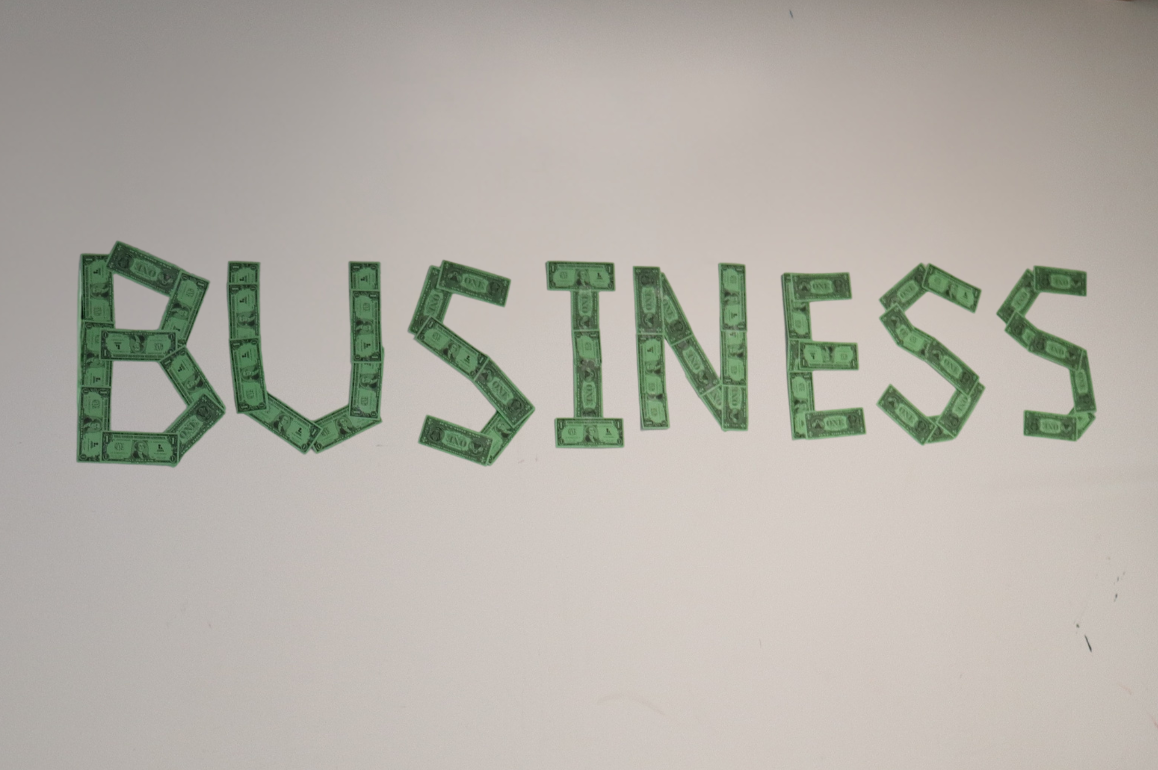
Marketing students took on a new task this year: advertising electives for course selection.
In past years, marketing students promoted their own classes and other courses from the Business Management pathway. This year, the project expanded to all electives. Groups of students were assigned a class to advertise, acting as their own marketing agency.
“We reached out to the different elective teachers,” Rafael Ancona, the school’s Marketing, Accounting and Spanish teacher, said. “Students were like a pseudo-marketing agency, and their clients were the teachers. They talked to their assigned teachers to get a feel of what the class is, and what types of students take the class, and came up with a marketing plan to promote the class and hopefully get students to sign up for it.”
Students applied their first-semester knowledge of guerrilla marketing — a high-stakes, unconventional strategy to create buzz and attract attention through out-of-the-ordinary experiences for maximum brand exposure — to their projects.
“My group focused on the main points of guerrilla marketing strategies, such as staying low-cost, unconventional and sparking curiosity through our creative ideas and outreach,” Siena Hahn (10), whose project was to advertise the Advanced Placement Seminar class, said.
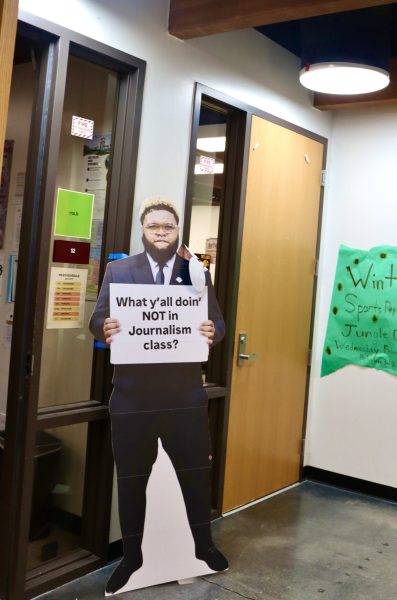
Before the actual marketing began, students assessed their target markets by sending out surveys and conducting research.
“We sent out a Google Form to Mr. Ancona’s class,” Samantha Hofflich (10), a student marketing for Mr. Ancona’s marketing course, said. “He told us the dynamics of his class, like who takes marketing, which is mainly sophomores and juniors, showing us who we needed to appeal to with our campaign.”
Students noted social media trends, and marketing ideas ranged from posters featuring well-known memes to celebrity cameos on social media.
“We ensured that our marketing efforts were engaging and appealing by focusing on finding something relevant to students,” Hahn said. “We chose to clip people with clothespins that said ‘Take AP Seminar’ because it is a common trend within our target market, so by using these visuals, we found that the message would be more memorable.”
Hofflich’s group focused on garnering student participation with another social media trend.
“My group has been going around and taking photos of students with nostalgic Snapchat filters because ‘2026 is the new 2016’ is trending among teenagers,” Hofflich said. “I am going to put the photos into a big picture frame and hang it on the wall to catch the eyes of students and pique their interest in marketing.”
A large part of this project was teamwork.
“This project has shown me how marketing works in group settings,” Hahn said. “As a group, everyone needed to collaborate and share their ideas; everyone needed to manage their time equally so we could work efficiently. “
The goal of this project is to give students hands-on marketing experience, teaching them guerrilla marketing with functional implementations.
“They learn how to talk with their clientele and figure out what their needs are,” Ancona said. “Then, they have to learn how to work within a group to come up with an idea, strategize how to implement that idea and make it successful, giving them a real-world usage of the marketing techniques we have been learning throughout the year.”
While developing marketing skills, students learned collaboration, communication and creativity.
“Do not be afraid to express your ideas, even if they are far-fetched or really outside the box,” Hahn said. “One person in my group brought up the clipping idea at the very last minute, and we ended up changing the trajectory of the project; it became one of the most successful guerrilla marketing projects in my class.”
As the course selection window closes, the remains of student marketing projects stay plastered to the B building’s walls, reflecting the work students put into their projects and the core principles they learned along the way.
“I learned that success requires teamwork,” Hahn said. “It means listening to everyone’s opinions and being flexible. Everyone’s ideas can contribute to a stronger final result when everyone works together.”