

It really is Pitch Perfect.
The judges seated at a table in the back, the matching outfits, the incredible vocals, the acronymic group names, the a cappella puns — they all match the 2012 blockbuster hit about an all-female, collegiate group of a cappella singers working out their differences to make it big on the stage, minus the romantic tension (but who knows?). It is aca-mazing.
Every year, Varsity Vocals, the largest organization for student collegiate a cappella, holds the International Championship of Collegiate A Cappella (ICCA) across nine different regions. A cappella is music performed exclusively with voices, without any instrument or backing track. Marketed as “real-life Pitch Perfect,” 7,700 ICCA singers belonging to 480 ICCA Groups compete across the country for a chance to win in the finals in New York City. Feb. 7 marked the ICCA Southwest Quarterfinal 3, held at the Mandeville Auditorium of the University of California, San Diego. It was one of 13 quarterfinals and primarily featured students from the University of California, San Diego (UCSD) and University of California, Irvine (UCI).
Ten groups performed, and two groups were able to qualify and move on to the ICAA Southwest Semifinal in Arizona. Each group had 10 minutes to showcase a “set,” with freedom on which songs to include and how many. The only limit was the group’s imagination.
At the concert, the auditorium was filled to the brim. Each audience member waited with bated breath as they prepared to immerse themselves in a world of otherworldly melodies. The best way to describe a cappella is ethereal — it sounds like the notes are floating and airy, almost like being underwater. Harmonies layer upon one another to create a resonant blend, and the beats are rhythmic and almost muted. Some describe it as a “human orchestra” or “blended smoothie,” where all the individual voices, with the exception of the soloist, fuse together to create a rich sound. Songs varied from recognizable pop to R&B to rap and more. Some of the songs were performed in different languages; the UCSD group, Sitaare, included a selection of Hindi music.
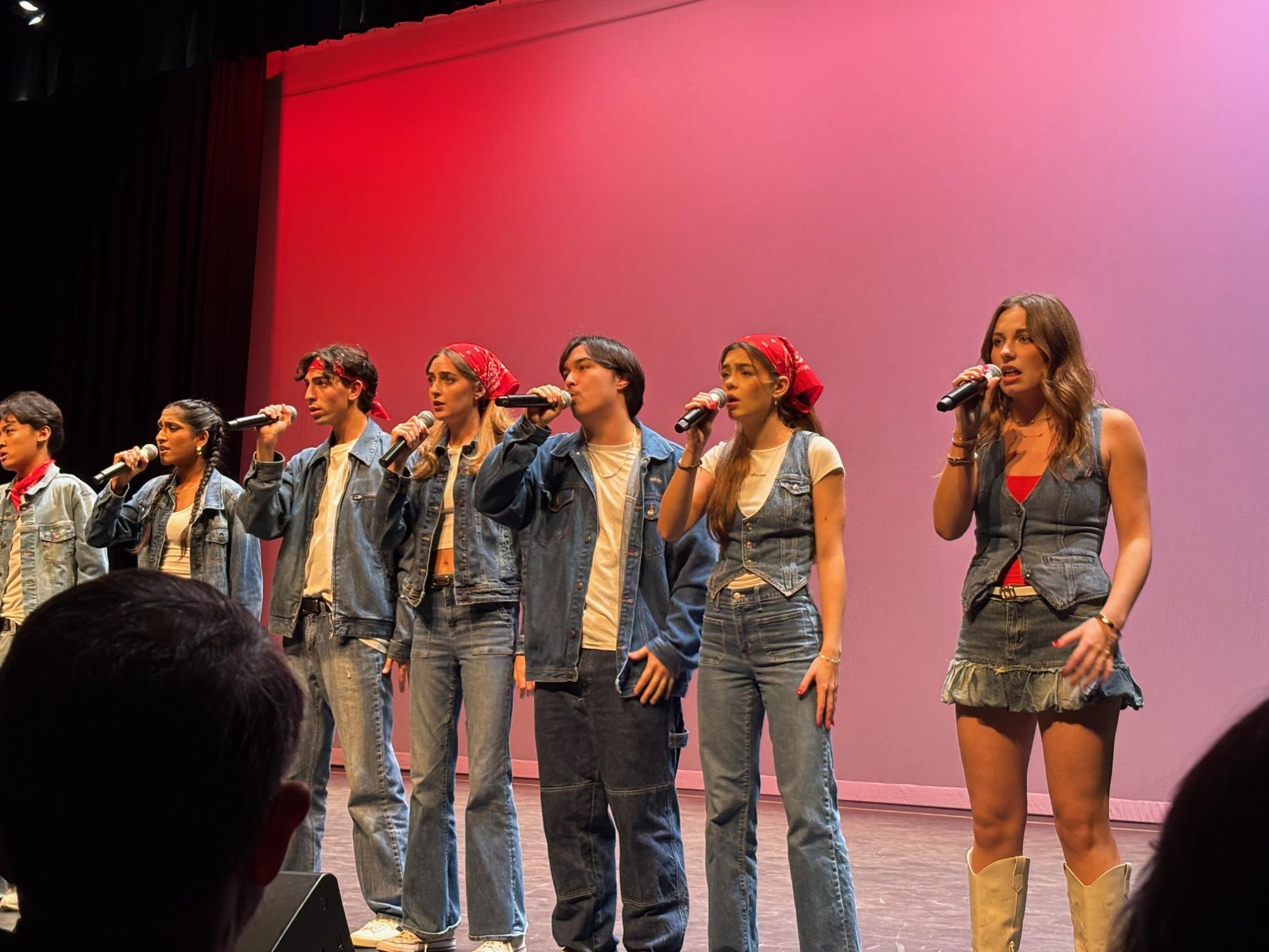
Furthermore, in a cappella, costumes and outfit coordination plays a subtle role in the execution of the piece. Each group had a self-designated theme to their clothing choices — Acamazing wore all denim, Clair de Lune wore earthy greens and browns, NOVA wore silvery and turquoise space outfits and the Vermillion Vocalists wore a mixture of red and black. Bandanas were popular amongst the groups, and notably, Morse Coda used them in an exceptionally unique way to draw the audience’s attention. The group was dressed in dark navy, and each of them had red bandanas tucked into hair, tied around wrists and in belt loops. During their set, they waved the bandanas, instilling a sense of movement that added color and emotion to their singing. At one point, one singer collected bandanas from all members except the soloist, focusing the audience’s attention on her.
-
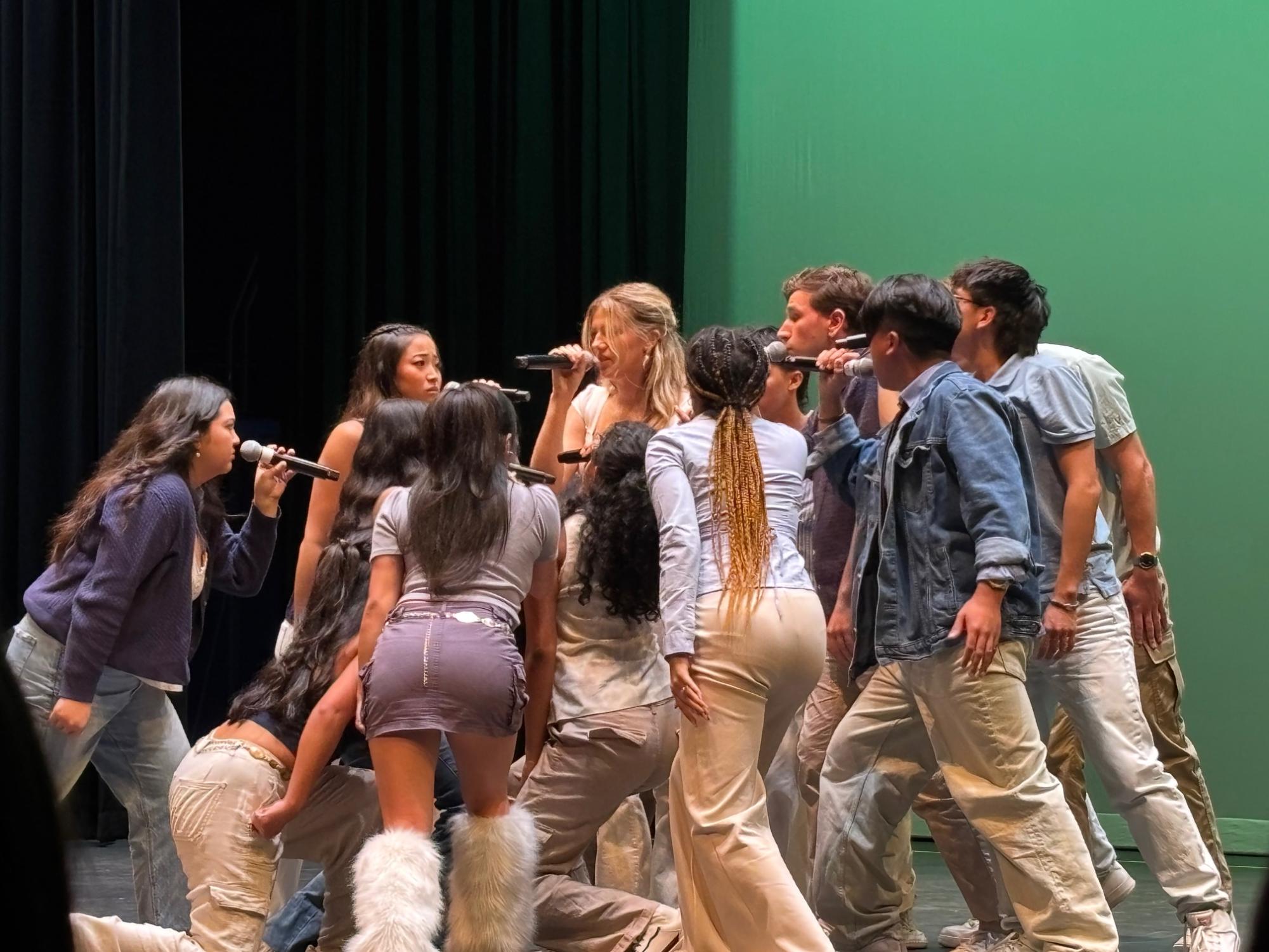
The Tritones lean in for dramatic effect. The group was founded in 1996 and was based in the University of California San Diego.
-
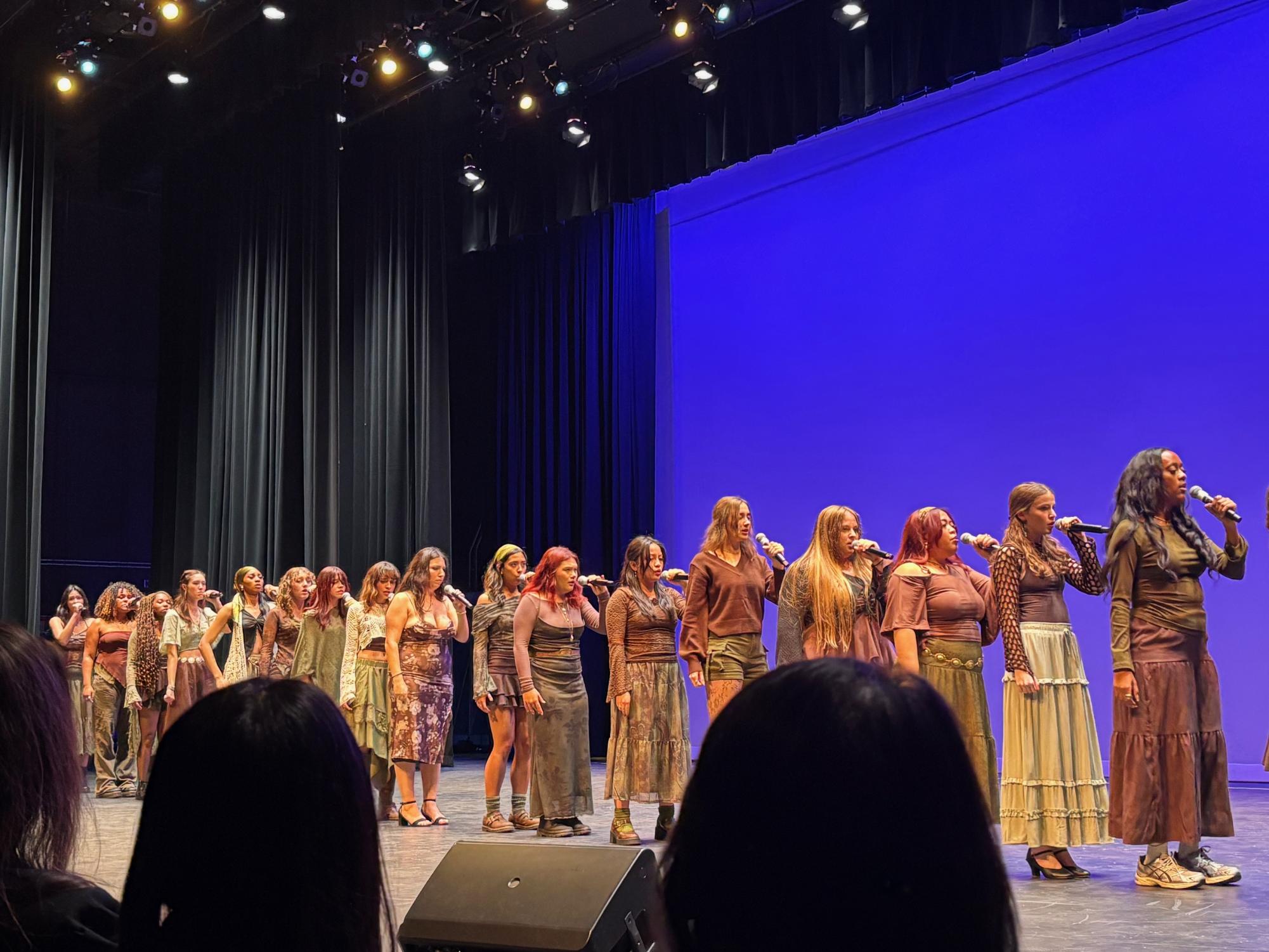
The all-female group Clair de Lune dresses in earthy greens and browns in line with the earthy theme of their songs. The group was from the University of California Irvine.
-
Acamazing dresses in all denim with red bandana accents. The co-ed group was from the University of California San Diego.
-
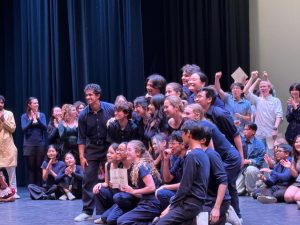
Morse Coda poses for a picture celebrating their first place win at ICCA Southwest Quarterfinal 3. Morse Coda and Tritones will move on to the ICCA Southwest Semifinals in Scottsdale, Ariz.

Then, of course, there are the vocals. The singing quality of the groups ranged from above average to Broadway star level, bringing variety, surprise and admiration whenever an exceptionally talented singer began a solo. However, it was not a single singer that made a group decidedly better than another, it was the strength of the group as a whole. Each member, whether having the role of percussion, background vocalist or soloist, contributed their share, proving that “the whole is greater than the sum of its parts.” The differentiator in each group was how they played into each other’s strengths and manipulated volume and harmony to pull at the audience’s heartstrings.
Still, the show could be fatiguing at times; watching and listening to group after group was dazing. The seating distance from the stage did make a significant difference in the experience. Audience members closer to the front could clearly see the groups’ dancing and emotional expressions. However, farther back, the emotional pull and attachment reduced, and the physical distance removed the audience from the performance. Even so, in the back, one could still see the group as a whole and the overall movement of the group.
When a vocalist made a mistake or the arrangement harmony was slightly off, there was a sense of discomfort and fighting the urge to cringe. But when it was good, it was exceptional. With notes soaring and voices pouring into one another, the performances washed the auditorium in a torrent of color and emotion, causing a fair number of goosebumps, at least on my part. Some songs placed the listener in a state of shock, some ridiculous dance moves elicited a laugh and some renditions made the audience smile at how unbelievably talented the group was. The beatboxers and percussionists, using their voices as veritable instruments, were mind-blowing — far beyond the typical “boots ‘n cats.”
My personal favorite group was Morse Coda. Their outfits were simple and conformative, but their use of red bandanas brought emphasis and flavor to their performance. While numerous groups like the Tritones, Clair de Lune and Vermillion Vocalists delivered outstanding vocals and solos, Morse Coda’s colorful arrangement made the group a standout performance. They integrated a fusion of R&B, rap and pop music and hit every note flawlessly. Their choreography was fluid and intentional, and I could not look away. Appropriately, Morse Coda won first place at the quarterfinals, followed by the Tritones and Vermillion Vocalists.
Regardless of whether you could sit through a vocal performance show for hours or prefer to listen from the comfort of your own headphones, the ICCA competition and concert is a must-see. The a cappella performances are completely different from any other music and induce such amazement and respect for what people are able to accomplish when they come together.
Vocals: 4.5/5
Arrangement quality: 3.5/5
Choreography: 4/5
Novelty: 6/5
Overall: 4/5