
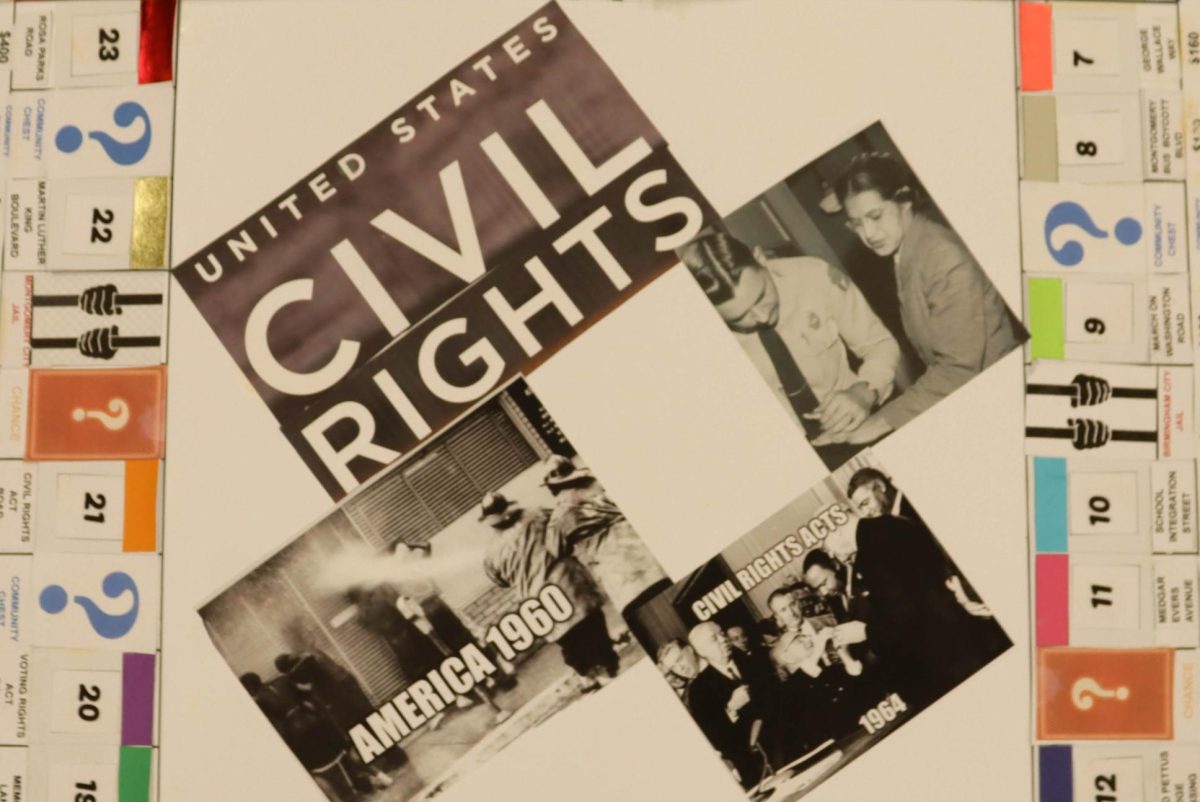
Social Justice, a new social science course, will be part of the school’s curriculum for the upcoming 2026-27 school year. It was created so students could take a class related to social movements and government laws and ultimately learn how to make change.
Austin Wade, Advanced Placement World History, College Prep U.S. History, Surf P.E. and Social and Political Effects of Rock and Roll teacher, will teach the course.
“My degree in history is in grassroots movements, and so I’ve taken a lot of time to study the different ways that people have gathered together to make change happen, both in America and on a global level,” Wade said. “I really want students to realize that while the powerful might tell you one thing, the real power lies in the hands of the people.”
The Social Justice class curriculum will be split across the four quarters of the school year.
“The first quarter will be an introduction to law and the American justice system,” Wade said. “The second quarter is going to be focused on the identifying of what is social justice and how that term has been used and applied to movements in the past.”
The second semester will be more student-led; during the third quarter, students will look more introspectively at their surroundings.
“[The] third quarter will be looking at what students are passionate about, what ideas need to be changed within our local community or on a global level,” Wade said. “The fourth quarter will be putting your passions into action, so either finding ways to volunteer, creating an action project.”
Since the Intro to Law class is no longer offered, students still wanted a similar course they could be involved in. Wade is taking both classes and mixing them into a unique course.
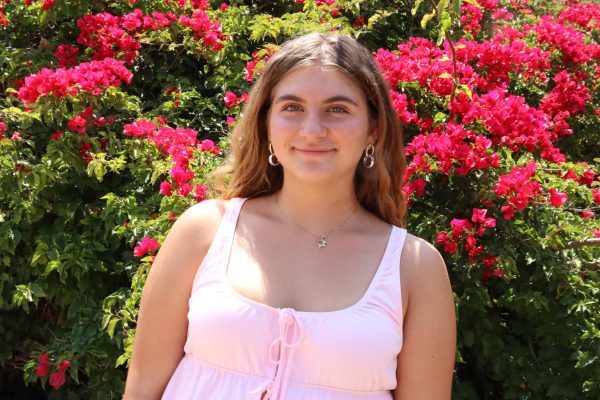
Harper Karvounis (10) took Introduction to Law last year.
“I think this new course will help students like me, who are interested in law, feel like they have a class that’s fun and entertaining,” Karvounis said. “As a student in Model UN, community projects are similar to the conferences we attend. In our conferences, we discuss various real-world topics at hand, which I think will be important for many students taking this course.”
“Showing students what they can do within the systems we have is powerful because it hopefully makes them feel a little less hopeless or like the task is less daunting to be able to make those changes,” Wade said.
Jaya Nyce (10) is enrolling in the course for next year.
“It teaches us real-world issues and educates us on how to become more active in our community,” Nyce said.
Wade wants to emphasize that students have the right to make change and be leaders.
“My background in grassroots movements is that everyone has the power to do something,” Wade said. “And so, my core concept to teach students on a high school level is that even though you might be told you’re too young or you don’t know … everyone has the ability, the energy and the space to create positive change.”