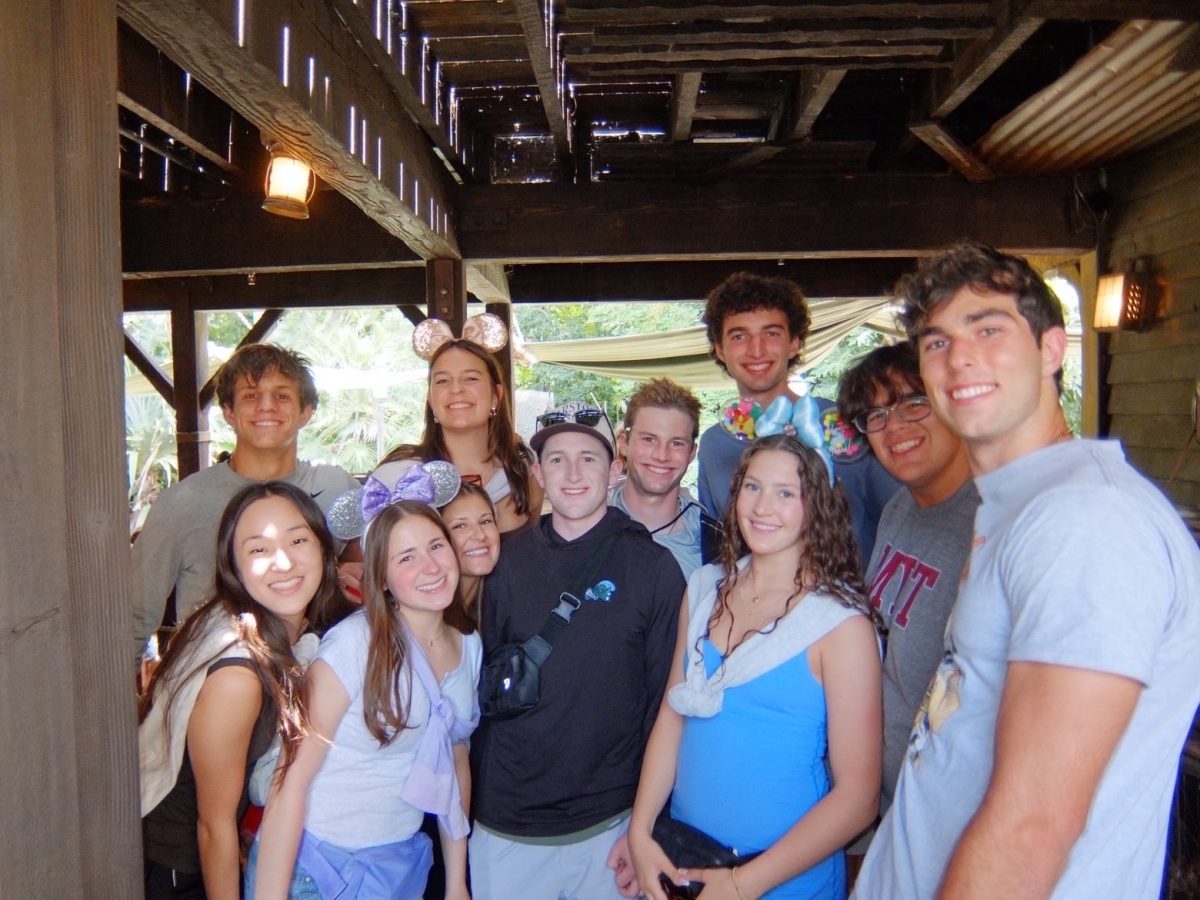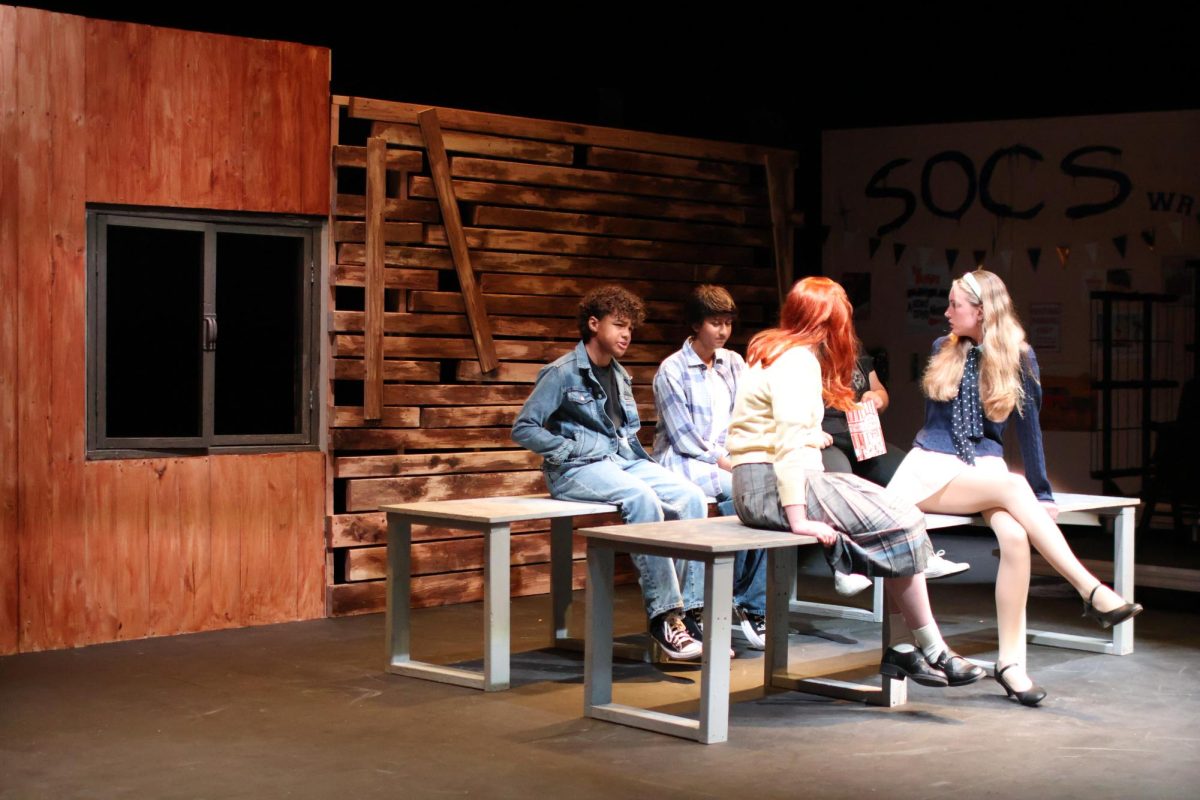

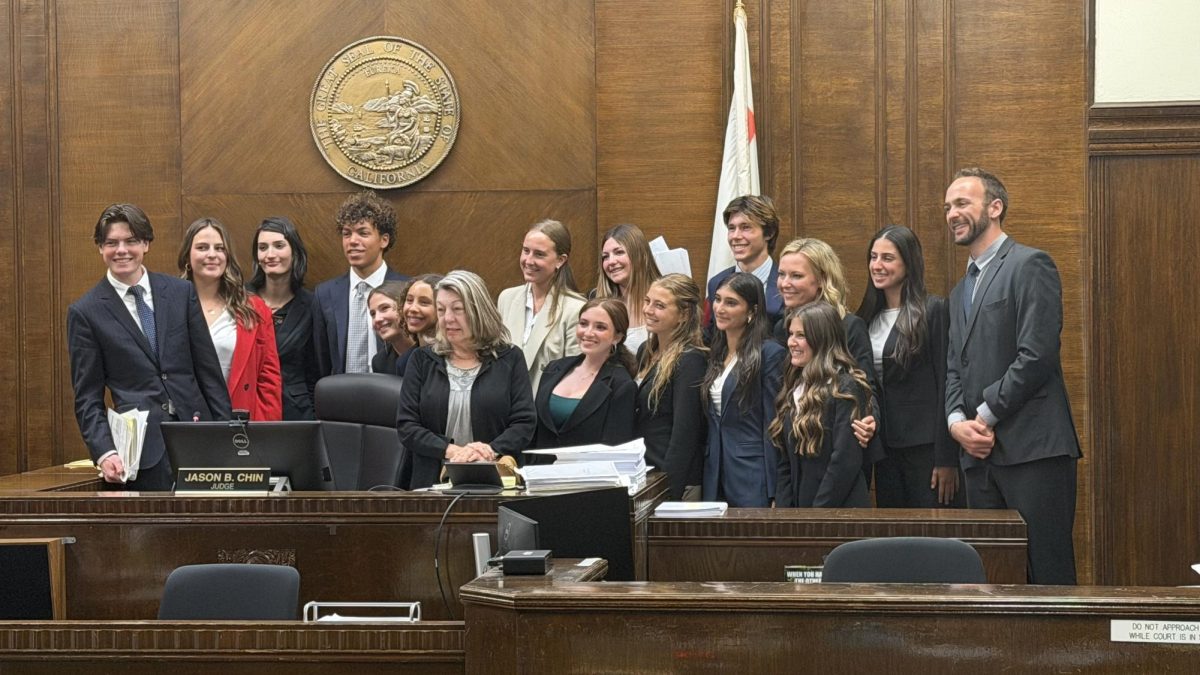
The school’s Mock Trial team competed at the California Mock Trial State Finals in Oakland, Calif., from March 20-22, where they finished 2-2 in four rounds after winning first out of 44 schools at the San Diego County Competition by going 6-0.
In the months leading up to the competition, the members prepared by familiarizing themselves with the case information for this year’s case: People v. Fromholz, which they received in advance. They also prepared opening statements, closing statements and cross-examinations. They practiced in scrimmages with other teams across San Diego County and all-day scrimmages during one select weekend.
Lucinda Fleming (12), vice president of Mock Trial, talked about the purpose of scrimmages.
“The biggest thing about Mock Trial is [that] everything is unpredictable,” Fleming said. “So I think … scrimmages [are] probably the biggest thing to do.”
John Milner, Advanced Placement World History and Sociology teacher and the team’s adviser, explained the process of preparing for competitions.
“Mock Trial is put on by … Teach Democracy,” Milner said. “They work with counties and court systems within [them] and they create … a mock case that is distributed to all the schools that sign up … and within those teams, they assign different roles.”
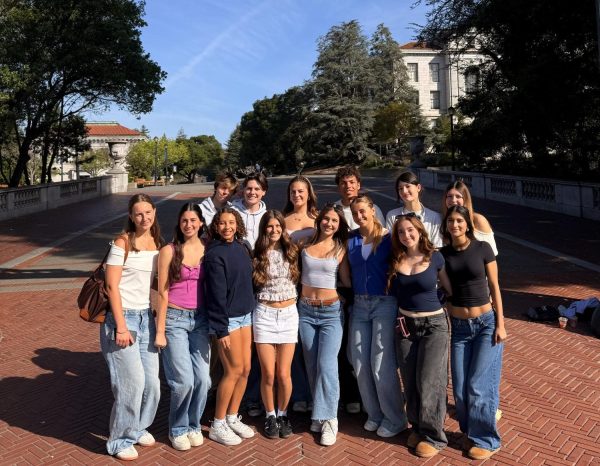
The assigned roles mimic the roles in a real court case.
“Within a team, you have to have both a defensive side and a prosecution side,” Milner said. “There’s three or four attorneys on both sides. There’s normally four witnesses, and it’s normally an expert, a detective and then a friend or somebody else involved with the case … Each of the students play a different role, so it’s a little theatrical, but it’s not too much.”
The most important parts of a mock trial are “knowing the law and how to try a case,” as well as “[staying] within the confines of the facts of the case,” according to Milner. Opposing teams point out small missed details that judges penalize.
Even in local competitions and practices, Mock Trial goes beyond cases and roles in imitating real courthouse experiences.
“All the kids dress up, just like lawyers,” Milner said. “They go down to the San Diego Courthouse and different high-up attorneys from across the city and [real] judges from the court system come and [they] judge the case.”
Dean Smith (12), president of Mock Trial, was proud of the team’s performance.
“I think, … especially in San Diego, we weren’t really sure what the outcome was going to be, so I think that we really trust each other,” Smith said. “We were really confident in ourselves … At the state competition, I think we kind of carried that momentum through. Obviously, it was a really tough competition, … but I’m so proud of how we acted, and I don’t think I started the season with this high of a performance in mind.”

Fleming said the last rounds of the county competition “were really just amazing.”.
“We had obviously worked really hard for it, but I don’t think any of us were expecting to be the top seed throughout all the finals, so I think just being able to see the hard work being rewarded was really amazing,” Fleming said.
Smith believes Mock Trial involves “continual improvement” throughout the season.
“Every single trial, you’re getting better,” Smith said.
The skills learned in a mock trial go beyond the courtroom and the field of law.
“It really hones your quick thinking,” Smith said. “When you’re up there, especially if you’re an attorney [or] a witness, you’re really put on the spot in terms of objections, in terms of pivoting your line of questioning, so having the opportunity to be able to think on your feet in front of a big crowd of people [is good] … I think for people interested in law or in becoming attorneys it’s really an invaluable experience. It will stick out to colleges and law schools, in my opinion, … but a lot of people who aren’t interested in law do [Mock Trial,] … and I think that’s [because] it’s helpful with public speaking, helpful with staying calm under pressure and quick thinking.”
In addition to building valuable skills, Smith appreciates the diversity of students in the club.
“We have a really diverse team,” Smith said. “We have a lot of people who are into a lot of different stuff … so I think that’s really interesting. I think that’s what sets us apart from the other teams … is probably why we do well at competitions. So I encourage everyone to come and try out [next year].”