

Pro-democracy China critic Jimmy Lai sentenced to 20 years in prison
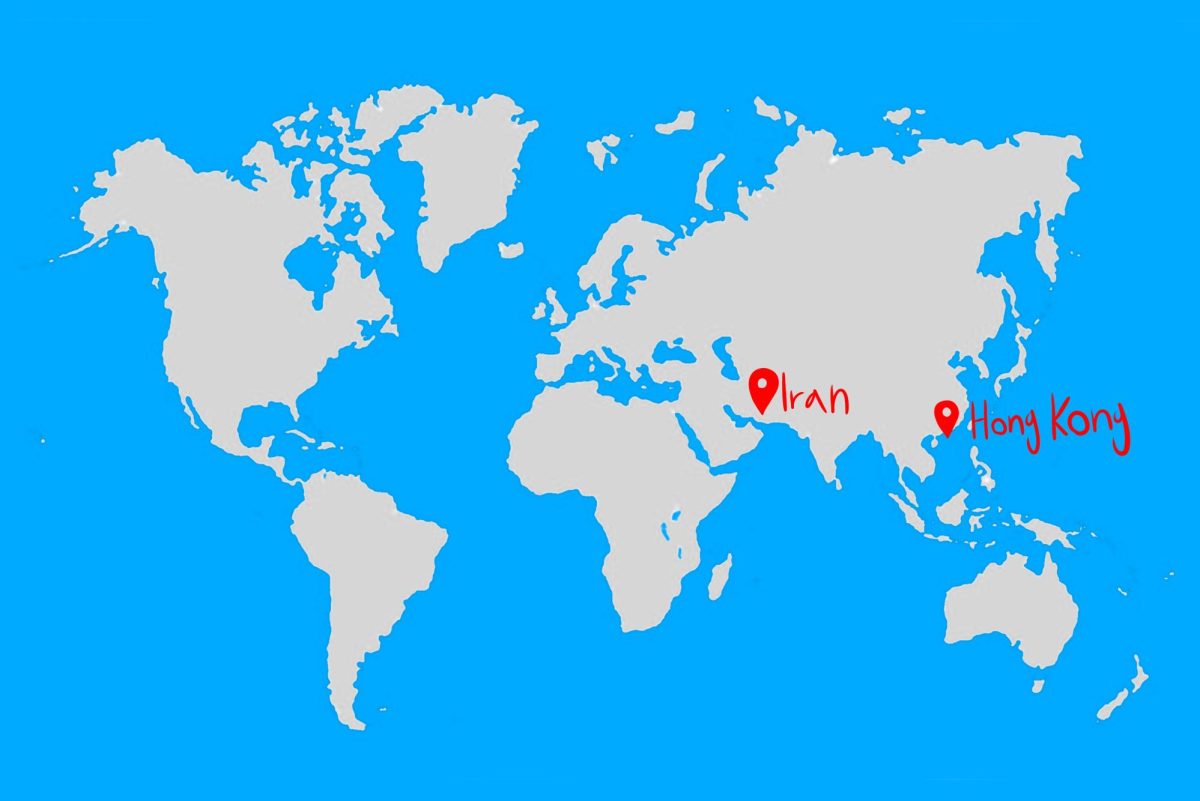
Pro-democracy People’s Republic of China critic and media tycoon Jimmy Lai was sentenced to 20 years in jail as of Feb. 9. The 78-year-old Hong Kong activist was convicted of violating the country’s contentious National Security Law (NSL), specifically on charges of conspiracy to “collusion with a foreign country or external elements” and “conspiracy to publish seditious publications.” China established the law in 2020, after massive pro-democracy protests, and it criminalizes secession, subversion, organization and perpetration of terrorist activities, collusion with foreign forces and espionage. This includes a range of activities from “chanting slogans to participating in pro-democracy protests.”
Lai, first convicted in 2020, was in jail for approximately four years beginning in 2022. During the prosecution, Mr. Lai stated “all I was doing was carrying a torch to the reality” when asked if he ever intended to “pollute the minds of his readers,” as the prosecution alleged.
Lai was among hundreds of others arrested under the NSL. Rights groups, including Amnesty International and Reporters Without Borders, demand his release, stating that it is “effectively a death sentence,” given Lai’s age. Lai founded the Apple Daily newspaper where he helped organize at least four of the 2019 pro-democracy protests in Hong Kong and met with U.S. officials to discuss Hong Kong’s autonomy and civil liberties. The government labels him a “traitor” while rights groups champion him as a hero.
Catherine Mintz, who teaches Advanced Placement Government & Politics, Film & Society and Advanced Placement Psychology, commented on the value of political activism.
“I believe that free speech is a right that we are all granted, and as long as … we don’t execute that in a violent manner or in a way that is defamatory to other people then we have the right to protest peacefully,” Mintz said. “We have the right to speak out.”
Lai’s pathway to activism was marked by adversity. Fleeing to Hong Kong as a Chinese stowaway, Lai experienced a “rags-to-riches” story, building a multi-million-dollar enterprise that included the retail brand Giordano. He began speaking out as a pro-democracy activist after the events of Tiananmen Square in 1989, using his platform on Apple Daily to reinforce protest slogans and publish editorials and cartoons imploring people to join the movement. He faced retribution. Lai was the target of an assassination plot in 2009. Masked attackers also firebombed Lai’s house and company headquarters in 2015.
“You don’t always get to be the martyr that can risk everything,” Mintz said. “Not everybody can, or not everybody’s willing to do that. It’s your life. It’s the life of your family, your children, your parents. … Not everybody can risk what it takes to just stand up for what’s right.”
The United States, United Kingdom, European Union and the United Nations condemned the sentence which many “see as politically motivated.”
“If you’re trying to suppress ideas, generally, people will rise up,” Mintz said “But if they’re scared of their life, they have to weigh that.”
Lai is a British citizen, however he is considered as a Chinese citizen by the country’s authorities. On one occasion, news agency Agence France-Presse (AFP) interviewed Lai.
“I came here with nothing, the freedom of this place has given me everything,” Lai said in the interview. “Maybe it’s time I paid back for that freedom by fighting for it.”
Anti-government protests continue in Iranian universities
Students across dozens of universities starting last Saturday in Iran gathered to protest their government’s violence against protesters and mourned the loss of Iranians killed in the massacres. Protests took place in the capital Tehran, including Sharif University of Technology, as well as universities in the city of Mashhad, before spreading to other areas. While the government has not responded directly, pro-government students began to counterprotest.
During protests, students shout “Death to the Dictator”, “The Blood that has been spilled will never be washed away” and more anti-government slogans. In a less vocal approach, some students refuse to attend classes.
“As it’s mostly college students who are engaging in these protests, I think they’re really the ones who are looking at generational trauma and generational issues,” Advanced Placement World History, Social Political History of Rock and Roll, Surf PE and College Prep United States History teacher Austin Wade said. “They kind of feel like they are the ones [that] have to do something about it.”
Wade notes that the juxtaposition between a rigid government and a younger generation creates issues.
“The younger generation through protest is hoping to find an [avenue] for change, but then you have a very embedded, conservative group of people in power not wanting to lose that power,” Wade said. “Young energized people want to see change and anytime in history when you get those two things together, you’re going to see conflict.”
In late December of 2025, initial signs of unrest emerged when Tehran’s bazaar, or central market, went on strike to protest rampant inflation, undesirable working conditions and the collapse of the Iranian currency, the rial. Other factors fueled the steep decline of the Iranian economy, including the strain of a 12-day war with Israel and the United Nations Security Council’s refusal to lift economic restrictions on Iran.
While protests started with economic motivations, they morphed into a general push against the theocratic government’s oppressive policies. As protests spread to more than 400 cities, becoming the largest uprising since the Islamic Revolution in 1979, the Iranian government cracked down on the mass demonstrations in early January of 2026 in one of the deadliest massacres in decades. Students, women and even older individuals took to the streets in various major cities, including Tehran, Mashhad, Tabriz, Urmia and the Sistan and Baluchestan provinces.
“I think when people feel oppressed and unheard, it pushes people to want to see some positive change around them,” Wade said. “These protests have escalated because there’s been such a harsh response from the Iranian government and some might suggest that would scare people away. I think it has the opposite effect, it’s almost like the violence is getting to the people in power, so if you keep doing that, change will happen.”
On Jan. 9, Supreme leader Ayatollah Ali Khamenei told the Supreme National Security Council, which includes the Islamic Revolutionary Guard Corps, to shut down the protest, establishing a shoot-to-kill order. Officials used firearms, batons, tear gas and shot individuals — including those who appeared to pose no threat — from the roof of police stations as they retreated from the scene. In hospitals, doctors worked to save injured protesters while managing growing casualties.
“I feel like the people who are still willing to march in protest after [all the violence] are definitely taking huge risks,” Wade said. “I think it’s really scary to get to a place on a societal level where people feel like they have no voice left and when you know walking out that day that there’s a huge potential violent reaction, it’s really hard to put yourself in that headspace.”
On Jan. 8, the Iranian government imposed an internet shutdown, which prevented protesters from sharing experiences and hospitals from accessing patient data needed for treatment.
“I think most governments will try to protect themselves, because that also limits interference from foreign governments,” Wade said. “So while the internet blackout is in effect, I think we’re missing a lot of pieces of ‘what are the true demands?’ ‘What are people wanting?’ Because right now, the government’s almost like the middleman and the delivery of information, which means that they’re probably changing the storyline a little bit. As soon as they turn access to WhatsApp and Internet back on, I feel like we’re going to get a lot more information as to what demands were, what true actions happened and what people experienced.”
The Iranian government claimed that its actions were justified, calling the protesters “terrorists” working against the wellbeing of Iran. While the Iranian government reports that 3,117 people were killed, other agencies including the Human Rights Activists News Agency believe that number is much larger.
“We know the number of people that have been killed is massive and we know the government has tried to restrict information on sharing apps,” Wade said. “I think that response just creates more tension and more frustration and now people feel like the only thing they have left to do is protest and voice their opinion in the streets. If the government had maybe responded in a more peaceful way, then maybe the natural protest energy might just run out … we’ve had that happen in the United States.”
Protests at universities in the last few days occur after a 40-day mourning period following the government massacre and are expected to continue. While internet restrictions have minimally been lifted as of today, most of the individuals in Iran are unable to access global internet and there is heavy filtering by the government.
“My heart goes out to the people of Iran who yearn to see positive change for themselves and the people around them, but I do have a part of me that looks at history and the way these types of protests have been handled in the past,” Wade said. “It’s not the first time the people of Iran have come together and protested against the government, but past protests haven’t seen a lot of change.”
Still, Wade acknowledges the power of collective awareness.
“I do feel like every protest is going to plant a seed for the next one,” Wade said. “The idea has now been passed on to others and that energy, as much as the government wants to, you can’t extinguish [it]. It has to be positively released in some way. So until the change happens, we’re going to see these protests arise, probably more frequently and probably maybe even more on a global scale, where it’s not just in Iran, maybe it’s going to happen in neighboring countries like Iraq or Saudi Arabia and then you start to see more of a full culture shift.”
Wade encourages students to do independent research outside of American media.
“I would recommend everybody who’s interested to look at foreign based journalism, whether it could be coming out of Europe or Asia, Australia, they just have a different lens to look at things,” Wade said. “Everything needs to be taken with a grain of salt and your curiosity should be backed up by doing the research.”